
Free Stock PORTFOLIo: Strait of hormuz crisis 2026
What Stocks to Buy During the Iran War Right Now — Full Portfolio Inside
Since February 2026, the Strait of Hormuz — through which 20% of the world’s oil flows — has been effectively shut down, triggering the world’s biggest energy supply shock in 50 years.
Global markets have reacted strongly. Crude oil prices are up, gold values have skyrocketed, and stock markets have experienced repeated drops and spikes in the wake of new developments.
There is no practical alternative route for most of this oil volume, and the war situation remains volatile. Investors are rightly asking: What are the best wartime stocks to hold when dealing with such unpredictability?
Our analysts have built a strategic portfolio of wartime stocks and hedges that perform, or cushion, across a range of outcomes, including prolonged escalation, broader market drawdowns, and eventual de-escalation. Download the report to war-proof your own stock portfolio.
Backed by results
+{{asx_latest}}%
Our ASX return for {{asx_latest_fy}}
vs. Market Return of {{asx_latest_mkt}}%
+{{us_latest}}%
Our US return for {{us_latest_fy}}
vs. Market Return of {{us_latest_mkt}}%
+{{hk_latest}}%
Our HKEX return for {{hk_latest_fy}}
vs. Market Return of {{hk_latest_mkt}}%
✓ 100% Free Report ✓ Instant Delivery ✓ No Card Required ✓ Compiled by Analysts
Download your free wartime portfolio report now.
Strait of Hormuz Crisis Snapshot
Which Sectors Benefit Most from the Hormuz Crisis?
While the Strait of Hormuz crisis and military conflict are undoubtedly causing consternation on political, economic and human fronts, the effects for investors are more nuanced. There are certain stocks that do well in wartime or that stand to benefit from these disruptions.
Energy
- Saudi Arabia and the UAE have existing oil pipelines that bypass the Strait.
- Oil suppliers such as the US, Canada and Norway benefit from demand for non-Middle East oil supply.
- Australia’s LNG exporters and energy stocks benefit from higher prices due to tighter global gas markets.
Defence
- Geopolitical conflict drives higher global defence spending.
- Defence contractors benefit from stronger long-term order pipelines.
Gold
- Gold is seen as a ‘safe-haven’ by individual and institutional investors, driving the price of gold stocks higher during geopolitical risk.
- Central banks often increase gold reserves in crisis periods.
Shipping
- Longer, rerouted and riskier shipping routes attract higher shipping fees.
- Stressed global supply chains heighten demand for available ships, causing LNG and oil tanker spot rates to spike.
Fertilisers
- Fertiliser producers outside of the Gulf benefit from higher demand, as Gulf-produced product is caught up in Strait closures.
- Fertiliser prices are significantly heightened because gas is used in their production, and gas prices have been forced higher.


Performance Matters.
At Sharewise, every stock report is built on the same principles that have driven our portfolios to outperform the market — data, discipline, and depth of research.
Over the past year, our analysts have delivered strong results across global markets:
+{{asx_latest}}%

Our ASX return for {{asx_latest_fy}}
vs. Market Return of {{asx_latest_mkt}}%
+{{asx_prior}}%
Our US return for {{asx_prior_fy}}
vs. Market Return of {{asx_prior_mkt}}%
+{{hk_latest}}%
Our HKEX return for {{hk_latest_fy}}
vs. Market Return of {{hk_latest_mkt}}%
Past performance is not indicative of future performance.
Inside the Wartime Portfolio
Energy stocks rise during geopolitical escalation. Shorts act as a hedge against falling prices during de-escalation. Cash buys flexibility amidst uncertainty.
Knowing the best stocks to own during wartime, and taking a strategic approach, is the difference between capitalising on this moment and watching it pass.
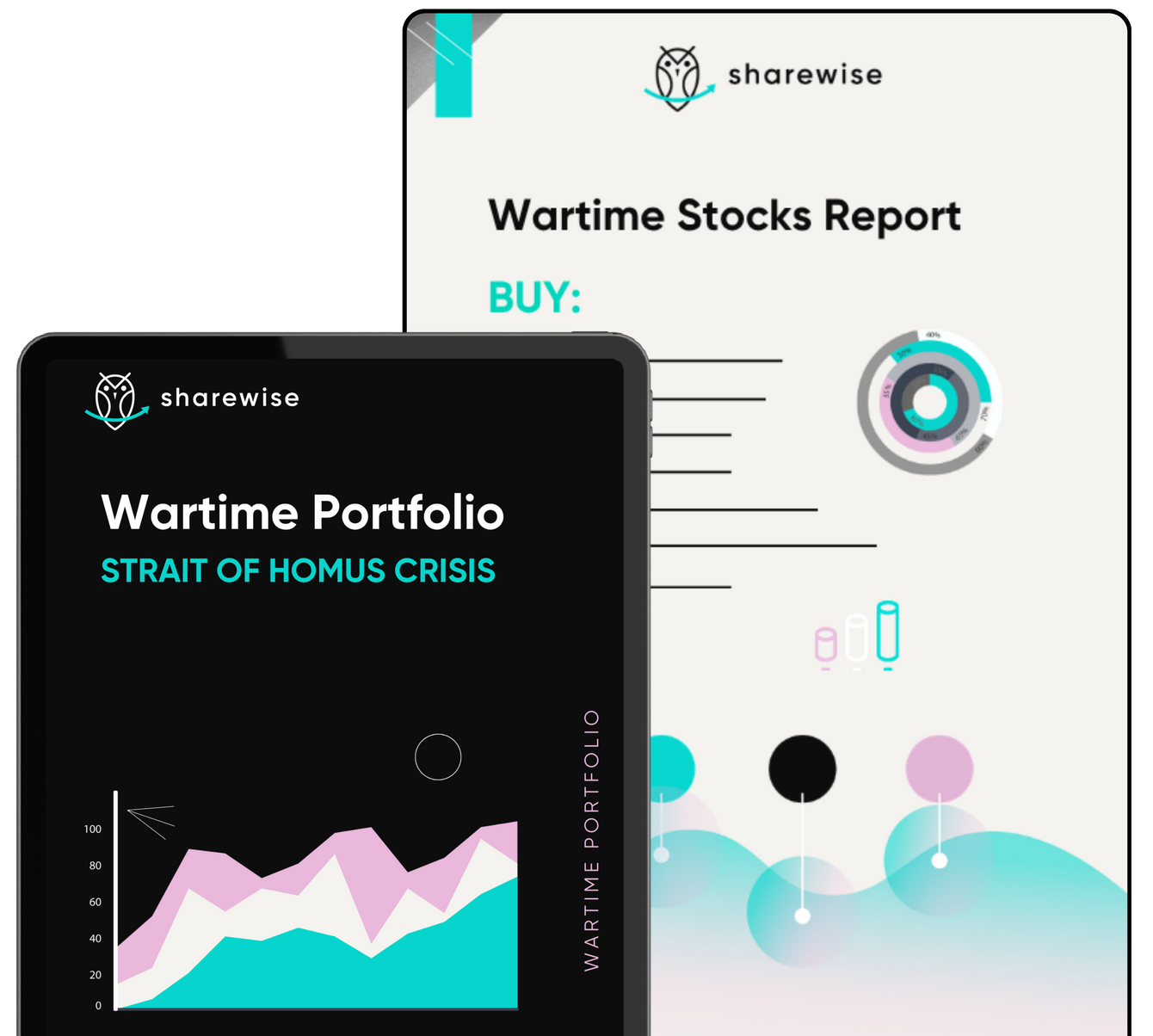
Our Wartime Portfolio is a thematic strategy built to perform across a range of outcomes as the world navigates the ongoing Strait of Hormuz crisis.
Inside the Strait of Hormuz Wartime Portfolio
- Full position list — 20 stocks across 5 exchanges and 6 countries
- Allocation breakdown — weighting and rationale for 8 wartime stock themes
- Bucket-by-bucket rationale — why each position was selected and sized
- Scenario matrix — estimated returns across 5 outcomes from escalation to de-escalation
- Cash deployment triggers — the exact signals that unlock the 30% cash buffer
- Short ETF strategy — three markets, two currencies, one defensive sleeve
- Exit triggers — hard rules for when to rotate or reduce each position
This report is regularly updated to reflect military developments, diplomatic signals, oil price movements, and any change in the operational status of the Strait — ensuring the analysis remains current and actionable.
The Strait of Hormuz Crisis — Timeline
US & Israel Strike Iran — Supreme Leader Killed
Joint military strikes on Iran including the killing of Supreme Leader Ali Khamenei. Iran's IRGC immediately begins issuing warnings prohibiting vessel passage through the Strait of Hormuz.
IRGC Formally Declares Strait "Closed"
Iran formally closes the strait. Tanker traffic collapses 70%. Over 150 ships anchor outside. War-risk insurance premiums surge 400%. Major shipping companies reroute via the Cape of Good Hope.
Brent Crude Breaks $100 — First Time Since 2022
Oil crosses $100/barrel for the first time in four years. The IEA announces an emergency 400M barrel reserve release — equal to just 4 days of global oil consumption.
Brent Peaks at $126 — IEA: Worst Supply Disruption in Oil Market History
Brent crude peaks at $126/barrel. The IEA declares this the largest supply disruption in the history of the global oil market — worse than the two 1970s crises combined, with 11 million barrels per day lost. European gas benchmarks nearly double. The ECB postpones rate cuts.
US Prepares Peace Framework — Iran Refuses to Negotiate
The US circulates six demands Iran must accept to end hostilities. Iran rejects the framework and signals it has no intention of reopening the strait under current conditions.
Trump Issues 48-Hour Ultimatum — Threatens to "Obliterate" Iran's Power Plants
Trump demands Iran reopen the Strait of Hormuz within 48 hours or face destruction of its power plants and energy infrastructure. Iran responds by threatening to mine Gulf sea lanes and strike energy facilities across the region. Markets brace for catastrophic escalation.
Trump Reverses Course — Claims "Very Good and Productive" Talks. Iran Denies Everything.
Hours before his own deadline, Trump posts on Truth Social claiming the US and Iran have held "very good and productive conversations." He postpones power plant strikes for 5 days. Oil drops 6% and futures surge on relief. Iran's Foreign Ministry flatly denies any negotiations took place, calling Trump's claims "psychological warfare to lower energy prices."
Trump Claims Iran Offered a "Very Significant Prize" — Backchannel Confirmed
Trump says Iran made a valuable offer in talks he won't specify. Kushner and Witkoff confirmed as US backchannel envoys. Pakistan, Egypt and Turkey relaying messages between parties. Israel tells NPR it wants to keep fighting for several more weeks to achieve its war aims. Fighting continues.
5-Day Diplomatic Window Opens — Strait Still Closed
The five-day pause on power plant strikes leaves a narrow window for talks. The Strait remains effectively closed, Iran continues to deny negotiations, and markets stay on edge.
Fragile Ceasefire Announced — Strait Partially Reopens
A US–Iran ceasefire is announced and Iran agrees to partially reopen the Strait of Hormuz under monitored conditions. Limited tanker traffic resumes. Brent crude falls sharply but remains volatile.
US Naval Blockade Establishes Containment Zone
The US imposes a naval blockade to establish a containment zone around key Iranian ports. Iran accuses the US of violating the ceasefire. Oil flows stabilise, but insurance risk premiums stay persistently high.
Islamabad Negotiations Break Down
Talks hosted in Islamabad collapse. With the ceasefire looking increasingly tenuous, markets begin pricing renewed escalation risk into LNG and freight rates.
Renewed Strikes — Brent Back Above $105
Israel, Iran and the US exchange renewed strikes against infrastructure and military targets. The Strait remains partially open but heavily militarised. Oil spikes back above $105 as risk premiums surge.
Provisional De-escalation Framework Agreed — But Nothing Is Settled
The US and Iran agree in principle to a provisional framework for de-escalation, though negotiations remain incomplete and fraught. The Strait is operational, but the situation is fragile and markets are volatile.
Free · Instant access · No card required

What Our Clients Are Saying!

Our Return vs. The Market
Our return is calculated based on a 1% risk allocation of portfolio value, multiplied by the cumulative risk-to-reward ratio of the positions. In other words, if 1% of your portfolio's value was allocated as risk to each recommended position, this is how your portfolio would have performed across all recommendations provided.
Past performance is not indicative of future performance.
Why Investors Are Turning to Sharewise Right Now.
Institutional Quality Research
Make informed decisions with confidence.
Dive into comprehensive stock-specific analysis, focused on all companies, from blue-chip to micro-cap. Our extensive research, led by Chief Investment Office Rabbi (Rabih) Ahmed, and support by our team of equity research analysts, ensure you have a deep understanding of the market landscape to invest with clarify and assurance.
Account & Portfolio Management
Your investments, our dedicated attention.
With a dedicated stockbroker, you can rest easy knowing your investments are under expert care. A Sharewise Managed Account allows your advisor to manage your portfolio on your behalf, ensuring strategic decision-making, timely buy and sell actions, and seamless trade execution. We conduct quarterly portfolio reviews and strategy sessions with you so you can enjoy a hands-off investment process.
Dedicated Investment Manager
Your partner in navigating the markets.
Our investment managers are licensed professionals with expert knowledge of the markets. They monitor stocks and market trends daily, managing risk while optimising your portfolio. Focused on maximising returns, they ensure your investments are actively managed and aligned with your objectives.
Timely Stock Recommendations
Never miss an opportunity.
Backed by in-depth research and a clear investment thesis, our buy and sell recommendations go beyond simple tips. Each recommendation is a strategic insight built on real company data, financial fundamentals, and advanced technical analysis. We focus on ensuring you understand exactly what you're investing in and why, delivering actionable trade opportunities with clear rationale.
Professional Risk Management
Stay focused, even in volatile markets.
We take emotions out of investing. Our investment managers use research, data and market signals to guide decisions. By staying disciplined and responsive to market changes, we help investors remain focused when markets move quickly.
Access to Client Portal
Never miss an opportunity.
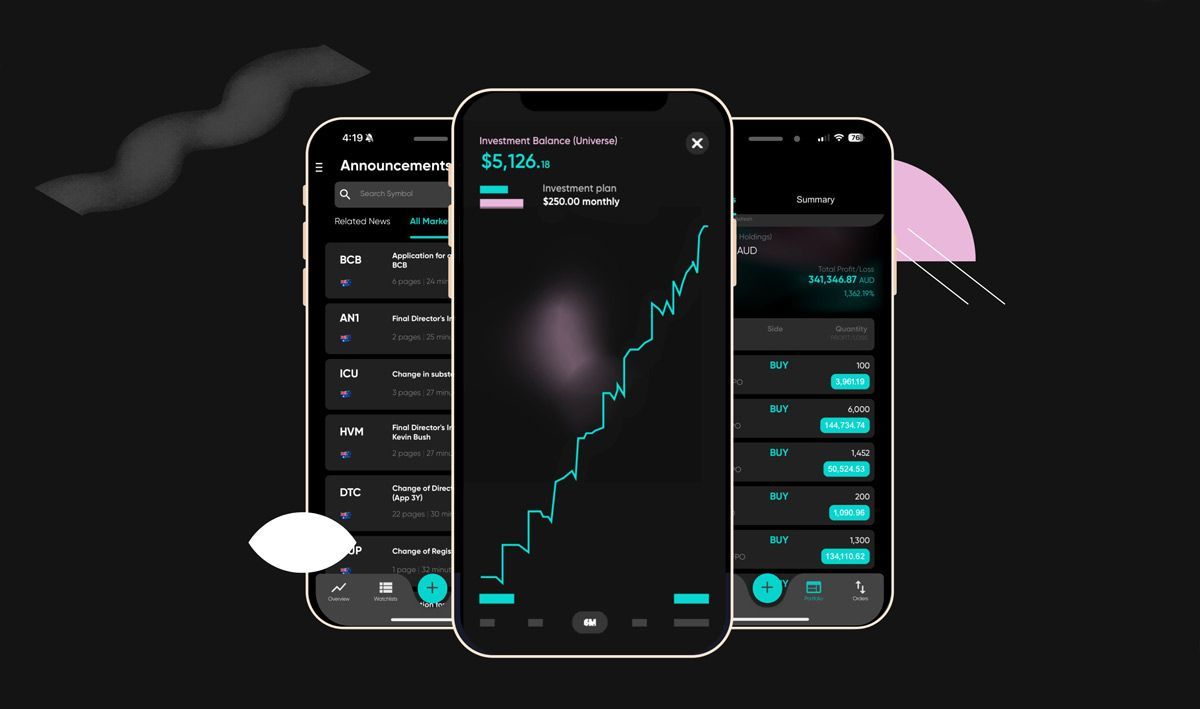
Our exclusive client portal gives you 24/7 access to our daily market research, in-depth stock analysis, and buy/sell recommendations. Whether you're at home or on the go, you can stay informed with up-to-date insights and make well-informed decisions. Our user-friendly platform ensures you’re always connected to the latest market trends, putting expert guidance at your fingertips.
Your Investment Journey to Wealth Creation.
Discover how Sharewise helps you build lasting wealth through expert advice, market intelligence, and proactive portfolio support - every step of the way.
Step 1: Start Your Journey with Confidence
Speak with one of our experienced investment managers to understand how we work and how we can support your investment objectives. Whether you’re new to investing or looking to take the next step, we’ll meet you where you are.
Step 2: Navigate the Markets with Clarity
Access our global market updates and institutional-grade research designed to help investors make more informed decisions across all conditions.
Step 3: Act on Research-Backed Ideas
Access timely buy and sell recommendations based on technical and fundamental analysis - helping you act with conviction when opportunities arise.
Step 4: Portfolio Oversight
Stay connected to your investments with ongoing oversight from your Sharewise investment manager. We help you monitor your portfolio, provide general advice based on market conditions, and keep you informed about opportunities that may impact your holdings.
Step 5: Build Resilience Through Risk Management
We support you in identifying and managing risk through research-led insights and regular updates - helping you stay focused, even when markets shift.
Step 6: A Journey of Long-Term Success
Your investment journey doesn’t end with one trade. We’re here for the long haul - providing continuous insights, opportunities, and support to help you stay on track over time.
Your Success in the Market Starts Here.
At Sharewise, our approach to investing is built on clarity, precision, and strategy. By combining technical and fundamental analysis, we uncover opportunities and manage risk with a data-driven mindset. Our diversified approach ensures portfolios remain balanced, resilient, and adaptive to global market shifts.
Whether you’re navigating volatility or pursuing growth, our insights are designed to simplify complexity and empower informed decisions.

Data-Driven Decisions
Our investment philosophy combines technical and fundamentalanalysis to uncover opportunities and manage risk with precision. Every recommendation is backed by data, research, and professional expertise — ensuring each move is informed and strategic.

Superior Strategy
We take a diversified, multi-asset approach to investing, balancing risk and reward across global markets. This strategy is designed to enhance returns, manage volatility, and protect your portfolio through all market cycles.

Resilient and Adaptable
Markets evolve — and so do we. Our team proactively adjusts strategies in response to global economic and political shifts, positioning portfolios to capture growth during bullish phases and remain resilient during downturns.

Effortless Portfolio Oversight
Your dedicated advisor manages the day-to-day performance of your portfolio while you remain in control of all trading decisions through our non-discretionary structure. This balance of professional management and client approval provides transparency, accountability, and confidence.

Strategic Risk Management
We carefully balance position sizes, correlations, and volatility to safeguard your investments. Through ongoing, proactive risk assessment, we maintain portfolio resilience and stability across changing market conditions.

Curated Market Insights
Our in-house analysts deliver institutional-grade research and stock recommendations, giving you access to the same calibre of insight used by professional investors.

Hear From More Clients!
Frequently Asked Questions.
Should I sell my stocks during the Iran war?
The Iran war and Strait of Hormuz closures have caused a wave of market volatility. Selling during a ‘panic period’ often locks in losses rather than helping to manage risk. A more effective strategy can be to reassess exposure to sectors likely to be negatively affected, look at diversification for stronger risk management, and to consider investing in stocks that do well in wartime.
What happens to the stock market if the Strait of Hormuz reopens?
A reopening is likely to trigger a sharp rally in energy-sensitive stocks and a fall in oil prices. However, while the situation remains uncertain, shipping insurance premiums may remain inflated, and the market may still price in expected volatility.
Which ASX stocks benefit from rising oil prices?
ASX energy producers, energy-related businesses and shipping industry players stand to benefit from higher global oil prices and a search for non-Middle Eastern supply. Defence-related businesses are also likely to benefit from increased defence spending, which can occur in times of geopolitical crisis.
How does war affect the stock market historically?
Historically, wars cause a sharp initial sell-off of stocks, followed by periods of increased market volatility. There are stocks that do well in wartime, such as energy and defence, and markets typically stabilise once supply impacts and policy responses become clearer.
Is the Wartime Portfolio actually free?
Yes - completely free. Enter your email, and the full portfolio report is delivered immediately. No credit card, no payment, no catch.
Why is the Strait of Hormuz so critical to global oil markets?
Approximately 20 million barrels of oil per day, around 20% of global petroleum consumption, transited the Strait of Hormuz in 2024. There is no practical alternative route for most of this volume. A closure triggers the single largest possible disruption to global energy supply.
Which sectors benefit most from the Strait of Hormuz crisis?
The sectors with the most compelling upside include: (1) Oil & gas producers outside the Persian Gulf, (2) Tanker and shipping companies on surging rates, (3) Defence contractors as military budgets scale, (4) Gold miners as safe-haven demand surges, (5) LNG alternatives as Europe diversifies, and (6) Fertiliser producers as Qatari LNG shortages bite.
What is included in the portfolio?
The report includes a 20-position wartime portfolio strategy, covering the best wartime stocks; impacts on energy, defence and commodities; short hedges and cash positioning; allocation rationale and scenario analysis.
