Expert Hong Kong Stock Market Advisory Services.

The Hong Kong Stock Exchange (HKEX) is one of Asia’s most influential financial centres, linking international capital with companies driving growth across Greater China. For SMSF trustees, high-net-worth individuals, and self-directed investors, the Hong Kong stock market could provide diversification opportunities across finance, property, technology, and consumer sectors.

With over 2,300 companies listed and a combined market capitalisation of roughly HKD 33.4 trillion (USD 4.3 trillion), the Hong Kong Stock Exchange ranks among the top five exchanges globally. Daily turnover in Q2 2025 averaged around HKD 120 billion (USD 15.4 billion), underscoring its role as a hub of international liquidity.


This market, however, is a complex environment. Regulatory shifts, currency moves, and geopolitical risks mean investors benefit from balanced, evidence-based insights.


This is where Sharewise’s Hong Kong stock advisory services come in. Our analysts, under the guidance of our Chief Investment Officer Rabbi (Rabih) Ahmed, deliver institutional-grade research, independent recommendations, and ongoing monitoring of the Hong Kong stock index. Whether you are weighing up how to invest in the Hong Kong stock market from Australia or refining an existing portfolio, our specialist team brings you clarity and discipline.

Speak to an Advisor

Why Invest In HKEX Stocks?

Hong Kong functions as a financial gateway between Mainland China and the world. The HKEX lists companies across finance, property, healthcare, telecoms, and technology. With over 2300 companies listed, the exchange plays a central role in regional and global capital markets.


There are a number of reasons why investors are considering HKEX stocks:

Gateway To Chinese Firms

Many of China’s largest banks and internet platforms are dual-listed in Hong Kong.

Sector Breadth

The exchange spans everything from blue-chip developers to biotech innovators.

Relative Valuations

When compared to Western peers, Hong Kong equities often trade at lower price multiples.

Dividend Track Records

A number of listed companies maintain long dividend histories, appealing to income-based investors.

Access To Growth Industries

Wider economic changes in Asia are driving the rapid expansion of industries like renewable energy, electric vehicles, and technology-enabled financial services.


The exchange’s sector mix is weighted towards financials, which account for ~36% of total market value, followed by technology at ~20% and real estate at ~12%. Consumer goods, healthcare, and other industries round out the balance, giving investors exposure to both established blue-chips and faster-growing areas like biotech, which already represents ~7% of HKEX’s market.

For investors who want to gain exposure to China’s ongoing economic transformation while remaining in a transparent, globally recognised market, HKEX presents attractive options to consider.


Given Hong Kong’s geopolitical positioning, there are a range of risks investors need to be mindful of, including Beijing policy intervention, global trade pressures, and rate fluctuations. Balanced advisory helps you to weigh these against the opportunities.

Hong Kong Stock Recommendations For Profitable Investing

Sound investment decisions need research, not speculation. Sharewise analysts deliver Hong Kong stock recommendations grounded in detailed analysis.


Our approach focuses on:


Fundamental Research

We assess company earnings, balance sheets, and governance to identify resilient businesses.


Market Monitoring

We track the Hong Kong stock index and sector performance to highlight changes that may influence investment decisions.


Macroeconomic Context

We factor in currency trends, US interest rates, and mainland policy changes.


Our Hong Kong advisory clients receive regular company notes, sector outlooks, and quarterly reviews. These practical tools show not just what to buy or sell, but why those calls may align with your objectives. This may include updates on specific sectors such as property developers, where regulatory policy often plays a critical role, or technology stocks that respond quickly to global demand cycles.


For investors outside Hong Kong, such as those based in Australia, the challenge often lies in accessing reliable market data. Sharewise bridges this gap by providing continuous coverage of HKEX developments, ensuring advisory clients remain up to date.

Explore the Advantages of Our Professional Hong Kong Investment Advisory.

The investment world can be overwhelming, especially if you've faced setbacks or are just starting out.

You want clarity, guidance, and most of all, results. At Sharewise, we've decoded the enigma of the stock market and strategised our stock portfolio management approach to resonate with your investment journey.

Guided Financial Compass

Our experienced advisors provide you with clear directional insights, ensuring you make informed decisions towards achieving your financial goals.

Effortless Portfolio Oversight

Our dedicated management ensures your investments are consistently monitored, adjusted and optimised, freeing up your time and reducing stress.

Curated Market

Insights

We sift through the noise, providing you with in-house institutional grade stock market analysis tailored to your portfolio's needs.

Strategic

Risk Management

We employ proactive risk assessment and management strategies, ensuring your portfolio is resilient against market volatilities.

Balanced Growth Approach

Our advisors take a balanced approach, focusing on both growth opportunities and safeguarding your investments from potential pitfalls.

Advanced Technical Analysis

Our experienced analysts utilise advanced technical analysis techniques to identify potential trading opportunities and manage risk. 

Our Return vs. The Market

Our return is calculated based on a 1% risk allocation of portfolio value, multiplied by the cumulative risk-to-reward ratio of the positions. In other words, if 1% of your portfolio's value was allocated as risk to each recommended position, this is how your portfolio would have performed across all recommendations provided.

Past performance is not indicative of future performance.

Hong Kong Stock Tips For Maximising Returns

Investors can apply several approaches to improve outcomes.

Sharewise delivers actionable tips shaped by ongoing analysis, with strategies including:


Growth Exposure

Targeting mid-cap firms with strong expansion prospects, especially in tech and healthcare.


Dividend Yield

Considering established companies with consistent payout histories.


Blue-Chip Value

Looking at large-cap stocks trading below intrinsic value.


Additional strategies involve keeping watchlists of companies likely to benefit from long-term macro trends such as green energy, digitalisation, and ageing demographics in Asia. Sharewise highlights these themes in regular reports, helping investors identify opportunities early.

With timely updates, clients are able to adapt to changing conditions, whether you are using Interactive Brokers, Hong Kong stock brokers, or global platforms built for international access.

Sharewise US Membership Features at a Glance.

Our approach to investing is underpinned by a collection of features designed with you in mind. Each element is crafted to support your investment journey, no matter where you're starting from. Here's a closer look at what sets our service apart.

Dedicated Investment Manager

Professional expertise at your side.


  • Work directly with a licensed Sharewise investment manager.


  • Experienced professionals with deep knowledge of US and global markets.


  • You’ll have their direct line for access during and outside of market hours.


  • Receive general advice and updates as market conditions evolve.


  • All advice is non-discretionary. No trades are placed without your confirmation.


  • A valuable sounding board to help you interpret market movements and navigate opportunities.

  • Ongoing portfolio monitoring to help you stay informed and confident.

Corporate Finance Access

Exclusive opportunities in the public market.


  • Priority access to select IPOs, placements, and capital raisings through our in-house corporate finance division.


  • Early visibility on upcoming deals before they're widely promoted.


  • Attend exclusive investor briefings, webinars, and Q&A sessions with company executives.


  • Backed by Sharewise's due diligence process and capital markets expertise.


  • Get exposure to companies expanding into new markets, launching new products, or repositioning post-acquisition.


  • Access select pre-IPO placements and early capital raisings before companies officially list.

Exclusive

Client Portal

Your Investment Hub.


  • See what stocks we're currently buying and holding.


  • View our recent winners and losers.


  • Look at all our past recommendations for US equities.


  • Read our market updates and investment reports.


  • Access research notes on US stocks.


  • Watch our webinars with the executives of US companies.


  • Manage your Sharewise membership.


  • Reach out to your advisor and Sharewise support.

Institutional

Research

Make informed decisions with confidence.


  • Our dedicated team of analysts provide in-depth research and actionable insights on US and globally-listed companies.


  • Future market trend predictions based on historical data.


  • Analysis of macroeconomics to manage risk.


  • Insights on global, liquid stocks for diversified portfolios.


  • Strategies to potentially outperform market averages.


  • Regularly updated research notes on US and global equities.


  • Advanced technical analysis to identify potential trading opportunities.

Comprehensive

Market Reports

Stay ahead with global insights.


  • Daily updates on global markets and US movements.


  • Regularly updated stock market reports on US and global equities.


  • Weekly credit reports to gauge market liquidity.


  • Monthly global market wrap-up.


  • Analysis of volatility and macro drivers influencing market trends.


  • Exclusive insights into corporate finance opportunities.


  • Deep dive research notes on hand-picked blue chip stocks.


  • All reports conveniently sent via email and available on our portal.

Live Investor Events

Real conversations with market leaders.


  • Join Sharewise-hosted events featuring executives from ASX-listed and soon-to-list companies.


  • Hear directly from decision-makers about company strategy, performance, and outlook.


  • Connect and network with other investors and fellow Sharewise clients.

  • Walk away with sharper insights and greater conviction in the companies you're watching.


  • Ask questions and hear directly from the executives shaping the future of public companies.

Buy/Sell Recommendations

Never miss an opportunity.


  • Timely US buy & sell  recommendations.


  • Alerts when it's the optimal time to make a move.


  • We leverage a combination of fundamental and technical analysis to identify potential investment opportunities and mitigate risks.


  • Regularly updated recommendations in response to market changes.


  • Hands-off option with managed advisory account.


  • Receive a call every time there's a new recommendation.


  • Trustworthy advice from your dedicated share advisor.

Live Investor Webinars

Interact with market leaders and  investment experts.


  • Regular webinars hosted by industry professionals.


  • Latest trends, insights, and opportunities in the US market.


  • Interactive Q&A sessions with our experts.


  • In-depth analysis of recent market events and US stock market research.


  • Strategies and predictions for the future.


  • Archived webinars for members to revisit anytime.


  • Exclusive content for s708 investors on IPO opportunities.


  • Masterclasses led by our Sharewise Investment Managers, where we break down market trends, investment themes, and real-time opportunities in a clear, practical format.

Your investments, our dedicated attention.


  • A dedicated share advisor for all your portfolio queries.


  • Speak to your advisor during and outside of market hours.


  • Risk management tailored to your financial portfolio management needs.


  • Quarterly portfolio reviews to gauge progress.


  • Hands-off, personalised trading account management services experience.

  • Receive a call for every a buy/sell recommendation.


  • Insights on potential shifts in market strategy.

Download the Secrets to Successful HKEX Investing.

What our Clients say.

Committed always to growing your wealth for the future, our team love creating success stories just like these. Real people, real stories and real wealth with the help of Sharewise's stock advisory services.

Highly recommended to anyone serious about achieving financial success.

"Harry is the best—forget the rest!
I’ve had the pleasure of working with Harry over the past 12 months, and the results have been nothing short of outstanding. His deep knowledge of the sharemarket, extensive experience, and frank, fearless, and fair advice have made a real difference to my portfolio.
Harry doesn’t just offer guidance—he delivers insight that builds confidence and drives results. I’m incredibly grateful for all his help and support, and I’m excited to continue growing our wealth together.
Highly recommended to anyone serious about achieving financial success. Thank you, Harry!"

Joe M.

Project Manager

Invest with Sharewise and make your money go further.

Get Started - Our Onboarding Process.

Our streamlined onboarding process is designed to make your experience with us as seamless as possible.

Login to our Client Portal

Our exclusive client portal is your gateway to make smarter investment decisions anytime, anywhere. We have designed the portal to enhance our clients' investment experience and provide them with valuable insights 24/7.

Strategy Call with Your

Share Advisor

Your success story begins with a strategy session. You'll have the opportunity to connect directly with a dedicated share advisor who will listen to your financial aspirations and provide insights into how we can help you achieve them. By understanding your goals from the start, we ensure that every recommendation aligns with your unique needs.

Portfolio Review

by our Analysts

Our experienced analysts will conduct an investment portfolio review, allowing us to personalise our recommendations based on your holdings, risk tolerance, and growth potential. We're committed to providing you with recommendations that fit your individual circumstances.

Open Your

Sharewise Account

As we guide you towards investment success, opening a Sharewise account is a key step. This account empowers your dedicated share advisor to implement strategies, conduct risk management, and oversee your portfolio's progress, ensuring that your investments remain on track.

Start Your Membership Today.

Your Own Investment Hub.

Our exclusive client portal is your gateway to make smarter investment decisions anytime, anywhere. We have designed the portal to enhance our clients' investment experience and provide them with valuable insights 24/7.
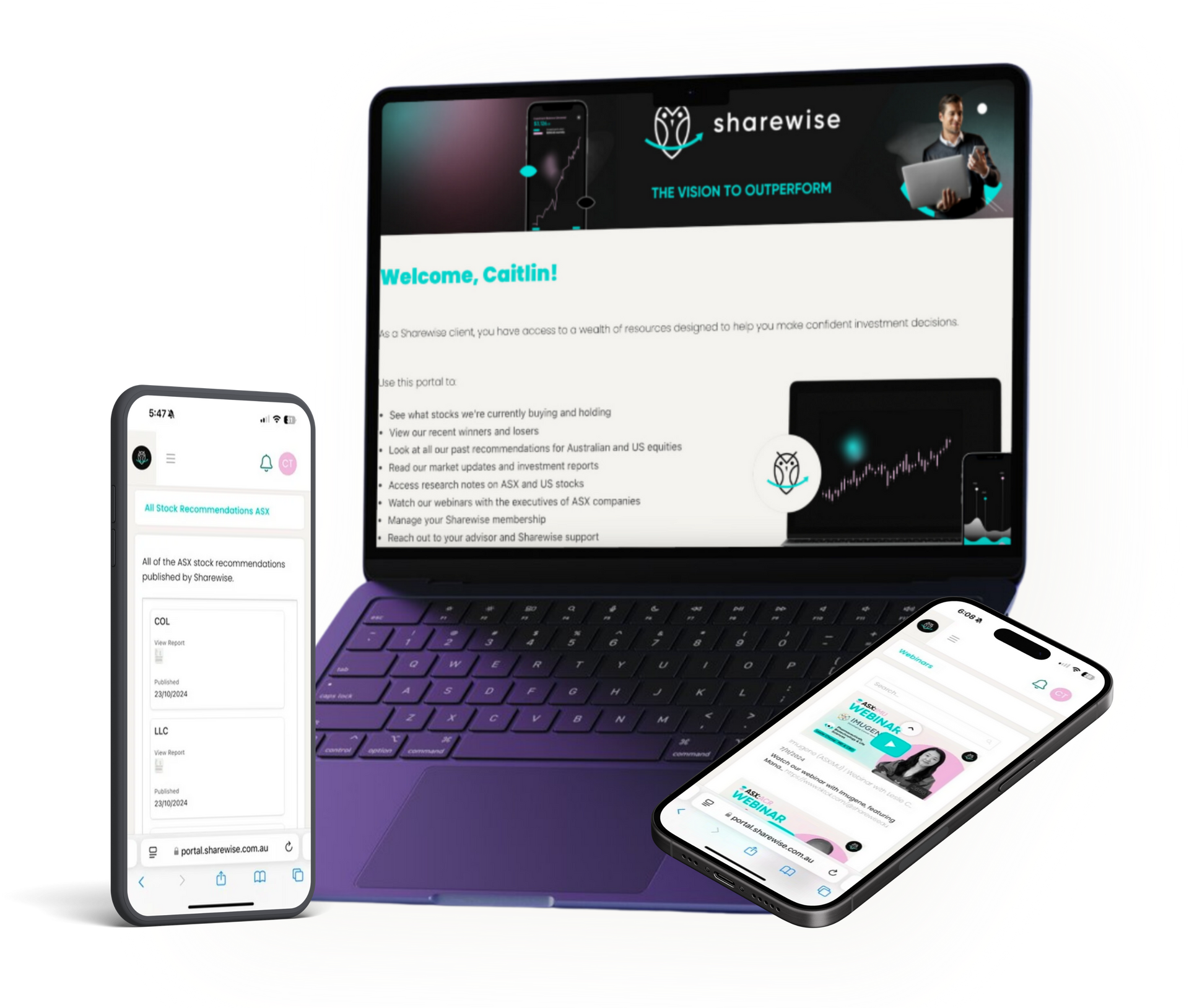
Real-time trade updates

View our open trades on US positions. See which stocks we're currently buying and holding.

Recommendation History

Access our recent winners and losers, as well as all our past published recommendations on  US equities.

In-depth Market Research

Keep up on the global market with our twice-daily updates, and institutional research notes on US stocks. Watch our webinars with the executives of public companies.

Simplified Communication

Connect directly with your share advisor and our support team for assistance whenever you need it. Manage your Sharewise membership and billing.

Stay Ahead Of Market Trends With Our Proficient Hong Kong Market Analysis

Investors need both technical and fundamental views of companies to navigate the HKEX effectively. Sharewise combines sector research with macroeconomic context to give you sharper insights.


In addition to fundamental analysis, we consider other additional including:


Technical Signals

To confirm both trends and momentum, to be able to anticipate shifts in both.


Sector Trends

Finance, real estate, and technology sectors are closely monitored for performance changes.


Macro Context

Analysing US monetary policy, mainland economic trends, and global trade factors.


Our analysts produce in-depth reports to include scenario analyses, to help investors consider both best-case and worst-case outcomes for sectors and indices. This structured approach gives our clients a framework for making decisions even in uncertain times.


For those asking “Can I invest in the Hong Kong stock market?” or “How to invest in Hong Kong stocks from Australia?”, our analysis provides the context needed to move forward with actionable insights and strategies.

Invest with Sharewise and make your money go further.

Frequently Asked Questions.

  • How often will I receive Hong Kong stock recommendations?

    All of Sharewise’s expert US stock recommendations and research reports are accessible through our secure online client portal. Investors can log in at any time to view in-depth stock analysis, market insights, and data-driven investment recommendations. Our platform also provides real-time alerts, ensuring you never miss critical updates that could impact your investment decisions.

  • What is included in the stock advisory reports?

    The frequency of stock recommendations depends on market conditions and emerging investment opportunities. Our team carefully evaluates the market, providing US stock tips when strong investment prospects arise. Some weeks may feature multiple recommendations, while others may have fewer, ensuring that each suggestion is backed by thorough research rather than arbitrary timing.

  • How do I interact with my dedicated advisor?

    Sharewise reports provide investors with comprehensive market intelligence, including fundamental and technical analysis, earnings forecasts, valuation metrics, and sector-specific insights. Each report explains the rationale behind our US stock market analysis, helping investors understand potential opportunities and risks before making a decision.

  • Do I have to open an account with Sharewise to get recommendations?

    Investors can communicate with their dedicated advisor via scheduled calls, emails, and virtual meetings. Our advisors offer professional guidance tailored to your investment goals, portfolio structure, and risk tolerance, ensuring you receive expert US stock market advice based on current market conditions.

  • Can I receive stock tips based on my personal risk profile?

    While an account is not required, opening one provides access to risk-managed recommendations, real-time alerts, and a more tailored investment experience. By creating an account, investors can receive strategy-driven insights aligned with their investment goals and market preferences.

  • How does the managed account option for Hong Kong stocks work?

    Yes, Sharewise customises investment recommendations to suit different risk profiles. Whether you prefer conservative, dividend-focused stocks or high-growth opportunities, our US stock advisor services ensure that your investment strategy aligns with your comfort level and long-term financial objectives.

  • What makes your Hong Kong stock advisory service worth choosing?

    With a managed account, Sharewise’s team actively oversees your portfolio, making strategic buy and sell decisions on your behalf. This service ensures that your investments are continuously optimised based on evolving market conditions, sector trends, and macroeconomic shifts, giving you a hands-off yet effective approach to portfolio management.

  • How often should I adjust my portfolio based on stock advice?

    When selecting an advisory service, investors should consider expertise, research depth, transparency, and track record. The best US stock advisors provide well-researched recommendations, timely updates and a client-focused approach to ensure that investment decisions are backed by credible insights rather than speculation. Sharewise excels in these areas, delivering institutional-grade research and expert-driven investment strategies, under the guidance of our Chief Investment Officer, Rabbi (Rabih) Ahmed.

  • What is the best long-term strategy for investing in HKEX stocks?

    Diversification across sectors is key. A balanced portfolio often includes financials, consumer stocks, technology, and defensive names such as utilities. Combining dividend-paying companies with growth stocks allows you to pursue capital appreciation without sacrificing stability. Our advisors help tailor strategies that reflect both your goals and tolerance for risk.

Latest Articles.

April 28, 2026
Get the latest on Genesis Minerals Limited (ASX:GMD), including stock performance, technical analysis, forecasts & key insights. See if GMD supports your goals.
April 24, 2026
Cochlear’s 40% decline exposes the limits of defensive stocks. Identify hidden risks, assess earnings durability and build a portfolio that holds under pressure.
April 24, 2026
This week's Stock Spotlight is ASX-listed Cochlear Limited . About Cochlear Limited. Cochlear Limited provides implantable hearing solutions for children and adults worldwide. The company offers cochlear implant systems, sound processor upgrades, bone conduction systems, and other products. It also provides cochlear nucleus systems, including Nucleus sound processors, smart bimodal hearing solution, and Nucleus implants; cochlear Baha systems comprising Baha 6 max sound processor and Baha implant; and accessories, such as wireless devices and Nucleus water-safe accessories. The company was founded in 1981 and is headquartered in Sydney, Australia. Source: EODHD Key Stats
April 23, 2026
Agentic AI is reshaping markets. Learn what it is, why it matters, and how investors can position for the next phase of AI-driven growth and opportunity.
April 23, 2026
About WHSP Holdings Limited WHSP Holdings Limited, an investment company, engages in investing various industries and asset classes in Australia. It operates through six segments: Strategic Portfolio, Large Caps Portfolio, Emerging Companies Portfolio, Private Equity Portfolio, Credit Portfolio, and Property Portfolio. The company invests in largely uncorrelated listed companies; managed listed equities; unlisted and growing companies; credit related financial instruments; and property development. It also engages in the manufacturing, distribution, and sale of building products. The company was formerly known as WASHINGTON H. SOUL PATTINSON AND COMPANY LIMITED and changed its name to WHSP Holdings Limited in September 2025. WHSP Holdings Limited was founded in 1872 and is headquartered in Sydney, Australia. Source: EODHD Key Stats
April 22, 2026
S&P 500 at all-time highs. Understand what’s driving the rally, the risks beneath the surface, and how to balance your portfolio for volatility and long-term growth.
April 22, 2026
This week's Stock Spotlight is ASX-listed Telstra Group Limited. About Telstra Group Limited. Telstra Group Limited provides telecommunications and information services in Australia and internationally. The company operates through six segments: Telstra Consumer; Telstra Business; Telstra Enterprise Australia; Telstra International; Networks, IT and Products; and Telstra InfraCo. It offers telecommunication and technology products and services to consumer and small and medium business customers using mobile and fixed network technologies, as well as operates call centers, retail stores, distribution network, digital channels, distribution systems, and Telstra Plus customer loyalty program. The company also provides network capacity and management, unified communications, cloud, security, industry solutions, integrated and monitoring services to government and large enterprise and business customers; wholesale services, including voice and data; and telecommunication products and services to other carriers, carriage service providers, and internet service providers, as well as builds and manages digital platforms. In addition, it operates the fixed passive network infrastructure, including data centers, exchanges, poles, ducts, pits and pipes, and fiber network; provides wholesale customers with access to network infrastructure; offers long-term access to components of infrastructure under the infrastructure services agreement; and operates the passive and physical mobile tower. The company was formerly known as Telstra Corporation Limited and changed its name to Telstra Group Limited in November 2022. Telstra Group Limited was founded in 1901 and is based in Melbourne, Australia. Source: EODHD Key Stats
April 17, 2026
Defence spending is no longer event-driven. With diplomacy faltering and budgets rising globally, here is why defence is becoming a structural trade.
April 16, 2026
Stagflation risk is rising as the RBA flags concern, with inflation staying elevated and growth slowing, reshaping markets, policy outlook and investor positioning.
April 15, 2026
From Diplomacy to Disruption In geopolitics, sentiment can turn quickly when underlying tensions are unresolved. The collapse of recent United States and Iran negotiations was not a sudden reversal, but the inevitable outcome of positions that were never aligned despite a brief window of optimism. On 8 April, markets rallied on the announcement of a two-week ceasefire. Oil fell 16% in its largest one-day decline since the pandemic, the ASX rose 2.6%, and Qantas Airways Limited gained 9% as investors priced in easing risk. Within seventy-two hours, that optimism reversed. Talks collapsed after 21 hours in Islamabad, the United States imposed a naval blockade on Iranian ports, and markets repriced sharply. Oil moved back above US$104 per barrel, the Australian dollar weakened, and the Reserve Bank of Australia acknowledged rising stagflation risk. This was not a gradual deterioration but a rapid shift from diplomacy to enforcement. Markets had priced in peace, but what existed was only a temporary pause with no shared end state. The failure of talks did not create risk, it revealed it. The blockade represents a decisive escalation, but also a broader signal that economic coercion is once again a primary tool of statecraft. What the Talks Were Trying to Achieve Before examining why the Islamabad talks failed, it is necessary to understand the scale of what they were attempting to deliver. The negotiations aimed to establish a verified framework to constrain Iran’s nuclear programme in exchange for sanctions relief, effectively a successor to the agreement abandoned in 2018. Attempting to reach such an outcome during an active conflict, within a compressed timeframe, left limited room for compromise. The United States entered with clear non-negotiable demands. These included verifiable limits on uranium enrichment, dismantling advanced centrifuge infrastructure, removal of highly enriched uranium stockpiles, and cessation of funding for regional militant groups such as Hezbollah. Iran’s position moved in the opposite direction. Tehran sought full sanctions relief, recognition of its right to enrich uranium, security guarantees against future military action, compensation for war-related damage, and recognition of its influence over the Strait of Hormuz. Despite these differences, expectations remained cautiously constructive. Both sides faced genuine pressure. Iran’s oil revenues had been disrupted, while the United States was managing elevated fuel prices and domestic political sensitivity. Pakistan’s role as a neutral intermediary enabled both delegations to engage. The incentives to negotiate were present, but the underlying positions remained structurally incompatible. The Breakdown: Why Talks Collapsed The collapse of the talks was not a last-minute failure. The structural conditions required for agreement were absent from the outset, and the 21 hours of discussions confirmed this reality. Three fault lines defined the negotiations. The first was a deep trust deficit. Iran’s position was shaped by the 2018 withdrawal from the original agreement and the reimposition of sanctions despite prior compliance. From Tehran’s perspective, any new agreement carried a high risk of being abandoned. The United States viewed Iran’s continued enrichment activity as evidence of bad faith. Both positions were grounded in recent history, making compromise difficult. The second fault line was the absence of a credible enforcement framework. The United States required verifiable nuclear concessions before offering sanctions relief. Iran demanded sanctions relief as a precondition for any concessions. Both positions are internally consistent but incompatible. Without a trusted third-party verification mechanism, sequencing could not be resolved. The third was a mismatch in timelines and strategic priorities. The United States sought rapid, measurable outcomes. Iran’s position reflected a longer-term strategic approach in which its nuclear programme is tied to sovereignty and long-term security. These perspectives could not be reconciled within a compressed negotiation window. The breakdown reflected structural incompatibility rather than negotiation failure. The speed of escalation that followed highlighted how little room there was for delay. The Pivot: Why the United States Chose a Naval Blockade With diplomacy exhausted, the United States faced limited options. Accepting a nuclear-capable Iran with influence over a critical energy corridor was not politically viable. Resuming direct military strikes carried significant escalation and diplomatic risks. Economic pressure emerged as the most viable alternative, targeting Iran’s primary revenue source through oil exports. Iran’s oil sector generates approximately USD45 billion annually, or around 13% of GDP, with exports near 1.85 million barrels per day. Disrupting this flow applies direct economic pressure without the costs associated with military engagement. A naval blockade allows enforcement to take effect immediately through interception and rerouting of vessels. The blockade offers three advantages. It delivers immediate impact, carries lower political cost than military strikes, and provides flexibility. Enforcement can be scaled depending on Iran’s response, maintaining leverage. Its scope is also deliberate. The blockade targets Iranian ports while allowing freedom of navigation through the Strait of Hormuz for non-Iranian traffic. This approach aims to restrict Iranian exports without fully disrupting global energy flows. Its effectiveness depends on the compliance of third-party actors such as China, India and Russia, which remain the key variable in determining outcomes. The First 72 Hours: Theory Becoming Real-World Disruption The events following the collapse illustrate how quickly geopolitical decisions translate into economic outcomes. On 12 April, negotiations ended with conflicting statements and oil moved higher in after-hours trading. Within 48 hours, the blockade was implemented. Shipping routes were adjusted, insurance costs increased, and vessels carrying Iranian crude faced interception risk. Risk-sensitive currencies weakened, oil prices rose, and Asia-Pacific equities declined. By 14 April, the effects had extended into corporate earnings and sentiment. Qantas Airways Limited warned of up to AUD800 million in additional fuel costs. Westpac Banking Corporation and National Australia Bank flagged deteriorating credit conditions. Consumer sentiment declined sharply. The Reserve Bank of Australia warned of a potential stagflationary shock. These developments emerged within forty-eight hours of the blockade, demonstrating how quickly geopolitical risk now feeds through markets and the real economy. Market and Economic Implications: From Global Shock to Domestic Transmission At the global level, the brief removal of the risk premium during the ceasefire has fully reversed. The blockade directly threatens Iran’s oil exports, which were running at approximately 1.7 million barrels per day, tightening already constrained physical markets. Even where actual supply disruption remains contained, the reintroduction of uncertainty has been sufficient to drive price volatility. At the same time, freight and insurance markets are repricing risk across key shipping routes, with disruptions likely to persist well beyond any near-term diplomatic resolution. The situation also introduces new geopolitical flashpoints, particularly around enforcement, including the potential targeting of third-party vessels, which could materially escalate tensions. These global pressures are now transmitting directly into the Australian economy through multiple channels. The most immediate is fuel and inflation. Australia imports close to 90% of its refined fuel, making it highly exposed to sustained increases in oil prices. The cost pressures flagged by Qantas Airways Limited are indicative of a broader dynamic affecting transport, logistics and manufacturing. Persistently elevated oil prices are likely to flow through to headline inflation, complicating the policy outlook for the Reserve Bank of Australia. This feeds directly into interest rate expectations. Markets are increasingly pricing further tightening as the central bank balances rising inflation against slowing growth. The use of stagflationary language by policymakers signals a willingness to prioritise inflation control, even at the expense of economic momentum. At the corporate level, early warnings from institutions such as Westpac Banking Corporation and National Australia Bank point to rising credit stress and deteriorating business conditions as higher input costs and borrowing rates converge. Equity markets are already reflecting these shifts. The rotation observed during the ceasefire period has reversed, with energy producers benefiting from higher prices while banks and consumer-facing sectors come under renewed pressure. More broadly, the environment reinforces a defensive positioning bias, with dispersion increasing across sectors as investors respond to a combination of higher costs, tighter financial conditions and elevated geopolitical risk. Conclusion: A Shift from Hope to Reality The pace of this escalation is the defining feature. Markets moved from a ceasefire-driven rally to pricing an active naval blockade within seventy-two hours, while policymakers shifted from cautious optimism to openly discussing stagflation within the same week. What changed was not the underlying reality, but the market’s understanding of it. Diplomacy created hope, but the structural differences between the United States and Iran meant a durable agreement was never in place. The blockade is now the central fact shaping global energy markets and will remain so until one of three outcomes emerges: a credible return to negotiations, economic pressure forcing Iranian concessions, or escalation into a broader conflict. In the meantime, the reintroduction of a sustained geopolitical risk premium is already feeding through commodities, trade flows, monetary policy expectations and corporate earnings. For Australian investors, the implication is clear. The question is no longer whether this matters, but whether it is being understood with sufficient clarity to inform deliberate decisions. With CPI data, an election cycle and the next Reserve Bank of Australia meeting all imminent, the coming weeks represent a critical window. This is not simply another news cycle. It is a live macro shock, and how it is interpreted will directly shape outcomes across portfolios, policy and the broader economy.
April 14, 2026
Get the latest on Wesfarmers Limited (ASX:WES), including stock performance, technical analysis, forecasts & key insights. See if WES supports your goals.
April 10, 2026
Learn how to balance defensive and cyclical stocks in today’s market, understand risks, and position your portfolio to manage volatility and capture opportunities.
Show More

Navigate the HKEX with Expert Guidance

Book your Free Call with an Investment Manager below.

Invest with Sharewise and make your money go further.