
Asia on the Brink as the Oil Shock Hits Hard

Recent military strikes and heightened security risks have disrupted tanker movements through the corridor. Shipping activity collapsed, with flows plunging by as much as 86% at their lowest point, falling from a 2026 average of nearly 20 million barrels per day to just 2.8 million barrels in a single day, as tanker operators suspended transits and insurers withdrew coverage almost immediately. Energy markets reacted quickly, with crude prices surging above US$110 to US$120 per barrel as traders priced in a rising geopolitical risk premium.
The ripple effects have extended beyond energy markets. Equity markets across Asia swung sharply as investors reassessed the implications of a sustained oil shock. In India, the Sensex dropped roughly 2,400 points in a single trading session as oil surged, highlighting how sensitive regional markets are to rising energy costs.
For Asia, the risk is structural. Around 84% of the oil shipped through the Strait of Hormuz ultimately flows to Asian economies, and the region's rapid industrialisation, manufacturing dominance and deep reliance on imported energy make it uniquely sensitive to disruptions in crude markets. A sustained oil surge of this magnitude could reintroduce inflationary pressures, strain trade balances and trigger renewed volatility across regional equity markets. In many ways, Asia now faces a familiar dilemma: strong economic momentum colliding with an external energy shock it cannot control.
Asia’s Structural Vulnerability to Oil Shocks
Asia’s exposure to oil price volatility reflects the structure of its energy consumption. The region accounts for roughly 40% of global oil demand, driven primarily by China, India, Japan and South Korea. Domestic production covers only a limited share of this demand, leaving these economies heavily dependent on imported crude. Decades of rapid industrial expansion and export oriented manufacturing have entrenched this dependency. When supply tightens, there is little domestic capacity to cushion the shock. Rising oil prices flow rapidly into industrial costs, freight expenses and consumer inflation.
Strategic petroleum reserves offer limited short term protection. Japan and South Korea maintain large stockpiles equivalent to around 254 and 210 days of import cover respectively. These reserves provide a buffer against temporary supply disruptions. Across much of Southeast Asia the situation is far less comfortable. Strategic reserves are smaller and fiscal capacity to absorb higher fuel costs is constrained. In several economies net fossil fuel imports already exceed three percent of gross domestic product. Prolonged price spikes would therefore place immediate pressure on both inflation and public finances.
Geography intensifies this vulnerability. Most of Asia’s imported energy travels through narrow maritime corridors before reaching refineries and distribution networks. The Strait of Hormuz remains the most critical of these routes. The Strait of Malacca forms another bottleneck for shipments heading into East Asia. If flows through the Persian Gulf are disrupted, tankers must divert to longer routes. Transit times increase, freight costs rise and congestion builds along already crowded shipping lanes.
The economic implications are clear. Energy shocks rarely spread evenly across the global economy. Asia carries a disproportionate share of the risk. Heavy reliance on imported oil, limited domestic production and exposure to vulnerable shipping routes mean disruptions in global energy markets quickly translate into inflation pressure, currency volatility and slower economic growth.
Inflation Risks Re-Emerge
Energy sits at the centre of Asia's economic cost structure, feeding directly into transport, manufacturing, electricity generation and food distribution. Oil shocks tend to pass through quickly and broadly across the region's economies, lifting production and freight costs, compressing corporate margins and ultimately feeding into consumer inflation.
This creates a difficult policy dilemma for central banks. Tightening interest rates to contain oil-driven inflation risks weakening domestic demand, while easing policy to support growth could trigger currency depreciation and capital outflows. Markets have already begun repricing this risk, with expectations for rate cuts in parts of Asia being pared back as the energy shock intensifies. Under a severe scenario, Goldman Sachs estimates a six-week closure of the Strait of Hormuz could lift regional inflation by around 0.7 percentage points, while other estimates suggest the conflict could add between 7 and 27 basis points to headline CPI across the region.
Currency movements amplify the problem. Oil is priced globally in US dollars. When geopolitical stress pushes investors toward the dollar, the local currency cost of imported energy rises. A stronger dollar therefore deepens the inflation shock for energy importing economies. The combination of higher input costs, rising inflation and currency volatility creates a difficult environment for policymakers and investors.
Economic Growth at Risk
Pressure on Consumption
Rising oil prices ultimately function as a tax on economic activity. Higher fuel costs reduce household purchasing power and increase operating expenses for businesses, creating a broad drag on economic momentum. Across many Asian economies, where transport and energy costs represent a meaningful share of household spending, the squeeze on disposable income can quickly translate into weaker consumer sentiment and softer retail demand.
Industrial Margin Compression
The impact is particularly pronounced in manufacturing-heavy economies that rely on global trade and stable input costs. Industries across the region depend on affordable energy to sustain production and maintain competitiveness in export markets. A sustained rise in crude prices therefore risks compressing industrial margins while increasing the cost of transporting goods across already strained supply chains. Even modest shifts in energy prices can have measurable macroeconomic consequences. Estimates suggest that if crude oil were to remain around US$110 per barrel for a prolonged period, it could shave roughly 0.4 percentage points from Japan’s annual GDP growth, a significant impact for an economy with relatively low potential growth.
Currency and Trade Pressures
Currency dynamics may further complicate the outlook. Oil shocks are typically accompanied by a stronger US dollar as investors move toward safe-haven assets. While weaker regional currencies can support export competitiveness in US dollar terms, they simultaneously raise the cost of imported energy and increase the burden of servicing US dollar-denominated debt. The result is often a deterioration in current account balances across oil-importing economies, adding another layer of pressure to regional growth prospects.
Diverging Outcomes Across Equity Markets
Energy shocks rarely affect equity markets evenly. Instead, they tend to produce sharp divergence between sectors that benefit from rising commodity prices and those that face higher input costs.
Potential Beneficiaries
Energy producers and upstream oil and gas companies are typically the most immediate beneficiaries. Higher crude and LNG prices translate directly into stronger revenues, improved cash flows and upgraded earnings expectations. Oilfield services companies may also see improved demand as elevated prices incentivise exploration, maintenance and production activity. Shipping companies, particularly crude tanker operators, can benefit as disruptions to supply routes increase freight rates and extend voyage distances. Precious metals producers may also attract renewed investor interest as geopolitical risk and inflation uncertainty strengthen the case for safe-haven assets such as gold.
Sectors Under Pressure
Fuel-intensive sectors face significant headwinds. Airlines are particularly exposed given that jet fuel represents a substantial share of operating costs. Chemical and petrochemical producers may experience margin compression as higher feedstock prices erode profitability. Consumer discretionary sectors are vulnerable as rising fuel costs and tighter financial conditions reduce household spending capacity. Transportation and logistics companies face similar challenges, as fuel surcharges rarely offset the full impact of sustained cost increases.
Regional Market Sensitivities
Market performance across Asia is unlikely to move in lockstep. Economies with heavier exposure to imported oil face sharper economic adjustments and greater equity market volatility. Investors should expect widening performance gaps between sectors and between national markets as the oil shock continues to filter through the regional economy.
Implications for Australian Investors
Australia occupies a complex position in the current oil shock. Despite being a major energy exporter, the country imports around 90% of its refined liquid fuel, meaning higher crude prices flow through quickly to petrol and diesel costs at the bowser. Estimates suggest that every US$10 increase in oil prices can reduce Australian GDP growth by roughly 0.24 percentage points, making the economy relatively sensitive to sustained price spikes.
At the same time, Australia stands to benefit from higher energy prices. As one of the world's largest exporters of liquefied natural gas, the country supplies an Asia-Pacific region that remains heavily dependent on imported energy. Stronger oil and gas prices can therefore translate into improved export revenues and stronger earnings across the domestic energy sector.
This dynamic is already visible in equity markets. Woodside Energy (ASX: WDS) has risen more than 30% in 2026, recently reaching around $31.50, supported by strong production and a dividend yield above 5%. Santos (ASX: STO) has also climbed more than 20% this year, aided by the start-up of the Barossa LNG project and tightening regional energy supply.
For investors, the result is a more nuanced picture. While higher oil prices create broader macroeconomic risks, exposure to energy producers can provide a meaningful hedge against geopolitical shocks and commodity-driven inflation.
Market Outlook: Navigating a Fragile Energy Moment
Near-term volatility is likely to remain the base case across Asian and Australian equity markets. The oil shock of March 2026 is more than a geopolitical episode. It is a reminder of Asia's deep structural dependence on imported energy, and a stress test of a regional growth model built on affordable fuel, strong manufacturing capacity and tightly integrated supply chains.
For Australian investors, the implications are mixed. Higher oil and gas prices provide a clear tailwind for energy producers, a trend already reflected in the strong performance of ASX energy stocks. At the same time, rising fuel costs risk pushing inflation higher and delaying monetary easing, creating headwinds for consumer-facing sectors and interest-rate-sensitive parts of the market. Navigating this environment requires balanced positioning rather than betting on a single outcome.
Several key indicators will shape how markets evolve in the weeks ahead. Tanker traffic through the Strait of Hormuz remains the clearest signal of whether the supply shock is intensifying or easing. Oil prices will be critical, particularly whether Brent crude holds above US$100 per barrel. Upcoming inflation data across Asia and central bank communications, including from the Reserve Bank of Australia, will also shape expectations for interest rates and economic growth.
History suggests that oil shocks often mark turning points in the global macro cycle. A sustained rise in energy prices can reshape inflation dynamics, shift monetary policy trajectories and drive significant sector rotation in equity markets. For investors, the priority is not reacting to daily price movements, but understanding the structural forces at play and positioning portfolios accordingly.
Subscribe to our newsletter
Disclaimer: This article does not constitute financial advice nor a recommendation to invest in the securities listed. The information presented is intended to be of a factual nature only. Past performance is not a reliable indicator of future performance. As always, do your own research and consider seeking financial, legal and taxation advice before investing.
Speak to an Advisor

Big Tech reports next week. Learn how to read earnings releases and filings, and what to look for in AI spending, cloud growth, cash flow and guidance.

Understand how AI investment could affect global financial stability, as the IMF and RBA warn of rising debt, market concentration and funding risks.

Firmus’ proposed mega-IPO puts a spotlight on the cost, capital intensity and risks of building AI infrastructure as investors weigh the next phase of the AI boom.
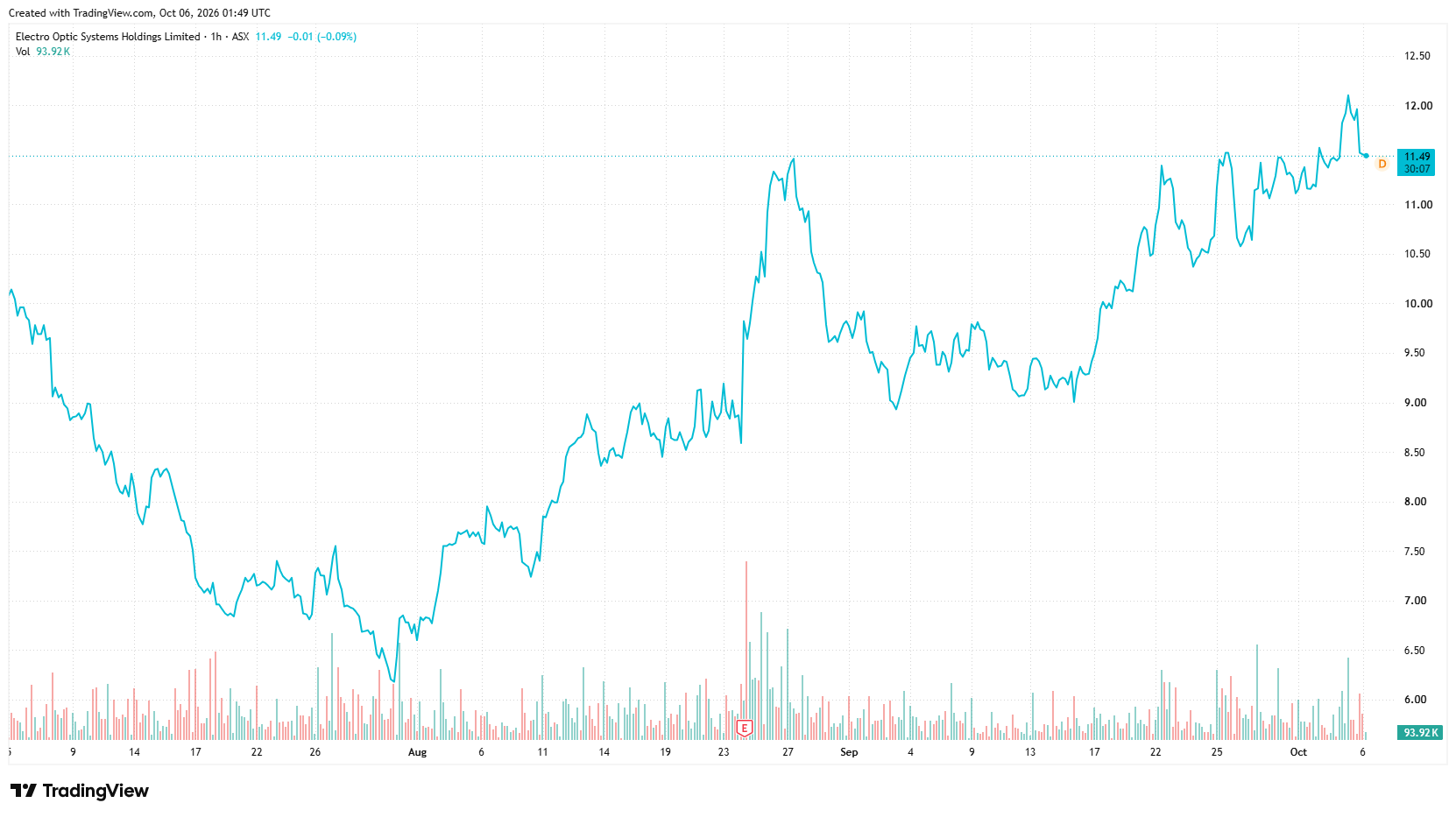
About Electro Optic Systems Holdings Ltd. Electro Optic Systems Holdings Limited engages in the development, manufacture, and sale of telescopes and dome enclosures, laser satellite tracking systems, remote weapon systems, and high laser weapon. It operates through Defense Systems and Space Systems segments. The company develops, manufactures, and markets fire control, surveillance, weapon systems, and high energy laser to military customers. It also provides passive optical and laser sensing equipment; optical, microwave and on-the-move radio and satellite products; and laser-based surveillance systems with space tracking capability. In addition, the company offers counter-drone, firepower, force protection, and UGV and marine lethality systems, as well as high energy laser weapon; optical tracking systems, space control, space domain awareness, satellite laser ranging, space sustainability, and precision optics. It operates in Australia, the United States, Singapore, the United Arab Emirates, the United Kingdom, New Zealand, the Netherlands, North America, Germany, and rest of Europe. Electro Optic Systems Holdings Limited was founded in 1983 and is based in Symonston, Australia. Source: EODHD Key Stats
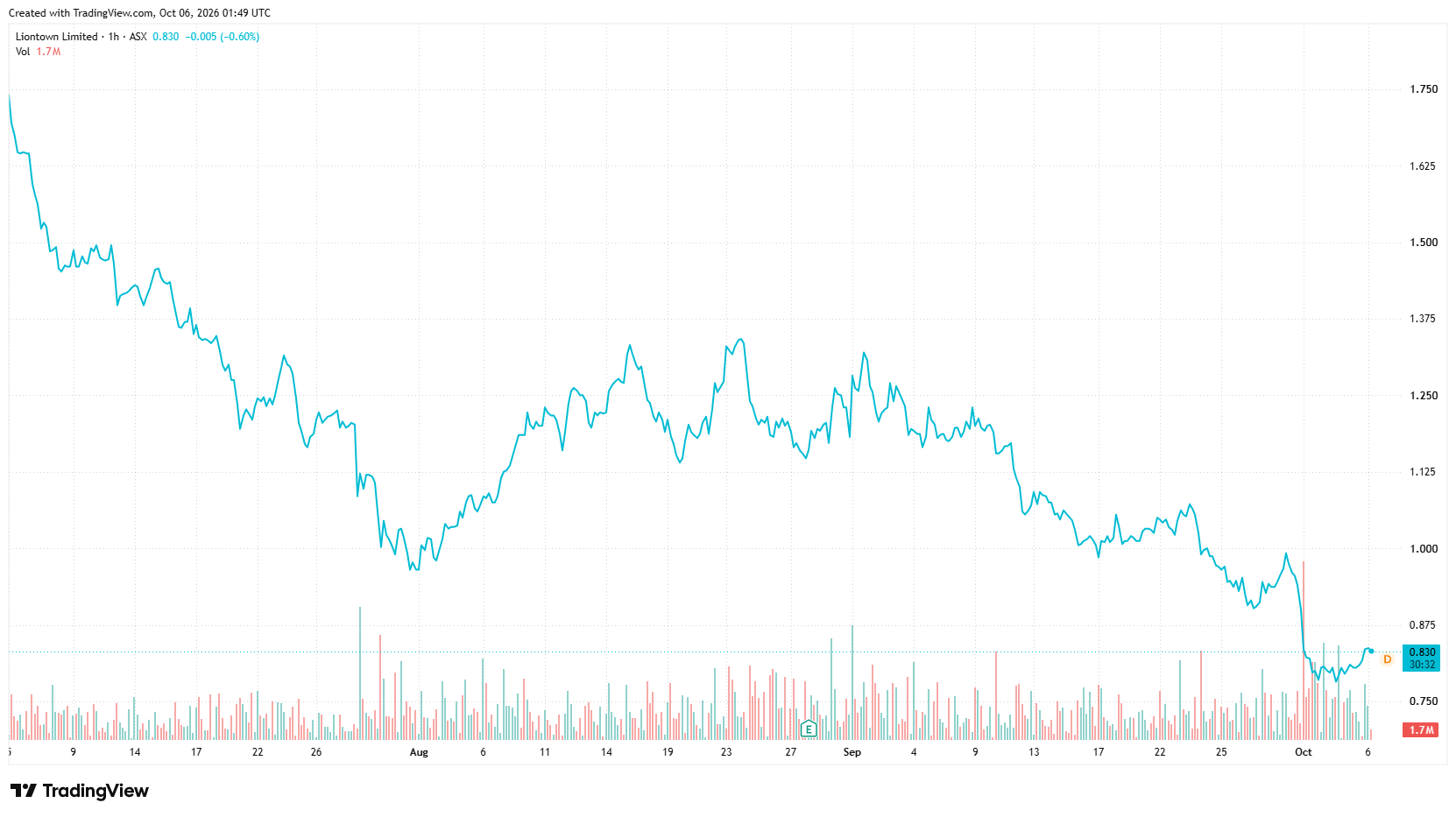
About Liontown Ltd. Liontown Limited engages in the exploration, evaluation, and development of mineral properties in Australia. It primarily explores for lithium, gold, and nickel deposits. The company's flagship property is the Kathleen Valley lithium project located in Perth, Western Australia. The company was formerly known as Liontown Resources Limited and change its name to Liontown Limited in November 2025. Liontown Limited was incorporated in 2006 and is headquartered in West Perth, Australia. Source: EODHD Key Stats

The RBA has raised rates to 4.60% as inflation pressures persist. Explore the impact of energy costs, AI demand and the key signals investors should watch next.

Discover how advances in genomics, AI, diagnostics and gene editing are creating a broader healthcare opportunity and where commercial value is emerging.

The AI trade is being forced to rethink the pace of progress. Here is what investors should watch across Nvidia, chips, AI spending, software and adoption.

Copper is at a record high, yet the global market still has a surplus. So where is all the copper, and why is it becoming harder to find?

Sharewise CEO Alex Perry sat down with ausbiz to unpack how the platform approached FY26, a year in which it reported an ASX return of almost 11% and a US return above 32%. The conversation ranged from the AI infrastructure theme to specific names on Perry's radar in resources and quantum computing. Here's a rundown of the key points.
