
S&P 500 at All-Time Highs: Why Portfolio Balance Matters More Than Ever

On the surface, record highs suggest strength and confidence. Markets do not reach these levels without solid earnings, supportive liquidity and sustained investor demand. Beneath the headline numbers, the picture is more nuanced. Participation remains uneven, risks have not disappeared, and portfolio positioning has become increasingly important.
For investors, the question is not whether markets can continue higher. They often do. The more relevant question is how portfolios are positioned at a time when optimism and risk sit side by side.
What Is Driving the Rally
Before assessing whether current conditions warrant optimism or caution, it is important to understand what has driven the S&P 500 to these levels. Not all rallies are built the same way, and the underlying drivers shape how sustainable they are.
Four key forces have supported the current advance.
The first is artificial intelligence. The AI-driven earnings and capital expenditure cycle has become a significant tailwind for the largest companies in the index. Firms such as Nvidia, Microsoft, Meta Platforms and Alphabet have delivered results that exceeded expectations, reinforcing confidence in sustained demand for AI infrastructure and services. Markets are increasingly pricing in productivity gains linked to this investment cycle, and earnings have so far supported that view.
The second is resilient corporate profitability. Despite a higher interest rate environment, earnings growth has remained strong. Expectations pointed to double-digit earnings growth in early 2026, and a high proportion of companies delivered positive surprises. This has provided a solid foundation for valuations, even as macro conditions remain mixed.
The third is liquidity. While central banks, including the Reserve Bank of Australia, have maintained restrictive policy settings, global financial conditions have remained supportive of risk assets. In the United States, the Federal Reserve has held rates steady while signalling potential easing ahead, helping sustain capital flows into equities, particularly in growth-oriented sectors.
The fourth is oil. A partial easing in geopolitical tensions, including signals around the reopening of key shipping routes such as the Strait of Hormuz, has led to a pullback in crude prices from recent highs. Lower energy costs reduce inflationary pressure across the economy, easing pressure on consumers and businesses while giving central banks greater flexibility.
These are tangible drivers. The rally is supported by earnings growth, investment trends and macro developments. However, these forces are concentrated in specific sectors and companies, which has implications for how risk is distributed beneath the surface.
A Strong Index, But a Narrow Market Beneath the Surface
One of the defining features of the current rally is concentration.
While the S&P 500 continues to reach new highs, much of its performance has been driven by a relatively small group of large-cap companies, particularly those linked to technology and artificial intelligence. The so-called Magnificent Seven — Apple, Microsoft, Alphabet, Amazon, Nvidia, Meta Platforms and Tesla — have delivered outsized gains and account for a disproportionate share of index returns.
This has created a divergence between the index and the broader market. While headline performance remains strong, a large portion of the underlying constituents have delivered more modest returns, with many not participating meaningfully in the rally.
The structure of the index amplifies this effect. As a market capitalisation-weighted benchmark, the largest companies exert the greatest influence on its level. When a small number of mega-cap stocks rise significantly, they can drive the index higher regardless of what is happening across the majority of stocks.
For investors, this has practical implications. Exposure to the S&P 500 through index funds or ETFs often results in a higher level of concentration than expected. While the index appears diversified, actual portfolio exposure is skewed toward a handful of dominant companies and a single prevailing theme.
This is not inherently a negative outcome. These companies have delivered strong earnings growth and continue to benefit from structural tailwinds. However, it does mean that portfolio performance is increasingly tied to a narrow set of drivers.
The key consideration is whether this concentration is intentional. Passive exposure is not neutral. It reflects the current composition of the market, which at this stage is heavily weighted toward large-cap technology and AI-related names.
Why All-Time Highs Are Not the Real Risk
One of the most persistent beliefs among retail investors is that buying at an all-time high is inherently dangerous, based on the assumption that markets must correct after reaching a new peak. Historical evidence does not support this view.
Every all-time high follows a previous one. Since recovering from the 2022 bear market and reaching a new record in early 2024, the S&P 500 has continued to set new highs through 2025. During sustained bull markets, record levels tend to cluster rather than occur in isolation. The long-term trajectory of equity markets is upward, and each point along that path was, at one stage, a record.
For long-term investors, entry at all-time highs has historically produced favourable outcomes over one, three and five-year horizons. The greater risk has often been remaining on the sidelines. Attempts to avoid investing at perceived peaks frequently result in missed opportunities, particularly when markets continue to trend higher.
Recent market behaviour reinforces this pattern. Investors who remained invested through the March 2026 sell-off experienced a temporary decline of around 9%, but have since recovered as the index returned to record levels. Those who exited during the downturn converted short-term volatility into permanent losses.
The key issue is not the level of the market, but how portfolios are positioned at that level. Excessive exposure to a single sector or theme increases vulnerability if conditions shift. A more balanced portfolio is better equipped to absorb drawdowns and participate in recovery.
All-time highs are not a signal to react. They are a point to reassess whether portfolio positioning aligns with the current environment and the risks that may emerge from it.
Where Risk Is Building Beneath the Surface
Despite strong headline performance, several areas of risk are building within the current market environment.
Valuations in certain sectors, particularly high-growth technology names, have expanded significantly. While supported by earnings expectations, these valuations leave less margin for error if growth disappoints or if interest rates remain elevated for longer.
Macro risks also remain. Inflation has moderated but is still above central bank targets. Monetary policy remains restrictive, and the path of interest rates is uncertain. Geopolitical tensions continue to influence commodity prices, supply chains and investor sentiment.
Another consideration is correlation risk. During periods of market stress, assets that typically behave differently can move in the same direction. This can reduce the effectiveness of diversification, particularly in portfolios heavily tilted toward growth or risk-sensitive sectors.
Risk is not absent. It is simply less visible during periods of strong performance.
Why Portfolio Balance Becomes Critical at Market Peaks
As markets move higher, the importance of portfolio construction increases.
In earlier stages of a cycle, when valuations are lower and growth is accelerating, more concentrated positioning can be rewarded. As markets mature and valuations rise, the margin for error narrows. Higher prices require stronger outcomes to be sustained, and any deviation can result in sharper corrections.
This is where balance becomes critical. Not because a downturn is certain, but because the relationship between upside and downside shifts. Momentum can persist, and the forces driving the rally remain credible. However, portfolios built solely to capture upside become more exposed if conditions change.
A balanced portfolio allows investors to participate in gains while maintaining resilience.
Growth and cyclical
exposures provide upside participation. If earnings continue to expand or policy becomes more supportive, these segments are likely to benefit.
Defensive
exposures provide stability and income. Businesses with consistent demand and stable cash flows tend to hold value more effectively during volatility. They help preserve capital and reduce overall variability.
Cash and short-duration fixed income
add flexibility. With interest rates elevated, these assets can generate meaningful income while preserving capital. They also provide optionality, allowing investors to deploy capital when more attractive opportunities emerge.
The objective is not to remove risk. It is to manage it in a way that allows the portfolio to perform across different environments. A balanced portfolio is better positioned to absorb drawdowns and remain invested through uncertainty.
At market highs, this balance is not a defensive posture. It is a strategic one.
Practical Framework: Positioning From Here
Assessing portfolio positioning does not require complex modelling. A structured and honest review can provide meaningful insight into how a portfolio is likely to behave in the current environment.
The first step is exposure assessment. Investors should understand which sectors and themes are driving returns, including indirect exposure through index funds or superannuation. Many portfolios are heavily tilted toward growth, technology and AI-related names. This is not inherently wrong, but it should be deliberate.
The second step is evaluating balance. Consider how your portfolio is split between growth-oriented positions and defensive or income-generating assets. With interest rates elevated and geopolitical risks still present, concentrated portfolios are more sensitive to shifts in sentiment.
The third step is a simple stress test. Consider how your portfolio would respond to a market correction or a change in macro conditions. If the outcome suggests significant drawdowns or pressure to react, it may indicate that the current level of risk is not aligned with your tolerance.
This is not about taking a negative view. It is about ensuring your portfolio allows you to stay invested through volatility, which remains the most consistent driver of long-term outcomes.
Strength Requires Discipline
Markets can continue to move higher from current levels. The forces driving this rally are credible, and momentum can persist longer than many investors expect. There is no clear signal that the current bull market is nearing its end.
However, the investors who navigate these periods most effectively are not those who attempt to time the peak. They are those who maintain discipline in how their portfolios are constructed. This includes avoiding excessive concentration in recently outperforming sectors, maintaining exposure to defensive assets that may appear unnecessary during strong markets, and preserving liquidity to act when conditions change.
The strength of the S&P 500 reflects genuine momentum in parts of the market, but risks remain beneath the surface. Market leadership is concentrated, valuations are elevated in certain areas, and macro uncertainty has not been fully resolved.
This is not a reason to step away from the market. It is a reminder to focus on preparation. A balanced portfolio allows investors to participate in continued upside while remaining positioned to manage volatility when it inevitably returns.
At record highs, the question is not whether to stay invested. It is whether your portfolio is built to handle what comes next.
Not sure how your portfolio is positioned for today’s market?
Understanding the market is one thing. Knowing how your portfolio is structured, and whether it aligns with your risk tolerance and long-term objectives is another.
Our advisers work with clients across different markets to provide clear, practical insights into portfolio positioning.
Subscribe to our newsletter
Disclaimer: This article does not constitute financial advice nor a recommendation to invest in the securities listed. The information presented is intended to be of a factual nature only. Past performance is not a reliable indicator of future performance. As always, do your own research and consider seeking financial, legal and taxation advice before investing.
Speak to an Advisor

Big Tech reports next week. Learn how to read earnings releases and filings, and what to look for in AI spending, cloud growth, cash flow and guidance.

Understand how AI investment could affect global financial stability, as the IMF and RBA warn of rising debt, market concentration and funding risks.

Firmus’ proposed mega-IPO puts a spotlight on the cost, capital intensity and risks of building AI infrastructure as investors weigh the next phase of the AI boom.
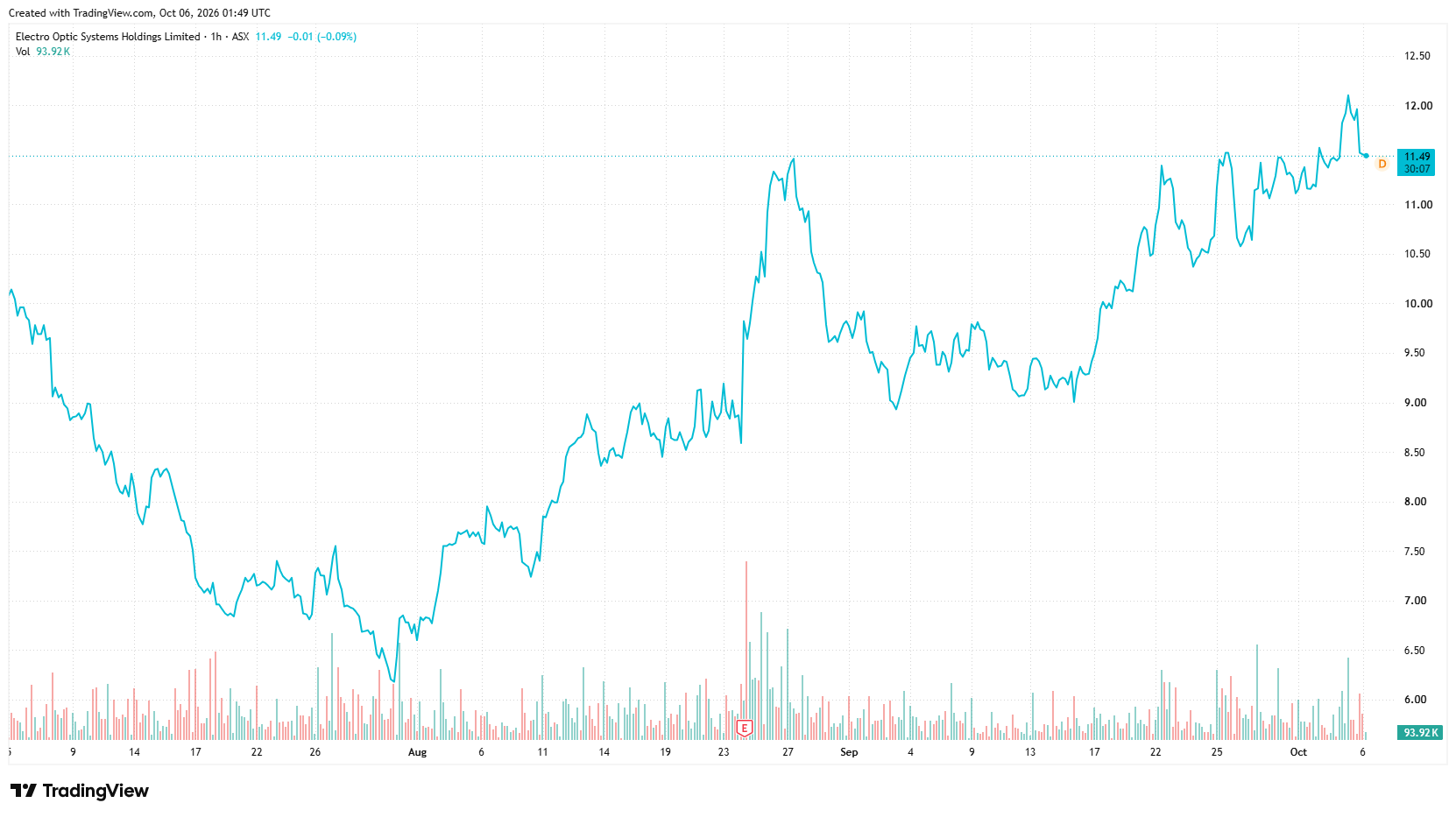
About Electro Optic Systems Holdings Ltd. Electro Optic Systems Holdings Limited engages in the development, manufacture, and sale of telescopes and dome enclosures, laser satellite tracking systems, remote weapon systems, and high laser weapon. It operates through Defense Systems and Space Systems segments. The company develops, manufactures, and markets fire control, surveillance, weapon systems, and high energy laser to military customers. It also provides passive optical and laser sensing equipment; optical, microwave and on-the-move radio and satellite products; and laser-based surveillance systems with space tracking capability. In addition, the company offers counter-drone, firepower, force protection, and UGV and marine lethality systems, as well as high energy laser weapon; optical tracking systems, space control, space domain awareness, satellite laser ranging, space sustainability, and precision optics. It operates in Australia, the United States, Singapore, the United Arab Emirates, the United Kingdom, New Zealand, the Netherlands, North America, Germany, and rest of Europe. Electro Optic Systems Holdings Limited was founded in 1983 and is based in Symonston, Australia. Source: EODHD Key Stats
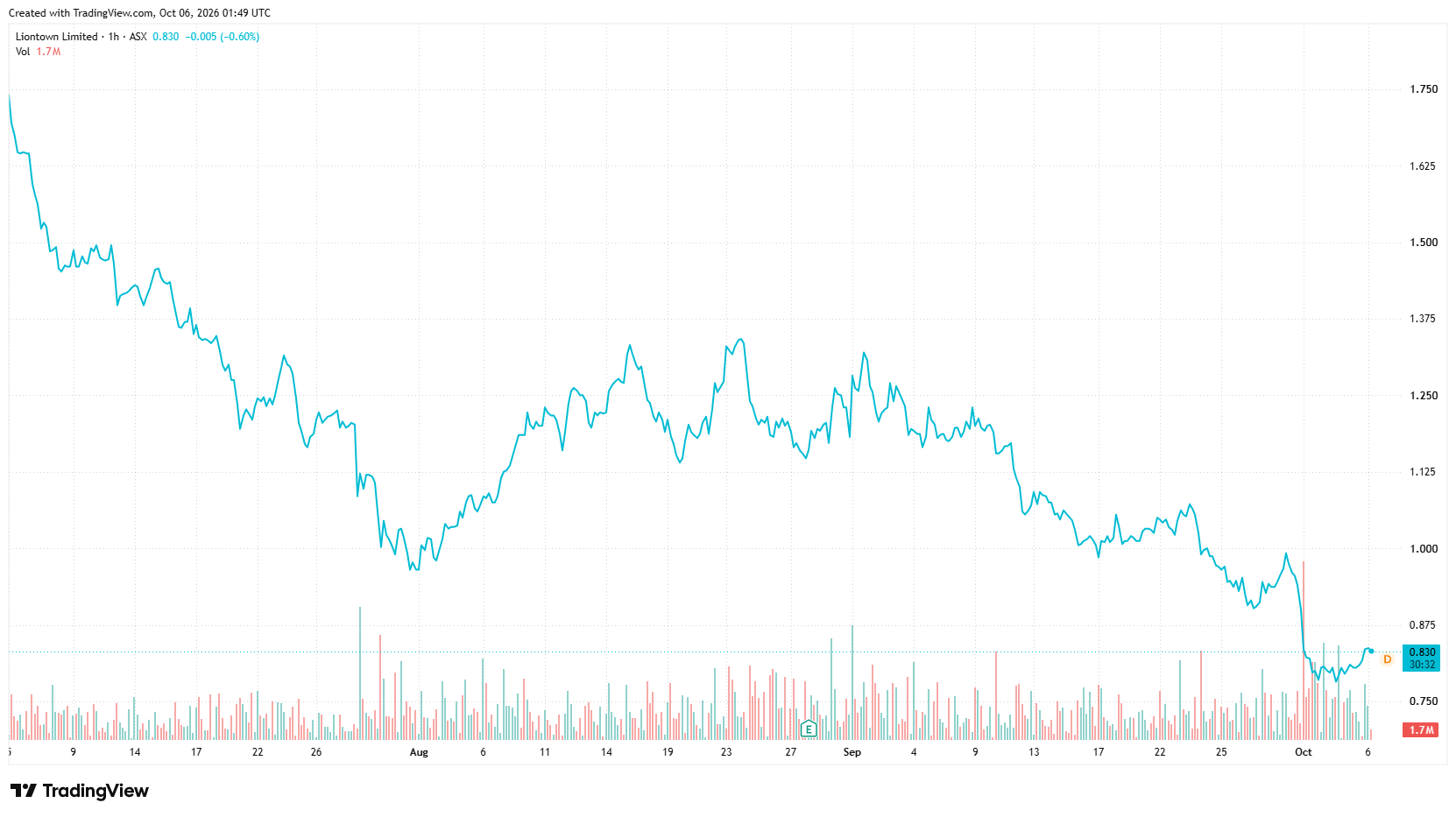
About Liontown Ltd. Liontown Limited engages in the exploration, evaluation, and development of mineral properties in Australia. It primarily explores for lithium, gold, and nickel deposits. The company's flagship property is the Kathleen Valley lithium project located in Perth, Western Australia. The company was formerly known as Liontown Resources Limited and change its name to Liontown Limited in November 2025. Liontown Limited was incorporated in 2006 and is headquartered in West Perth, Australia. Source: EODHD Key Stats

The RBA has raised rates to 4.60% as inflation pressures persist. Explore the impact of energy costs, AI demand and the key signals investors should watch next.

Discover how advances in genomics, AI, diagnostics and gene editing are creating a broader healthcare opportunity and where commercial value is emerging.

The AI trade is being forced to rethink the pace of progress. Here is what investors should watch across Nvidia, chips, AI spending, software and adoption.

Copper is at a record high, yet the global market still has a surplus. So where is all the copper, and why is it becoming harder to find?

Sharewise CEO Alex Perry sat down with ausbiz to unpack how the platform approached FY26, a year in which it reported an ASX return of almost 11% and a US return above 32%. The conversation ranged from the AI infrastructure theme to specific names on Perry's radar in resources and quantum computing. Here's a rundown of the key points.
