
Defensive vs Cyclical Stocks: Striking the Right Balance in Today’s Market

All within a 48-hour window. Same market, same news cycle—completely different outcomes.
For investors, this kind of divergence can feel confusing. But it is not random. It reflects something far more fundamental: how different types of stocks respond to changes in the economic and geopolitical backdrop.
If you checked your portfolio or super this week, you have already experienced this dynamic in real time. The question is not what happened. It is whether your portfolio was positioned for it.
Revisiting the Framework: What are Defensives and Cyclicals?
At its core, the market can be broadly grouped into two categories: cyclical and defensive stocks. This framework explains why some parts of the market move sharply while others remain relatively stable during the same event.
Cyclical stocks
rise and fall with the economic cycle. When growth is strong, confidence is high and demand is expanding, these companies tend to outperform. When uncertainty increases, inflation pressures build or growth slows, they are often the first to come under pressure. On the ASX, this includes energy producers such as Woodside Energy Group and Santos, miners like BHP Group and Rio Tinto, as well as airlines and discretionary retailers including Qantas Airways, Harvey Norman and JB Hi-Fi.
Defensive stocks
sit at the other end of the spectrum. These businesses generate relatively stable earnings because demand for their products and services remains consistent regardless of economic conditions. Consumers may cut back on discretionary spending, but they continue to buy groceries, pay utility bills, access healthcare and maintain essential services such as telecommunications. On the ASX, this includes companies such as Woolworths Group, Coles Group, Telstra, Transurban Group, CSL Limited and Medibank.
In simple terms, cyclicals provide earnings leverage when conditions improve, while defensives provide earnings stability when conditions deteriorate.
Neither category is inherently superior. Cyclicals can deliver strong returns in favourable environments, while defensives provide stability and income when uncertainty rises. The key is not choosing one over the other, but understanding what you own and whether that balance is intentional.
This Week Was a Masterclass
The past six weeks have provided a clear, real-time demonstration of how these two groups behave under pressure.
As geopolitical tensions escalated, energy prices surged sharply, with oil rising from the mid-$60s to above $100 a barrel. This drove strong performance across energy producers such as Woodside Energy Group and Santos, reflecting their direct exposure to higher commodity prices. This is classic cyclical behaviour, where earnings expand alongside favourable macro conditions. At the same time, airlines such as Qantas Airways came under pressure as rising fuel costs compressed margins.
Higher oil prices also flowed through to broader cost pressures across the economy, lifting transportation and production costs and contributing to inflation. Defensive sectors such as supermarkets and utilities absorbed these pressures but remained relatively stable, reinforcing their role as earnings stabilisers rather than beneficiaries of macro shocks.
The shift came quickly. As ceasefire developments emerged, the narrative reversed almost overnight.
Energy stocks retraced gains as oil prices fell, while airlines rebounded strongly on improved cost expectations. In contrast, defensive stocks including banks, supermarkets and healthcare providers showed limited reaction in either direction. They did not rally on improving sentiment, but importantly, they had not declined materially during the earlier period of stress.
That consistency is the defining characteristic of defensives. They are not designed to generate rapid gains, but to preserve capital when conditions become volatile. In a market where some portfolios experienced double-digit swings while others moved only marginally, that difference becomes highly relevant.
The takeaway is not that cyclical stocks are inherently riskier or less attractive. It is that they require investors to be directionally correct on the broader environment. Defensive stocks, by comparison, provide protection when that view proves wrong.
Where We Are in the Economic Cycle Right Now
The cyclical vs. defensive split isn't just about responding to news events. It maps directly onto the economic cycle, and where we sit in that cycle should heavily influence your portfolio mix.
In periods of expansion, cyclical stocks tend to outperform as growth accelerates and demand strengthens. As the cycle matures and interest rates rise, leadership often rotates toward defensives. During periods of contraction or heightened uncertainty, defensives provide stability as cyclical earnings come under pressure. As recovery begins, cyclicals regain leadership as growth expectations improve.
The current environment does not fit neatly into a single phase.
In Australia, the Reserve Bank of Australia cash rate remains elevated at 4.10%, while inflation at 3.7% is still above target. Labour market conditions are gradually softening, and geopolitical risks remain present despite recent de-escalation efforts. At the same time, structural demand linked to commodities and infrastructure continues to support parts of the cyclical market.
Historical data from S&P Dow Jones Indices suggests that cyclical sectors have underperformed defensive sectors over longer periods, only outperforming in a minority of years. This supports the case for stability during periods of uncertainty.
Taken together, the backdrop points to a late-cycle environment with a geopolitical overlay. This does not require a full shift away from cyclicals, but it does call for a more deliberate balance between growth exposure and defensive resilience.
What Does Your Portfolio Actually Look Like?
For many investors, the most important question is not what the market is doing—it is how their own portfolio is positioned.
A practical way to assess this is through a simple three-step process.
Step 1: Categorisation.
List your holdings and classify them as cyclical, defensive, or neutral. This includes not only direct equity investments but also your superannuation allocation. Many investors underestimate how much cyclical exposure they have through growth-oriented funds.
Step 2: Quantification.
Estimate what proportion of your portfolio sits in each category. This does not need to be precise, but it should be directionally clear. A typical balanced super option may still have 60–70% exposure to growth assets, while high-growth options can be significantly higher.
Step 3 : Reflection.
Ask whether this allocation is intentional. Many investors increased exposure to energy and resource stocks during the recent commodity rally, concentrating their portfolios in cyclicals at a time of elevated uncertainty. Others remain heavily exposed to growth assets through super without fully appreciating the associated volatility.
Neither positioning is inherently wrong. The issue arises when it is unintentional.
The key insight is that most portfolios are not constructed with a deliberate balance in mind—they evolve based on recent performance and market narratives.
How to Think About Rebalancing Right Now
Rebalancing does not require a wholesale overhaul of your portfolio. It requires clarity of purpose.
The core principle is that balance does not mean a fixed 50/50 split. It means aligning your exposure with your objectives, time horizon, and risk tolerance.
There are three key questions to guide this process.
What is your time horizon?
Investors with long-term horizons can absorb cyclical volatility and benefit from the higher return potential over time. Those closer to retirement may prioritise stability and capital preservation, increasing the role of defensives.
What level of short-term volatility can you tolerate?
Geopolitical developments remain fluid. A reversal in recent events could quickly push commodity prices higher again, with corresponding impacts on cyclicals. Understanding how your portfolio would respond to such scenarios is critical.
Are you being adequately compensated for the risk you are taking?
Cyclical stocks, by definition, should offer higher expected returns in exchange for greater volatility. If that trade-off does not align with your circumstances, it may warrant adjustment.
For many investors, the most significant allocation decision sits within superannuation. Adjusting between high-growth and balanced options is not inherently reactive if it reflects a genuine reassessment of risk tolerance. However, changes driven solely by short-term headlines can be counterproductive.
The objective is not to eliminate risk, but to ensure that it is taken deliberately.
The Bottom Line
The past week has reinforced how quickly market leadership can shift. The investors who navigated it most calmly were not those who predicted the ceasefire, but those who understood how their portfolios would behave under different scenarios.
Cyclical stocks will continue to offer opportunities, particularly where structural demand remains strong. Defensive stocks will continue to provide stability when conditions turn uncertain. Neither is inherently superior.
The difference lies in intent.
An investor holding Woodside Energy Group as a deliberate, sized cyclical position with a clear thesis is in a fundamentally different position to one who bought it on rising oil prices without a defined strategy. The same principle applies across all holdings.
Woodside may recover. The ceasefire may hold. Cyclicals may surge again. These outcomes are uncertain. What is not uncertain is that markets will continue to generate volatility.
That is not the variable investors can control. What they can control is how their portfolios are positioned to respond.
The question is not whether volatility will occur. It is whether your portfolio was built with it in mind.
Not sure how your portfolio is positioned?
Understanding the theory is one thing. Applying it to your own holdings, and knowing whether your mix of defensive and cyclical stocks truly reflects your risk tolerance, is another.
Our advisers work with clients across different markets to help make sense of portfolios in conditions like these. No jargon, no obligation, just a clear and practical conversation about where you stand.
Subscribe to our newsletter
Disclaimer: This article does not constitute financial advice nor a recommendation to invest in the securities listed. The information presented is intended to be of a factual nature only. Past performance is not a reliable indicator of future performance. As always, do your own research and consider seeking financial, legal and taxation advice before investing.
Speak to an Advisor

Firmus’ proposed mega-IPO puts a spotlight on the cost, capital intensity and risks of building AI infrastructure as investors weigh the next phase of the AI boom.
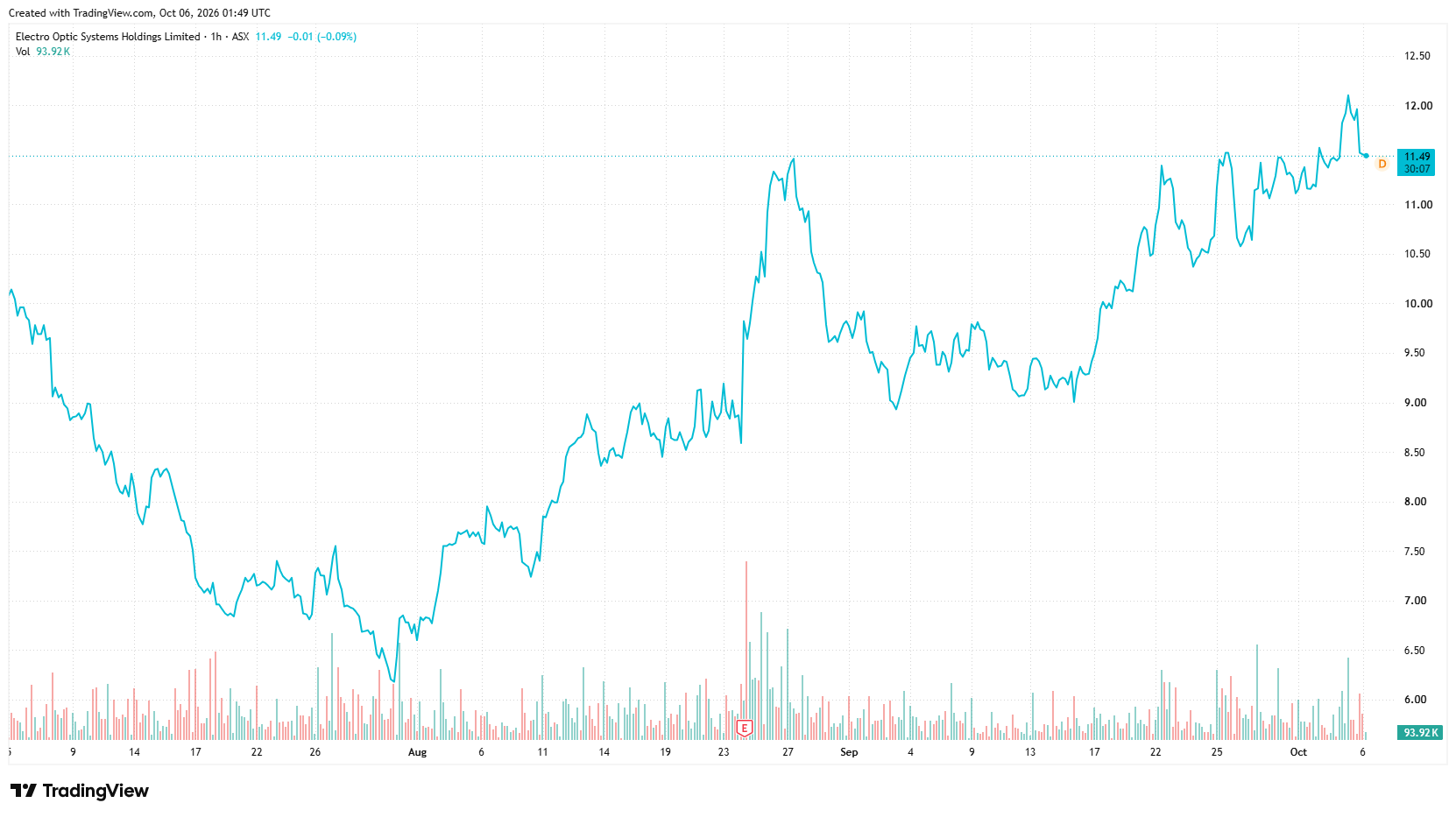
About Electro Optic Systems Holdings Ltd. Electro Optic Systems Holdings Limited engages in the development, manufacture, and sale of telescopes and dome enclosures, laser satellite tracking systems, remote weapon systems, and high laser weapon. It operates through Defense Systems and Space Systems segments. The company develops, manufactures, and markets fire control, surveillance, weapon systems, and high energy laser to military customers. It also provides passive optical and laser sensing equipment; optical, microwave and on-the-move radio and satellite products; and laser-based surveillance systems with space tracking capability. In addition, the company offers counter-drone, firepower, force protection, and UGV and marine lethality systems, as well as high energy laser weapon; optical tracking systems, space control, space domain awareness, satellite laser ranging, space sustainability, and precision optics. It operates in Australia, the United States, Singapore, the United Arab Emirates, the United Kingdom, New Zealand, the Netherlands, North America, Germany, and rest of Europe. Electro Optic Systems Holdings Limited was founded in 1983 and is based in Symonston, Australia. Source: EODHD Key Stats
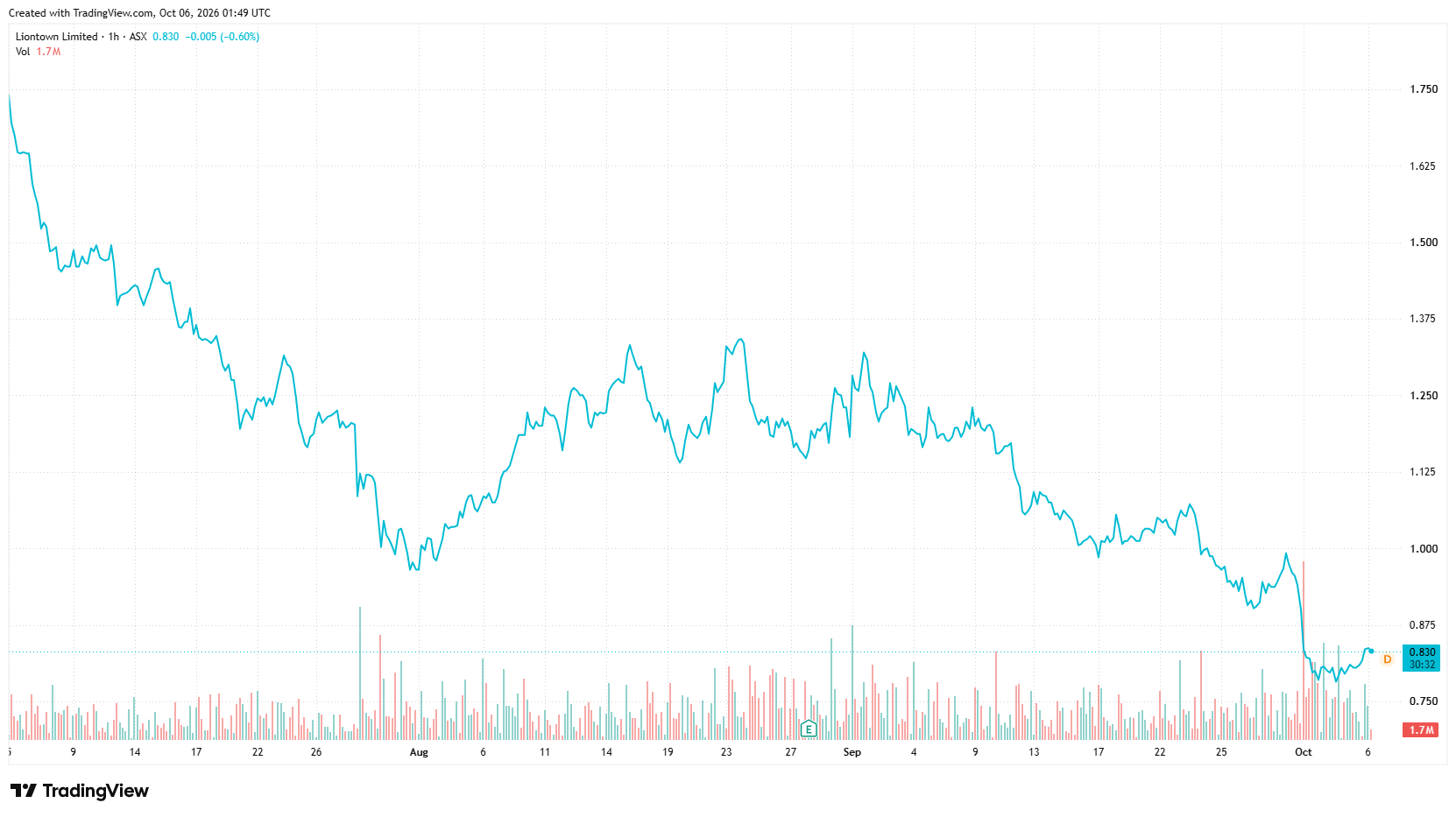
About Liontown Ltd. Liontown Limited engages in the exploration, evaluation, and development of mineral properties in Australia. It primarily explores for lithium, gold, and nickel deposits. The company's flagship property is the Kathleen Valley lithium project located in Perth, Western Australia. The company was formerly known as Liontown Resources Limited and change its name to Liontown Limited in November 2025. Liontown Limited was incorporated in 2006 and is headquartered in West Perth, Australia. Source: EODHD Key Stats

The RBA has raised rates to 4.60% as inflation pressures persist. Explore the impact of energy costs, AI demand and the key signals investors should watch next.

Discover how advances in genomics, AI, diagnostics and gene editing are creating a broader healthcare opportunity and where commercial value is emerging.

The AI trade is being forced to rethink the pace of progress. Here is what investors should watch across Nvidia, chips, AI spending, software and adoption.

Copper is at a record high, yet the global market still has a surplus. So where is all the copper, and why is it becoming harder to find?

Sharewise CEO Alex Perry sat down with ausbiz to unpack how the platform approached FY26, a year in which it reported an ASX return of almost 11% and a US return above 32%. The conversation ranged from the AI infrastructure theme to specific names on Perry's radar in resources and quantum computing. Here's a rundown of the key points.

Warsh gave markets a framework, not a forecast. What his first Jackson Hole keynote means for inflation, rates, forward guidance and the outlook for equities.
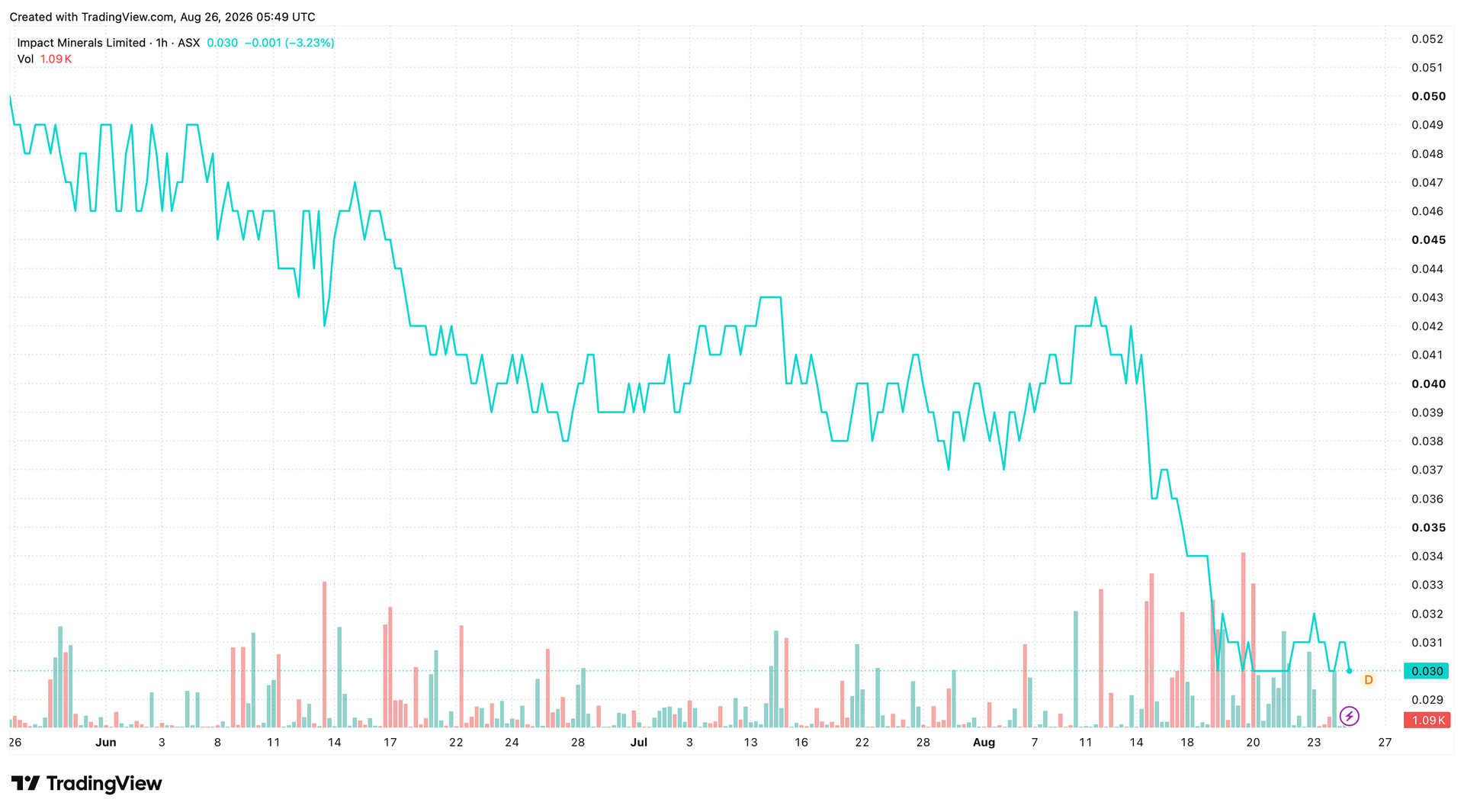
Get the latest on Impact Minerals (ASX: IPT), including stock performance, technical analysis, forecasts & key insights. See if IPO supports your goals.
