
Stagflation Returns: The RBA's View and What It Means for Investors

Stagflation is not a term central bankers use lightly. It tends to surface only when economic conditions begin to move in ways that are difficult to manage with conventional policy tools. Recent commentary from the Reserve Bank of Australia suggests that risk is moving back into focus as inflation proves more persistent while growth begins to slow.
Andrew Hauser, Deputy Governor of the Reserve Bank of Australia, described the current environment as a central banker’s nightmare, defined by inflation rising while economic activity weakens. That characterisation is deliberate. Central banks do not use language like this to describe routine conditions.
What it reflects is a shift in underlying dynamics. Inflation has moderated from its peak but remains elevated. Growth is losing momentum as higher interest rates flow through to households and businesses. At the same time, renewed pressure from energy markets is reintroducing cost shocks that monetary policy cannot easily offset. This combination places the economy in a setting where the usual policy responses no longer work cleanly.
What Is Stagflation and Why It Is Categorically Worse
Most economic challenges come with a clear policy direction. When growth slows, central banks can cut rates to support demand. When inflation rises, they can tighten policy to bring it under control. The process is not painless, but the path is defined.
Stagflation breaks that framework. It is the combination of high inflation, slowing growth and rising unemployment risk, conditions that pull policy in opposing directions at the same time. Inflation remains too high to justify easing, yet growth is too weak to absorb further tightening. The result is a constrained environment where every policy decision carries a cost.
The impact is felt across the economy. Households experience a steady erosion of purchasing power as prices rise faster than incomes. Businesses face margin pressure as input costs increase while demand softens. At a policy level, the challenge becomes structural. The Reserve Bank of Australia retains its tools, but their effectiveness is reduced because each action taken to address inflation risks deepening the slowdown.
This is what makes stagflation more difficult than inflation or recession on their own. It also explains why comparisons to the 1970s oil shock are resurfacing. The current environment is different in many respects, but the re-emergence of supply-driven inflation alongside weakening growth is a combination that markets and policymakers cannot ignore.
Why Stagflation Risk Is Rising Now
The current risk is not driven by a single factor. It reflects the convergence of supply shocks, weakening demand and a softer global backdrop.
On the supply side, energy is central. Disruptions to the Strait of Hormuz, which carries around 20% of global oil and LNG flows, have pushed oil prices from roughly USD67 per barrel to above USD100 in a matter of weeks. For Australia, the impact is direct. The country imports close to 90% of its refined fuel and relies heavily on diesel across mining, agriculture and transport. Higher energy prices flow quickly into operating costs across the economy. This is already evident at the corporate level, with Qantas Airways Limited warning its fuel bill for the second half of FY2026 could rise by up to AUD800 million, or around 32% above prior expectations.
At the same time, demand is softening. The Reserve Bank of Australia has lifted the cash rate to 4.10%, and those increases are now feeding through. Consumer sentiment has fallen sharply, with the Westpac-Melbourne Institute index dropping 12.5% to 80.1. Business confidence has also weakened to levels typically associated with periods of stress. Higher borrowing costs are compressing discretionary spending just as essential costs rise, creating a squeeze on both households and corporate earnings.
The global backdrop adds another layer. China’s recovery remains uneven, and its importance to Australian exports means any slowdown flows directly into domestic growth. At the same time, global growth forecasts are being revised lower, and energy demand is expected to contract by around 1.5 million barrels per day in the near term. Trade fragmentation and geopolitical tension are increasing costs across supply chains. Together, these forces create conditions where inflation remains elevated even as growth slows.
The Policy Dilemma: Why the RBA Is Constrained
The Reserve Bank of Australia is navigating a narrow path. Inflation at around 3.7% remains above the 2–3% target band, limiting the scope to cut rates. At the same time, growth is weakening and unemployment is beginning to rise, which constrains how far policy can be tightened without risking a sharper slowdown.
The Bank has made its priority clear. As Andrew Hauser stated, rates will need to reach a level that brings inflation back to target, even if that requires further increases. This reflects a decision to prioritise inflation control over near-term growth support. The credibility of that approach is critical. Allowing inflation expectations to drift higher would create a far more difficult adjustment later.
This does not mean policy is ineffective. It means the trade-offs are unavoidable. Monetary policy can influence demand, but it cannot directly resolve supply-driven inflation. The likely outcome is a period where rates remain restrictive, growth remains subdued and inflation takes longer to return to target. Markets are already pricing a further increase to around 4.35%, with the possibility of rates approaching 4.85% if inflation persists.
Market Implications: A Regime Shift in Progress
Stagflation changes how assets behave. The impact is uneven, and understanding that dispersion is critical.
In equities, growth and consumer discretionary sectors face the most pressure. Higher rates compress valuations, while weaker demand weighs on earnings. Energy and materials are holding up better, supported by commodity prices, while defensive sectors such as healthcare and utilities are attracting flows as investors prioritise stability.
In fixed income, the outlook is less predictable. The path of rates is uncertain, limiting the effectiveness of long-duration bonds as a hedge. Shorter-duration assets and inflation-linked securities are better positioned in an environment where inflation remains elevated and policy stays restrictive.
Commodities remain supported. Oil prices underpin energy producers, while gold continues to benefit from safe-haven demand. Infrastructure assets with inflation-linked revenues offer more stable real returns in an environment where inflation risk remains elevated.
Currency markets reflect the same tension. The Australian dollar is supported by higher rates but remains sensitive to global growth and China. In a risk-off environment, downside pressure on the currency can add to imported inflation, reinforcing the broader challenge.
What Tends to Work in Stagflation
Stagflation tends to reward a different set of characteristics than a typical growth-driven market. While each cycle has its nuances, history provides a consistent guide to what holds up and what comes under pressure.
Energy and commodities are the most reliable beneficiaries. When inflation is being driven by supply-side shocks, elevated input costs flow directly into higher commodity prices, supporting producers even as broader growth slows. Infrastructure and real assets also tend to perform more defensively, particularly where revenues are contractually linked to inflation. Assets such as toll roads, utilities and transport networks can maintain real returns in a way that more cyclical businesses cannot.
At the company level, pricing power becomes critical. Businesses that can pass rising costs through to customers without materially impacting demand are better positioned to protect margins. This typically favours companies with strong market positions, essential products or limited substitutes. Identifying these businesses becomes increasingly important in a stagflationary environment.
By contrast, high-growth equities are more exposed. Rising interest rates compress valuations, while weaker economic conditions challenge earnings expectations. Rate-sensitive and highly leveraged businesses also face headwinds, as higher borrowing costs coincide with a more difficult operating environment. In this setting, balance sheet strength and cash flow resilience become far more important than growth optionality.
Outlook: Navigating a More Difficult Macro Environment
The outlook is best described as uncertain, with a range of plausible outcomes rather than a single clear path. The base case is a period of below-trend growth and persistent inflation, with the Reserve Bank of Australia maintaining a restrictive stance for longer than previously expected.
Risks remain skewed to the downside. Further escalation in energy markets could intensify inflation pressures, while overtightening could push the economy into contraction. These risks are increasingly reflected in market pricing and policy communication.
Periods of volatility also create opportunity. Greater dispersion across sectors allows for more selective positioning, particularly in areas aligned with inflation and pricing power. Market dislocations can provide entry points that are not available in more stable conditions.
The broader shift is clear. Markets are moving away from the low-inflation, low-rate environment that defined the previous decade. Macro conditions are once again a primary driver of returns, and navigating this environment requires a greater focus on resilience, balance sheet strength and the ability to adapt to changing conditions.
Not sure how your portfolio is positioned? Speak to an adviser
on positioning your investments through today’s market conditions.
Subscribe to our newsletter
Disclaimer: This article does not constitute financial advice nor a recommendation to invest in the securities listed. The information presented is intended to be of a factual nature only. Past performance is not a reliable indicator of future performance. As always, do your own research and consider seeking financial, legal and taxation advice before investing.
Speak to an Advisor

Understand how AI investment could affect global financial stability, as the IMF and RBA warn of rising debt, market concentration and funding risks.

Firmus’ proposed mega-IPO puts a spotlight on the cost, capital intensity and risks of building AI infrastructure as investors weigh the next phase of the AI boom.
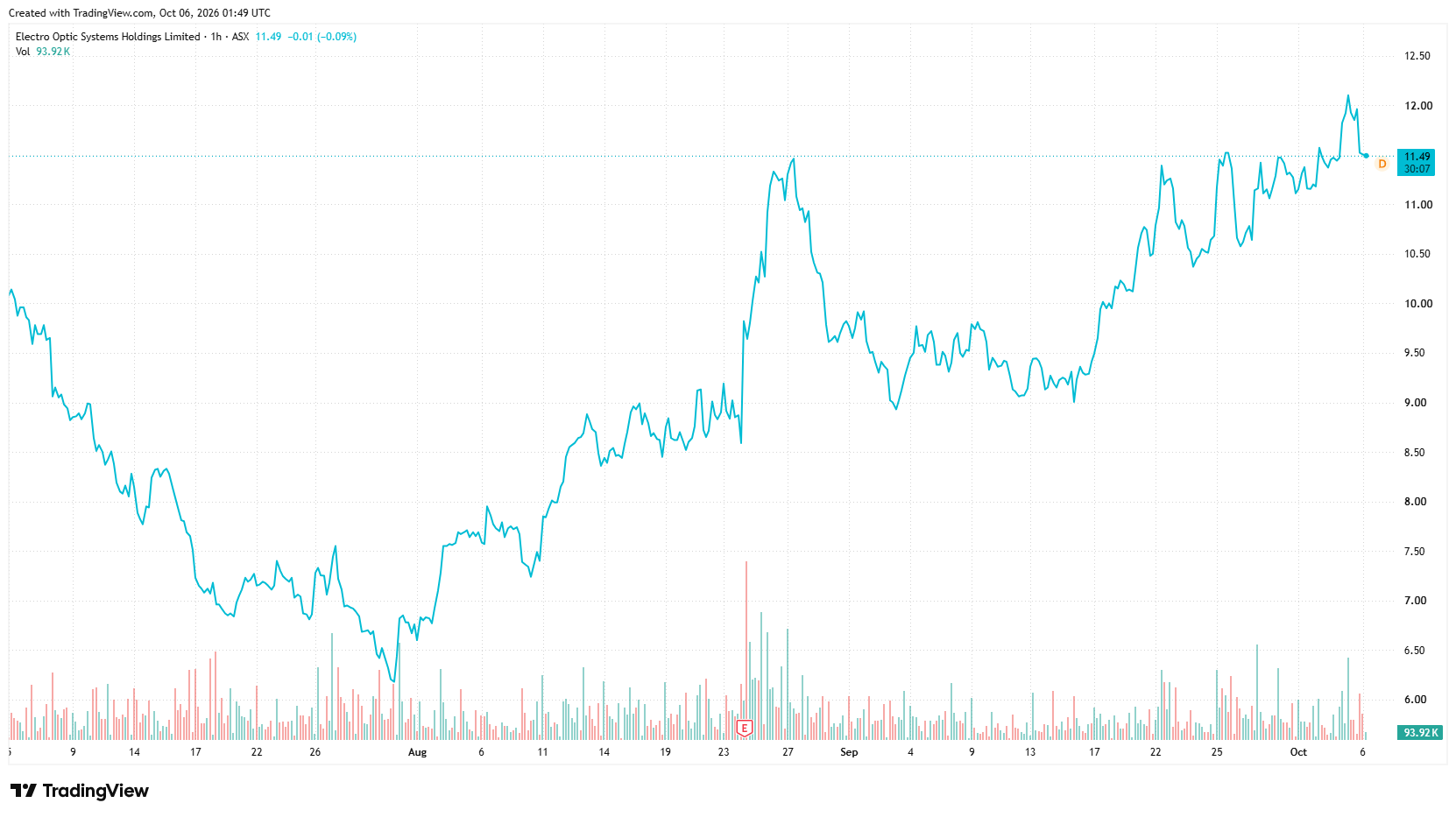
About Electro Optic Systems Holdings Ltd. Electro Optic Systems Holdings Limited engages in the development, manufacture, and sale of telescopes and dome enclosures, laser satellite tracking systems, remote weapon systems, and high laser weapon. It operates through Defense Systems and Space Systems segments. The company develops, manufactures, and markets fire control, surveillance, weapon systems, and high energy laser to military customers. It also provides passive optical and laser sensing equipment; optical, microwave and on-the-move radio and satellite products; and laser-based surveillance systems with space tracking capability. In addition, the company offers counter-drone, firepower, force protection, and UGV and marine lethality systems, as well as high energy laser weapon; optical tracking systems, space control, space domain awareness, satellite laser ranging, space sustainability, and precision optics. It operates in Australia, the United States, Singapore, the United Arab Emirates, the United Kingdom, New Zealand, the Netherlands, North America, Germany, and rest of Europe. Electro Optic Systems Holdings Limited was founded in 1983 and is based in Symonston, Australia. Source: EODHD Key Stats
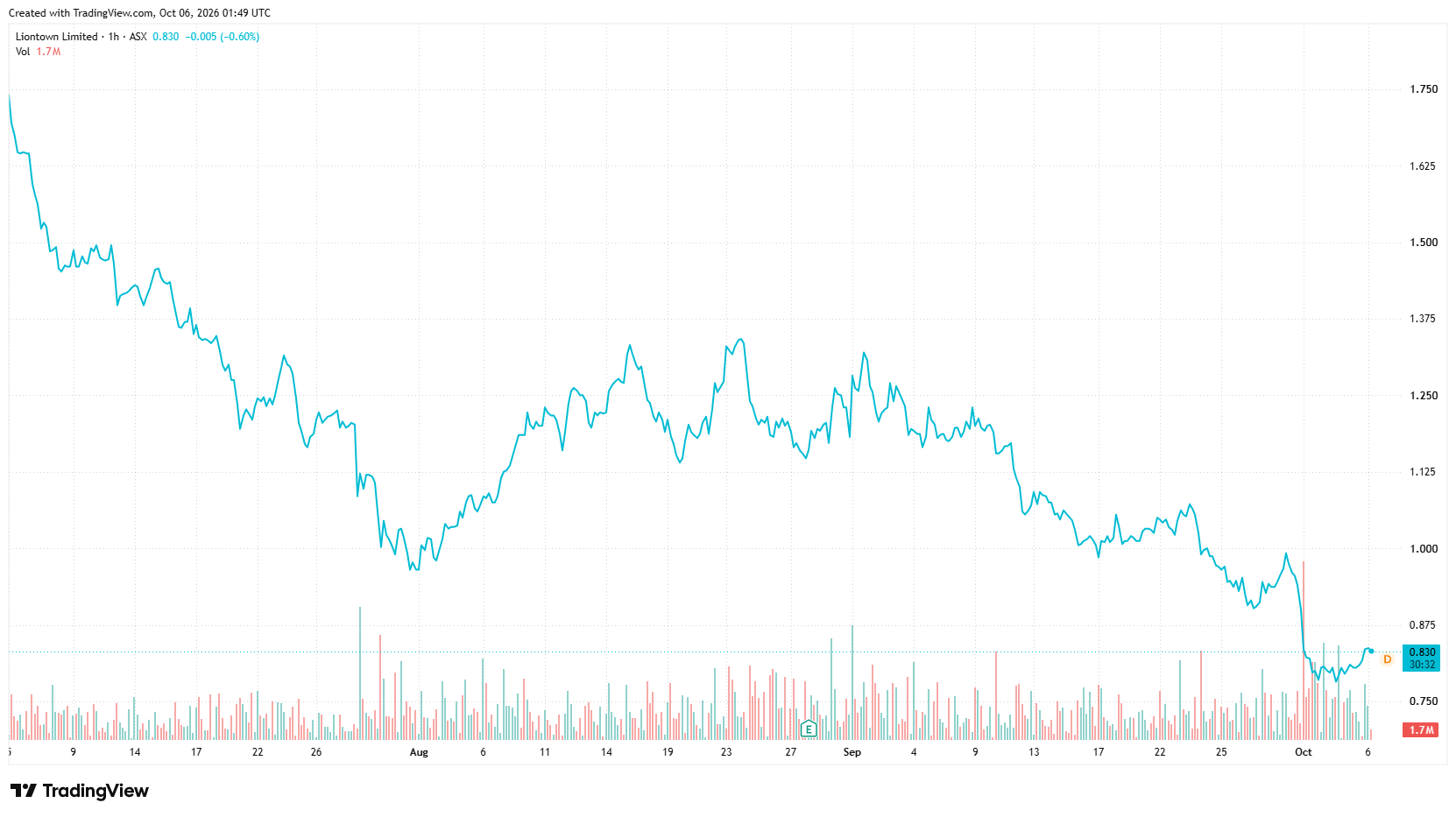
About Liontown Ltd. Liontown Limited engages in the exploration, evaluation, and development of mineral properties in Australia. It primarily explores for lithium, gold, and nickel deposits. The company's flagship property is the Kathleen Valley lithium project located in Perth, Western Australia. The company was formerly known as Liontown Resources Limited and change its name to Liontown Limited in November 2025. Liontown Limited was incorporated in 2006 and is headquartered in West Perth, Australia. Source: EODHD Key Stats
The RBA has raised rates to 4.60% as inflation pressures persist. Explore the impact of energy costs, AI demand and the key signals investors should watch next.

Discover how advances in genomics, AI, diagnostics and gene editing are creating a broader healthcare opportunity and where commercial value is emerging.

The AI trade is being forced to rethink the pace of progress. Here is what investors should watch across Nvidia, chips, AI spending, software and adoption.

Copper is at a record high, yet the global market still has a surplus. So where is all the copper, and why is it becoming harder to find?
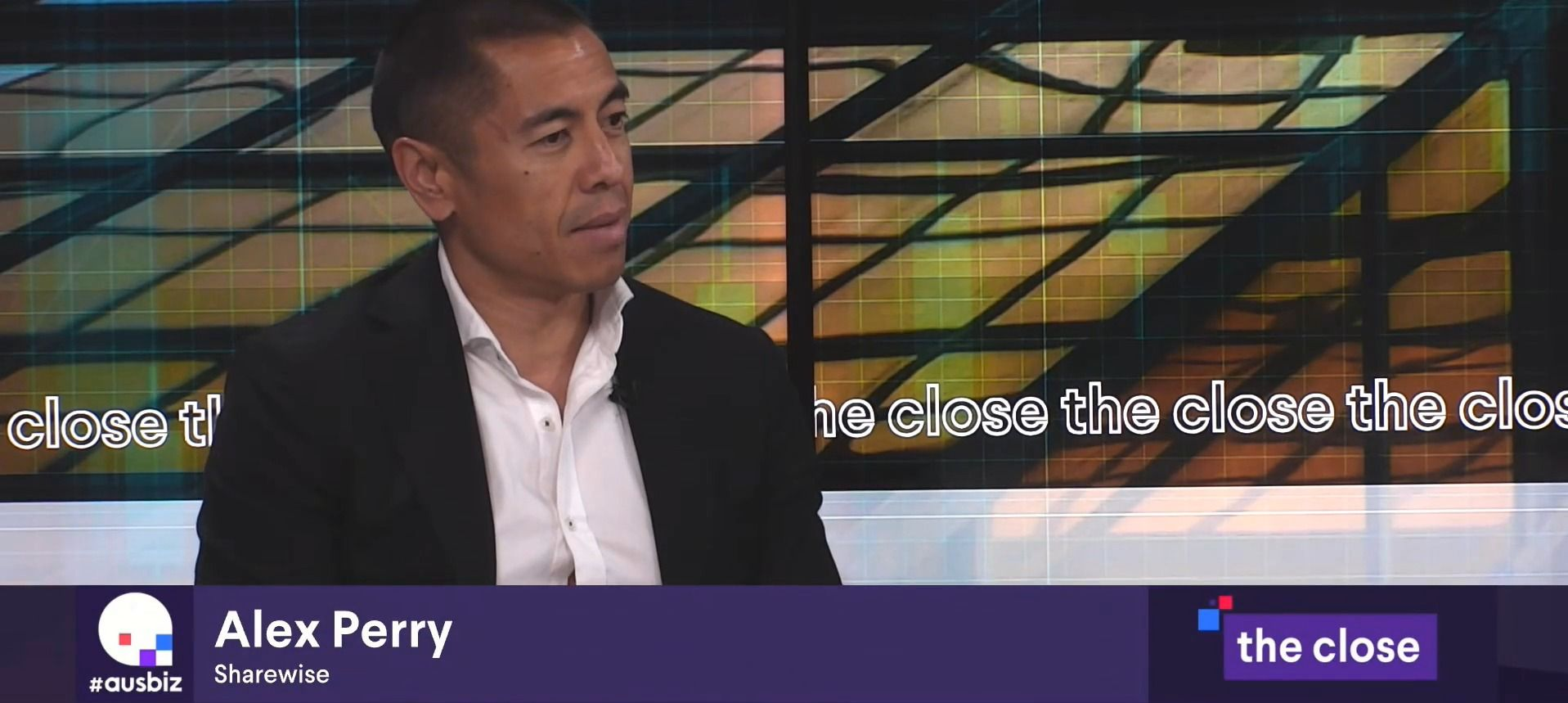
Sharewise CEO Alex Perry sat down with ausbiz to unpack how the platform approached FY26, a year in which it reported an ASX return of almost 11% and a US return above 32%. The conversation ranged from the AI infrastructure theme to specific names on Perry's radar in resources and quantum computing. Here's a rundown of the key points.

Warsh gave markets a framework, not a forecast. What his first Jackson Hole keynote means for inflation, rates, forward guidance and the outlook for equities.
