
Playing the Long Game: Why Time in the Market Beats Timing the Market

Faced with this environment, many investors make what feels like the sensible decision to wait until markets stabilise.
By the end of 2021, the S&P 500 had not only recovered but reached record highs. Investors who remained invested, or who added capital during the downturn, participated in one of the strongest recoveries in modern market history. Those who waited for clarity often re-entered markets at significantly higher prices or remained on the sidelines while equities continued to rise.
This dynamic illustrates a central paradox of investing. The periods that feel most uncomfortable to invest often prove, in hindsight, to be the most rewarding. Periods that appear safest frequently occur after markets have already moved higher.
Predicting where markets will move next with certainty is impossible. Decades of market history show that maintaining time in the market has consistently proven more effective than attempting to time it.
What Does “Timing the Market” Actually Mean?
Market timing refers to the strategy of buying and selling investments based on expectations about future market movements. The concept is straightforward. Investors attempt to buy before prices rise and sell before they fall, repeating the process to capture gains while avoiding losses.
The appeal is easy to understand. In everyday life, consumers seek to purchase goods at the lowest possible price. Waiting for discounts or favourable timing often leads to better outcomes when buying products such as electronics or travel tickets. Applying this logic to financial markets seems intuitive.
The challenge lies in what the strategy requires. Successful market timing depends on consistently predicting future market movements. Not once or twice, but repeatedly across many years and market cycles. Investors must identify the right moment to exit the market and then determine the appropriate time to re-enter.
Missing either decision can significantly reduce long-term returns. In many cases, investors who attempt to avoid short-term volatility inadvertently miss the strongest periods of market recovery.
The Problem With Trying to Predict the Market
The numbers tell a clear story. Research shows that an investor who remained fully invested in the S&P 500 over a 15-year period would earn significantly higher annualised returns than one who missed just the 10 best trading days. Missing the 20 best days reduces returns substantially. Missing the 30 best days can leave the investor with results that barely exceed cash.
The difficulty is that the strongest trading days often occur very close to the worst days, frequently during periods of market stress. Investors who exit the market during downturns in an attempt to limit losses often miss the sharp recoveries that follow, which are critical to long-term performance.
Even professional fund managers with large research teams and extensive resources struggle to outperform consistently. S&P Global’s SPIVA scorecards regularly show that the majority of actively managed funds underperform their benchmark indices over 10 to 15 years. If professional investors struggle to time the market reliably, the probability of retail investors doing so consistently is even lower.
Behavioural factors further complicate the challenge. Fear and greed are powerful drivers of investor behaviour. When markets fall sharply, selling can feel like a rational attempt to avoid further losses. When markets rise quickly, investors often feel pressure to chase returns at elevated prices. These emotional responses are natural, but they often lead to decisions that undermine long-term investment outcomes.
Frequent trading also introduces practical costs that erode returns. Brokerage fees, bid-ask spreads and potential tax liabilities from short-term capital gains reduce overall portfolio performance. Over time, these costs accumulate and weaken the case for attempting to predict short-term market movements.
What “Time in the Market” Really Means
The buy-and-hold philosophy is not about being passive or disengaged. Rather, It reflects the recognition that financial markets, over long periods, have historically trended upward and that the most reliable way to participate in that growth is by remaining invested.
At the centre of this approach is the principle of compounding. When investment returns are reinvested and begin generating returns of their own, growth can accelerate over time. This effect becomes increasingly powerful the longer capital remains invested. A longer investment horizon allows compounding to build momentum and play a more meaningful role in portfolio growth.
From this perspective, investing is less about identifying the perfect entry point and more about allowing time to work in your favour. The objective is to give invested capital the longest possible horizon. Each year spent outside the market represents a year in which compounding cannot occur, and those early years can have a significant impact on long-term outcomes.
Market Returns Are Concentrated in Short Bursts
Historical data shows that a disproportionate share of long-term equity market gains occurs during a relatively small number of trading days. Investors who attempt to time the market risk missing these critical periods.
Studies analysing the S&P 500 over multi-decade periods show that missing just the 10 best trading days can significantly reduce annualised returns. Missing the 20 best days produces a far larger decline in performance. In some periods, missing the 30 best days leaves returns only marginally above cash.
These strong market days frequently occur during periods of heightened volatility, often shortly after sharp market declines. Investors who exit during downturns may therefore miss the early phase of recovery when some of the strongest gains occur.
This highlights a structural challenge with market timing. Success requires two correct decisions rather than one. An investor must determine when to exit the market and then accurately identify when to re-enter before the recovery is already underway. Historical evidence suggests that consistently executing both decisions is extremely difficult for most investors.
The Data Doesn’t Lie
Long-term market performance reinforces the case for staying invested. A hypothetical investment of $10,000 in the S&P 500 at the beginning of 1990 would have grown to roughly $200,000 by 2020 if dividends were reinvested and the investor remained fully invested. This represents a twenty-fold increase in value despite several major disruptions, including the dot-com downturn, the global financial crisis and the COVID-19 market shock.
Consider the same investor attempting to avoid each downturn. Even if the investor managed to exit before periods of decline, the strategy would still require correctly identifying when to re-enter. In practice, this second decision has proven equally difficult. Research shows that the average equity investor earns returns well below those of the broader market index over time. Much of this gap is attributed to poorly timed entry and exit decisions driven by emotional responses to short-term market movements.
For investors hesitant to commit a large lump sum at once, dollar-cost averaging provides a practical alternative. This approach involves investing a fixed amount at regular intervals such as monthly, regardless of market conditions. When prices are lower, the same investment amount purchases more shares. When prices are higher, fewer shares are acquired. Over time, this approach smooths the impact of market volatility without requiring investors to forecast market movements. The strategy relies on consistency and continued participation across market cycles.
Common Market Timing Myths
“I will invest after the market corrects.”
Markets can remain elevated or continue rising for far longer than many investors anticipate. Waiting for a correction often means forgoing potential returns in the interim. When a correction eventually occurs, the uncertainty and negative sentiment surrounding markets typically intensify rather than dissipate. As a result, investors who plan to enter after a pullback frequently find themselves delaying the decision again, remaining on the sidelines while markets continue to evolve.
“Now is a particularly bad time to invest.”
Periods of uncertainty have always been present in financial markets. In 1987, Black Monday triggered one of the largest single-day declines in history. The early 2000s saw the collapse of the dot-com bubble. The global financial crisis in 2008 threatened the stability of the international banking system. In 2020, a global pandemic halted economic activity. Each period offered compelling reasons to delay investing. Investors who remained invested through these environments generally achieved stronger long-term outcomes than those who waited for more favourable conditions.
“I will re-enter once conditions are more stable.”
Equity markets are forward looking. By the time economic conditions appear stable, much of the recovery is often already reflected in prices. Market rebounds following periods of stress are frequently rapid and concentrated. Investors who wait for clear confirmation of stability may miss the early phase of recovery, when some of the most significant gains are realised.
These myths highlight a broader truth about investing: waiting for perfect conditions often leads to inaction. In markets, perfection is rarely visible until after the fact.
Building a Disciplined Investment Framework
It is important to distinguish between long-term investing and passive neglect. Remaining invested through market cycles does not mean ignoring a portfolio. Long-term investing still requires discipline and thoughtful portfolio construction.
Several key principles support this approach in practice.
- Start early. Time is one of the most powerful advantages an investor can have. Even modest contributions made consistently over long periods can grow significantly through compounding.
- Strategic asset allocation. Diversifying across asset classes, geographic regions, and sectors helps reduce concentration risk and moderates portfolio volatility over time. A well-diversified portfolio is better positioned to withstand periods of market stress, making it easier for investors to remain committed to their long-term strategy.
- Dollar-cost averaging. Investing a fixed amount at regular intervals removes the pressure of identifying the perfect entry point.
- Automated investing. Regular, automated contributions can help remove emotional decision-making and ensure investors continue participating in markets regardless of short-term fluctuations.
- Periodic rebalancing. Over time, strong performing assets can gradually dominate a portfolio. Rebalancing restores the intended allocation and maintains alignment with risk tolerance.
- Regular portfolio review. Reviewing investments periodically, rather than reacting to short-term market fluctuations, helps ensure that the portfolio remains aligned with an investor’s financial goals, investment horizon, and changing circumstances.
Patience in this context is not passivity. It reflects a deliberate commitment to maintaining exposure to long-term growth drivers despite short-term uncertainty.
Conclusion
Market timing is a natural response to uncertainty, shaped by behavioural biases that influence how investors interpret risk and volatility. The historical record points consistently in one direction. Investors who remain invested through market cycles tend to achieve stronger long-term outcomes than those who attempt to predict short-term movements.
The reasons are structural. Compounding rewards time above all else. A significant share of market gains occurs during brief and unpredictable periods. Market recoveries follow downturns over long horizons, and investors who remain invested are positioned to participate in those recoveries.
Volatility is an inherent characteristic of financial markets rather than a signal that investors must act. Over time, those who maintain disciplined exposure through uncertainty are often the ones who benefit most from compounding and economic growth.
Success in financial markets is rarely determined by predicting the next short-term move. More often, it is determined by remaining invested long enough for favourable outcomes to accumulate. Investors who recognise this principle stop waiting for perfect and start playing the long game.
Thinking about how these principles may apply to your own investment strategy? Click
here to speak with an adviser.
Subscribe to our newsletter
Disclaimer: This article does not constitute financial advice nor a recommendation to invest in the securities listed. The information presented is intended to be of a factual nature only. Past performance is not a reliable indicator of future performance. As always, do your own research and consider seeking financial, legal and taxation advice before investing.
Speak to an Advisor

Big Tech reports next week. Learn how to read earnings releases and filings, and what to look for in AI spending, cloud growth, cash flow and guidance.

Understand how AI investment could affect global financial stability, as the IMF and RBA warn of rising debt, market concentration and funding risks.

Firmus’ proposed mega-IPO puts a spotlight on the cost, capital intensity and risks of building AI infrastructure as investors weigh the next phase of the AI boom.
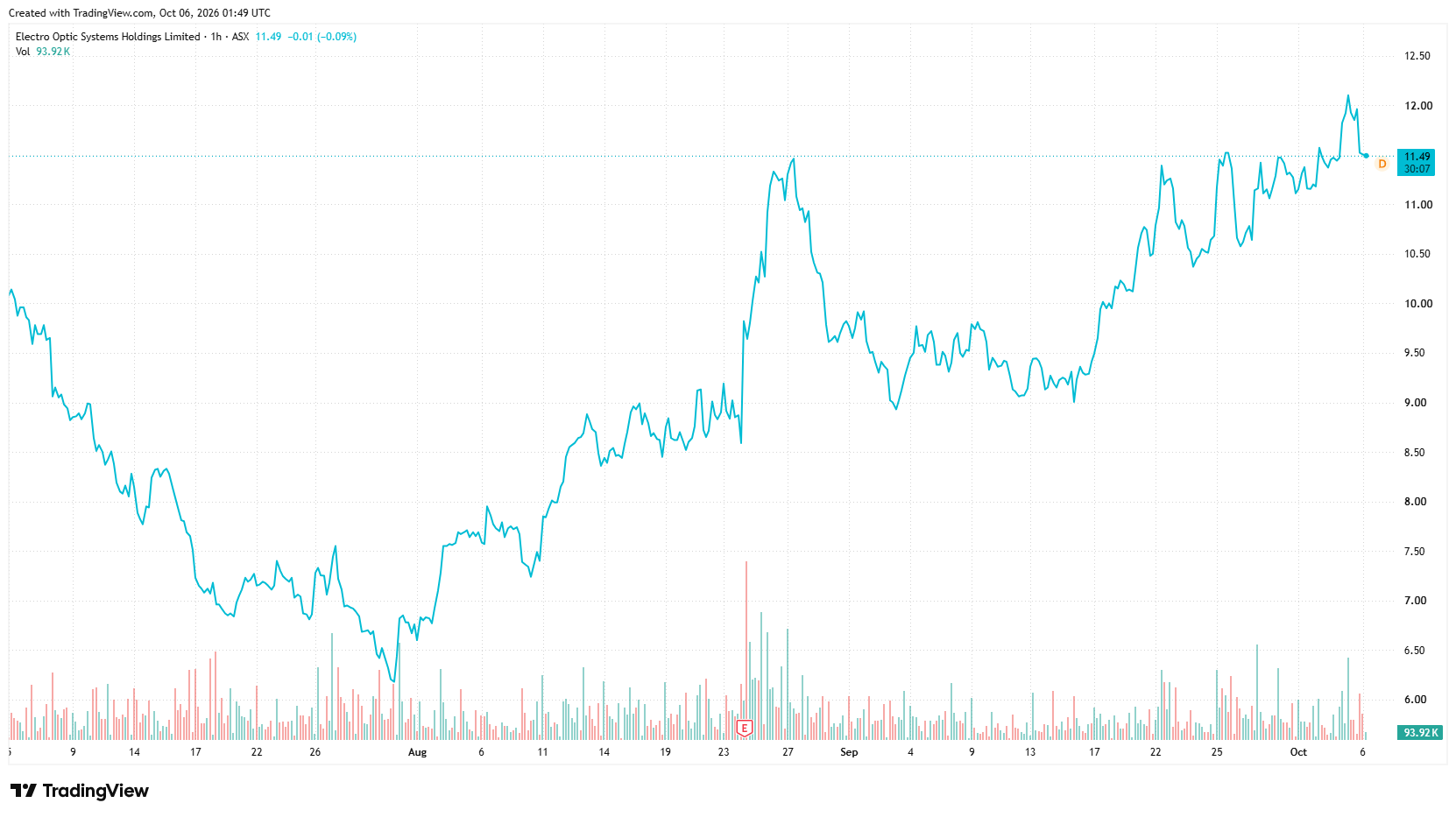
About Electro Optic Systems Holdings Ltd. Electro Optic Systems Holdings Limited engages in the development, manufacture, and sale of telescopes and dome enclosures, laser satellite tracking systems, remote weapon systems, and high laser weapon. It operates through Defense Systems and Space Systems segments. The company develops, manufactures, and markets fire control, surveillance, weapon systems, and high energy laser to military customers. It also provides passive optical and laser sensing equipment; optical, microwave and on-the-move radio and satellite products; and laser-based surveillance systems with space tracking capability. In addition, the company offers counter-drone, firepower, force protection, and UGV and marine lethality systems, as well as high energy laser weapon; optical tracking systems, space control, space domain awareness, satellite laser ranging, space sustainability, and precision optics. It operates in Australia, the United States, Singapore, the United Arab Emirates, the United Kingdom, New Zealand, the Netherlands, North America, Germany, and rest of Europe. Electro Optic Systems Holdings Limited was founded in 1983 and is based in Symonston, Australia. Source: EODHD Key Stats
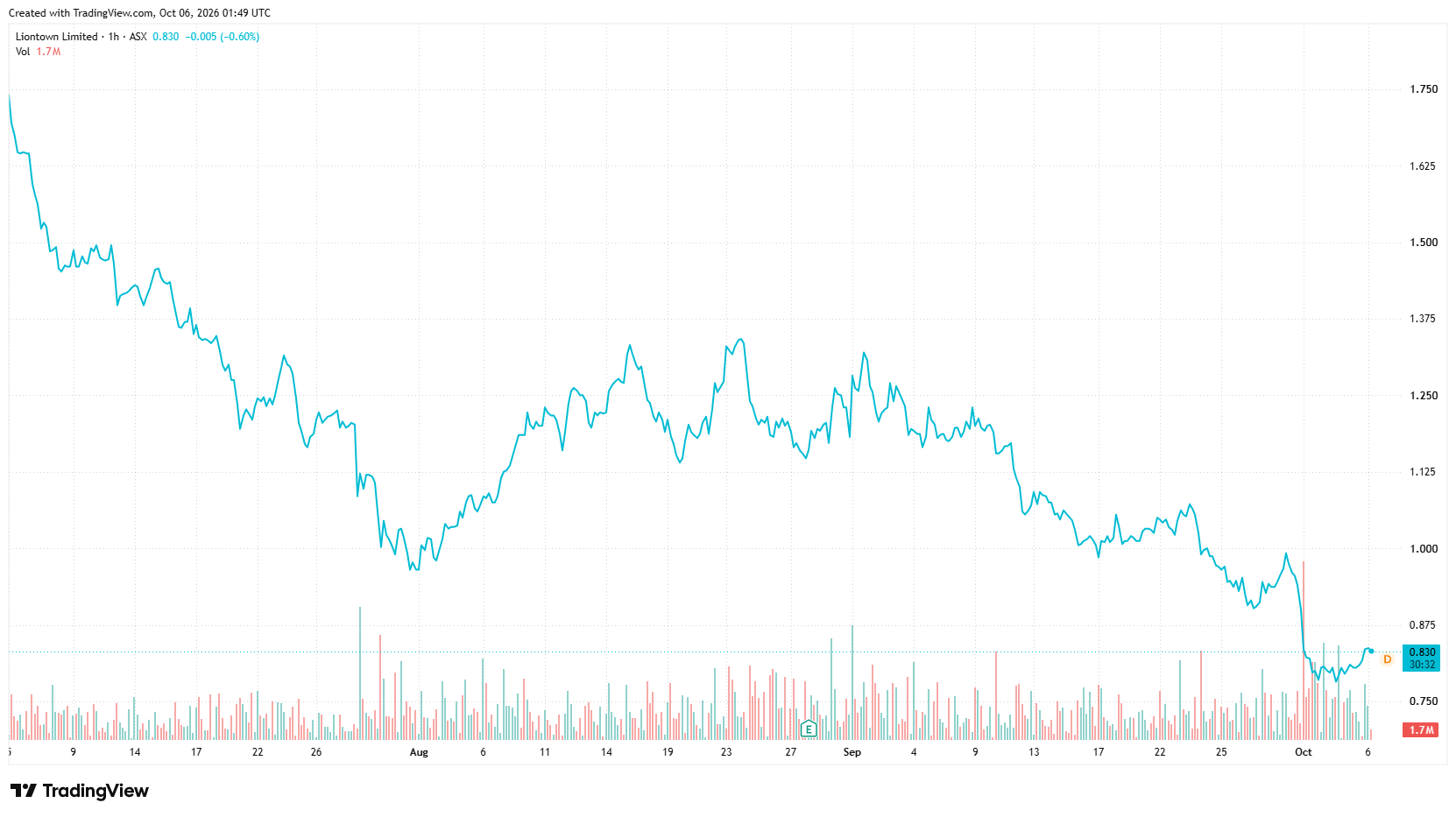
About Liontown Ltd. Liontown Limited engages in the exploration, evaluation, and development of mineral properties in Australia. It primarily explores for lithium, gold, and nickel deposits. The company's flagship property is the Kathleen Valley lithium project located in Perth, Western Australia. The company was formerly known as Liontown Resources Limited and change its name to Liontown Limited in November 2025. Liontown Limited was incorporated in 2006 and is headquartered in West Perth, Australia. Source: EODHD Key Stats

The RBA has raised rates to 4.60% as inflation pressures persist. Explore the impact of energy costs, AI demand and the key signals investors should watch next.

Discover how advances in genomics, AI, diagnostics and gene editing are creating a broader healthcare opportunity and where commercial value is emerging.

The AI trade is being forced to rethink the pace of progress. Here is what investors should watch across Nvidia, chips, AI spending, software and adoption.

Copper is at a record high, yet the global market still has a surplus. So where is all the copper, and why is it becoming harder to find?

Sharewise CEO Alex Perry sat down with ausbiz to unpack how the platform approached FY26, a year in which it reported an ASX return of almost 11% and a US return above 32%. The conversation ranged from the AI infrastructure theme to specific names on Perry's radar in resources and quantum computing. Here's a rundown of the key points.
