
High Beta Stocks: Tactical Allocation or Structural Risk?

High beta stocks occupy a unique position in equity markets. They offer amplified upside during rallies, but with equally magnified downside during periods of stress. At its core, beta measures a stock’s sensitivity to broader market movements. A beta above 1 implies greater volatility than the market, while below 1 suggests relative defensiveness. Yet in practice, beta captures far more than price movement. It often reflects deeper structural characteristics such as cyclicality, operating leverage, and financial leverage, all of which shape how a business responds to changing economic conditions.
The distinction is not simply about volatility. It is about context and application. Whether high beta enhances returns or erodes capital depends on where we are in the market cycle, how exposures are sized, and whether investors understand what beta is truly measuring and what it is not. Used deliberately, high beta can be a powerful tactical tool. Used indiscriminately, it can become a persistent source of structural risk.
Understanding Beta
At its most basic, beta measures the sensitivity of a stock’s returns relative to the broader market, typically proxied by the S&P 500. A stock with a beta of 1.5 is expected to move 1.5% for every 1% move in the index, in either direction. This symmetry is important and often underappreciated, particularly by investors who focus primarily on the upside potential of amplified returns.
Beta is not a static measure. It evolves with changes in volatility regimes, shifts in a company’s capital structure, and broader correlation dynamics across sectors. For example, a technology stock that exhibited a beta of 1.3 during the low-volatility expansion of 2017 to 2019 may behave more like a beta above 2.0 during a risk-off environment, when correlations increase and institutional investors reduce exposure more broadly.
It is also important to distinguish what beta represents and what it does not. Beta reflects historical co-movement with the market, not future return potential. It is a statistical outcome of past price behaviour rather than a direct measure of business quality. As a result, two companies can share similar beta profiles while occupying very different positions on the quality spectrum. One may be a high-growth, cash-generative business with cyclical exposure, while the other may be a highly leveraged, low-margin company whose share price simply exhibits greater volatility. Recognising this distinction is essential to using beta effectively in portfolio construction.
Characteristics of High Beta Stocks
High beta stocks tend to cluster in sectors and segments that are more sensitive to economic growth and investor sentiment. These typically include Technology, Consumer Discretionary, and Industrials, as well as small-cap equities. In these areas, earnings are more cyclical and more responsive to changes in demand, which naturally leads to greater share price volatility relative to the broader market.
Their performance is closely tied to the market cycle. In bull markets and early-stage recoveries, high beta stocks often outperform as improving sentiment, earnings upgrades, and multiple expansion drive returns. In downturns or periods of tightening financial conditions, they tend to underperform, with sharper drawdowns reflecting both earnings pressure and valuation compression.
Liquidity and investor positioning further amplify these moves. High beta names often attract strong inflows in risk-on environments, creating momentum-driven rallies. In risk-off periods, these same stocks can experience rapid outflows as investors reduce exposure, leading to heightened volatility and more pronounced price swings.
Taken together, high beta stocks are not just more volatile by definition. They are more exposed to shifts in macro conditions, sentiment, and capital flows, which can accelerate both upside and downside depending on the environment.
The Case for Tactical Allocation to High Beta
There are clear and well-documented scenarios where increasing portfolio beta can be a rational and return-enhancing decision. The key is that this approach is tactical. High beta exposure tends to deliver a premium only when it is aligned with the broader macro environment and supported by a clear view of the cycle.
Early-Cycle Recovery Dynamics
The strongest case for high beta exposure typically emerges in the early stages of an economic recovery. As credit conditions ease, earnings expectations begin to improve, and risk appetite returns following a downturn, high beta stocks often lead the market higher. This is driven by a combination of operating leverage and multiple expansion, which tend to benefit more cyclical and growth-sensitive businesses.
Historically, periods following market troughs have shown this pattern consistently. The highest beta segments of the market have outperformed in the first phase of recovery, as earnings revisions turn positive and investors reprice risk assets more aggressively.
Portfolio Amplification in Bull Markets
In rising markets, high beta stocks can also serve as an effective tool for enhancing portfolio returns. For investors managing against a benchmark, increasing exposure to higher beta sectors provides a more efficient way to participate in market upside without relying solely on concentrated, stock-specific positions.
Tilting towards sectors such as Technology, Consumer Discretionary, and Industrials can increase overall market sensitivity while still maintaining diversification across themes. This allows investors to express a constructive market view while managing idiosyncratic risk at the individual stock level.
Sector Observations
Certain segments of the market tend to exhibit structurally higher beta. Small-cap equities, for example, often outperform in periods of improving economic momentum. Similarly, semiconductors, regional banks in a steepening yield curve environment, and emerging market equities typically carry higher beta and can act as strong performance drivers when conditions are supportive.
However, the effectiveness of these exposures is highly dependent on the macro backdrop. High beta allocation requires a clear and informed view of the cycle. Without that, what appears to be a tactical opportunity can quickly become an unintended source of risk.
When High Beta Becomes Structural Risk
The case against treating high beta as a long-term structural allocation is, in many respects, more compelling than the case for it. While high beta can enhance returns in the right environment, maintaining a persistent overweight introduces risks that can materially undermine long-term compounding. Three considerations are particularly important.
Volatility Drag and the Mathematics of Drawdowns
High volatility, a defining feature of high beta stocks, creates a structural headwind to compounding through what is commonly referred to as volatility drag. A stock that declines by 50% requires a 100% gain to recover. Portfolios that experience large swings in value tend to underperform smoother return profiles over time, even if the average return is similar. This is due to the asymmetric nature of gains and losses. Over a full market cycle, this dynamic can erode much of the return premium that high beta investors expect to capture.
High Beta Does Not Equal High Quality
A common misconception is that higher volatility signals greater opportunity. In reality, many high beta stocks are characterised by weaker balance sheets, less predictable earnings, or more speculative business models. These traits can drive strong performance in risk-on environments, particularly when short covering and sentiment amplify upside moves. However, the same characteristics can accelerate declines during market stress. Maintaining structural exposure to high beta without a clear focus on quality effectively assumes that favourable conditions will persist, which is rarely the case over a full cycle.
Liquidity and Drawdown Risk in Stress Events
High beta stocks are more exposed to liquidity-driven sell-offs during periods of market stress. As volatility rises, institutional investors often reduce overall risk quickly, and high beta positions are typically among the first to be trimmed. This can create self-reinforcing selling pressure, where price declines are driven as much by positioning and liquidity as by fundamentals. In such environments, valuations can disconnect from underlying business performance. For investors unable to absorb that volatility, the impact is not just temporary fluctuation, but the risk of realised and potentially permanent capital loss.
Putting Beta to Work: A Practical Framework
Understanding the risks and opportunities associated with high beta is only part of the equation. The more important task is applying that understanding in a disciplined, repeatable way aligned with market conditions. In practice, this means treating beta not as a static portfolio outcome, but as an actively managed lever.
A key starting point is anchoring beta exposure to the market cycle. High beta tends to work best in early-stage recoveries, when growth expectations are improving, credit conditions are easing, and earnings upgrades are starting to come through. This is when cyclical stocks benefit the most. As the cycle matures and conditions become less supportive, reducing beta is simply following through on the same positioning decision.
Quality matters just as much as timing. Not all high beta stocks are equal. Some are volatile because they are exposed to growth cycles, while others are volatile because their balance sheets are weak or earnings are unreliable. Focusing on companies with strong cash flow, reasonable leverage, and resilient business models helps ensure that movement is driven by opportunity rather than fragility.
Position sizing and diversification are equally important. Because beta amplifies both gains and losses, exposures should be scaled relative to overall portfolio risk, not just conviction at the stock level. High beta stocks move more, so they should not be sized the same way as more stable holdings. A smaller position in a high beta name can carry similar risk to a larger position in a low beta stock. Thinking in terms of total portfolio risk helps maintain balance.
Finally, high beta strategies require clear exit discipline. High beta stocks can fall quickly when conditions change, often driven by liquidity and positioning rather than fundamentals alone. Having a clear plan for when to reduce or exit, whether due to weaker earnings, tighter financial conditions, or a shift in the macro outlook, helps avoid reactive decision-making.
The objective is not to avoid high beta, but to control how it is used. High beta should be treated as a tool that can be adjusted as conditions change, rather than a source of unintended risk embedded in the portfolio.
Conclusion
High beta stocks are neither inherently beneficial nor inherently risky. They are a tool, and their effectiveness depends on how and when they are used. In the right context, supported by a clear understanding of the market environment and disciplined portfolio construction, they can enhance returns and provide meaningful upside participation.
For investors with a well-defined macro view, a structured risk framework, and the discipline to adjust exposures as conditions evolve, high beta can be a valuable source of alpha, particularly in the earlier phases of a market upcycle. Without that framework, however, high beta can create the appearance of sophistication while introducing hidden vulnerabilities through volatility drag, asymmetric drawdowns, and exposure to lower-quality businesses.
Ultimately, the decision is not simply whether to allocate to high beta, but whether the allocation is supported by a repeatable process and a clear understanding of the risks involved. Beta is not a shortcut to outperformance. It is a lever that requires careful calibration. Beta rewards preparation and discipline, and penalises assumption.
If you are reviewing your portfolio positioning or considering how to integrate high beta exposure into your investment strategy, we invite you to
speak with one of our advisers to assess how this allocation may align with your objectives.
Subscribe to our newsletter
Disclaimer: This article does not constitute financial advice nor a recommendation to invest in the securities listed. The information presented is intended to be of a factual nature only. Past performance is not a reliable indicator of future performance. As always, do your own research and consider seeking financial, legal and taxation advice before investing.
Speak to an Advisor

Firmus’ proposed mega-IPO puts a spotlight on the cost, capital intensity and risks of building AI infrastructure as investors weigh the next phase of the AI boom.
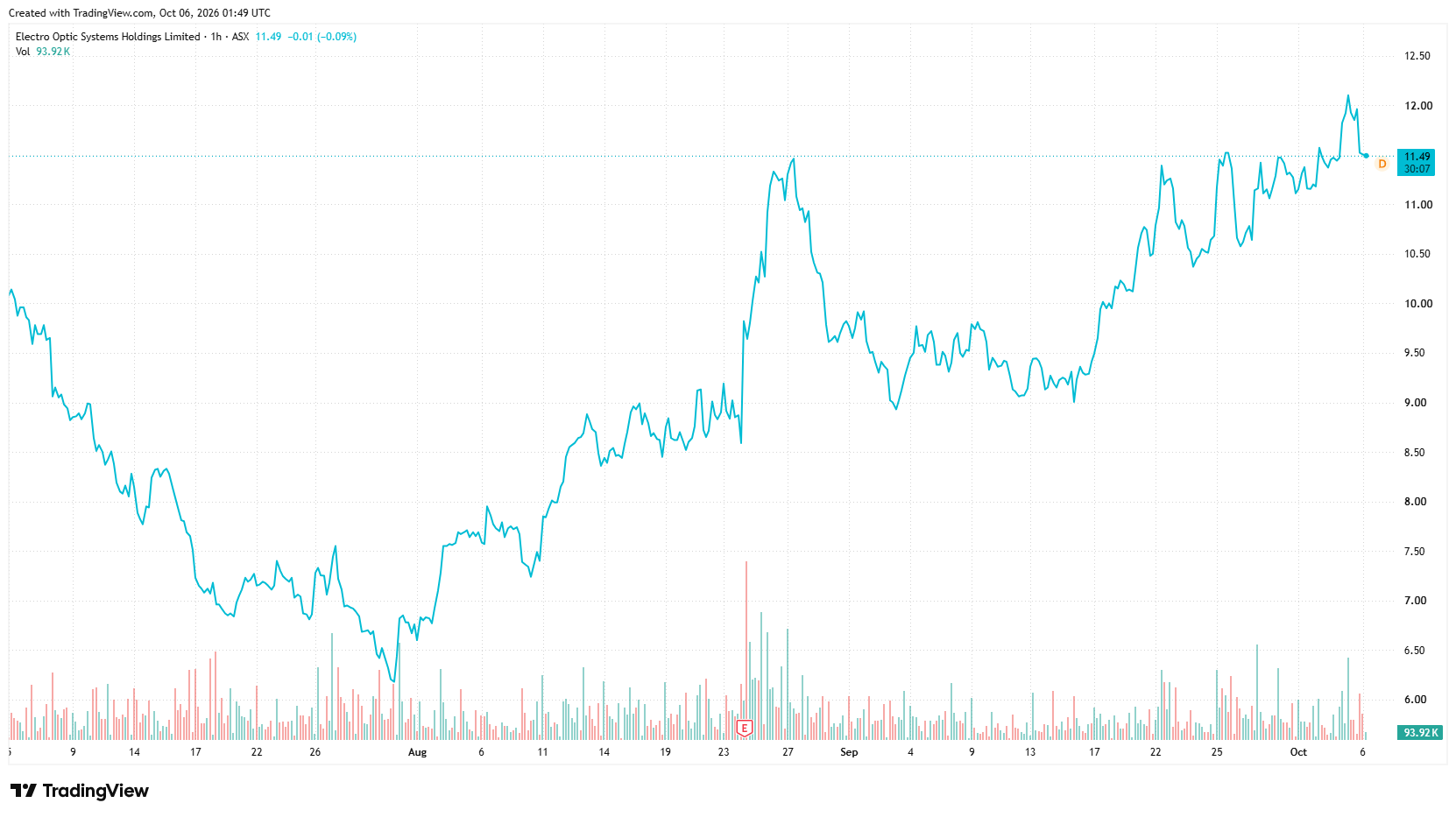
About Electro Optic Systems Holdings Ltd. Electro Optic Systems Holdings Limited engages in the development, manufacture, and sale of telescopes and dome enclosures, laser satellite tracking systems, remote weapon systems, and high laser weapon. It operates through Defense Systems and Space Systems segments. The company develops, manufactures, and markets fire control, surveillance, weapon systems, and high energy laser to military customers. It also provides passive optical and laser sensing equipment; optical, microwave and on-the-move radio and satellite products; and laser-based surveillance systems with space tracking capability. In addition, the company offers counter-drone, firepower, force protection, and UGV and marine lethality systems, as well as high energy laser weapon; optical tracking systems, space control, space domain awareness, satellite laser ranging, space sustainability, and precision optics. It operates in Australia, the United States, Singapore, the United Arab Emirates, the United Kingdom, New Zealand, the Netherlands, North America, Germany, and rest of Europe. Electro Optic Systems Holdings Limited was founded in 1983 and is based in Symonston, Australia. Source: EODHD Key Stats
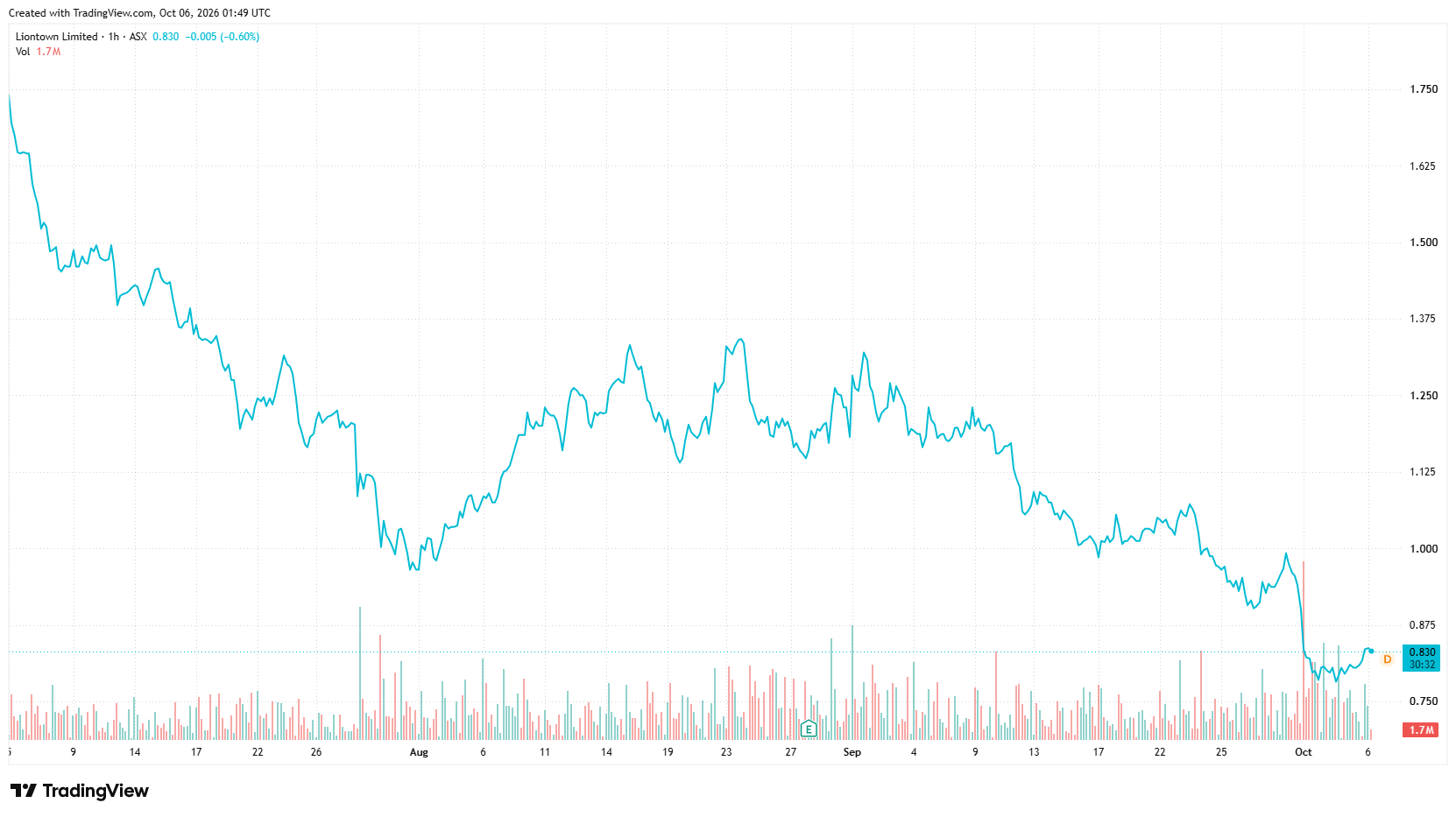
About Liontown Ltd. Liontown Limited engages in the exploration, evaluation, and development of mineral properties in Australia. It primarily explores for lithium, gold, and nickel deposits. The company's flagship property is the Kathleen Valley lithium project located in Perth, Western Australia. The company was formerly known as Liontown Resources Limited and change its name to Liontown Limited in November 2025. Liontown Limited was incorporated in 2006 and is headquartered in West Perth, Australia. Source: EODHD Key Stats

The RBA has raised rates to 4.60% as inflation pressures persist. Explore the impact of energy costs, AI demand and the key signals investors should watch next.

Discover how advances in genomics, AI, diagnostics and gene editing are creating a broader healthcare opportunity and where commercial value is emerging.

The AI trade is being forced to rethink the pace of progress. Here is what investors should watch across Nvidia, chips, AI spending, software and adoption.

Copper is at a record high, yet the global market still has a surplus. So where is all the copper, and why is it becoming harder to find?

Sharewise CEO Alex Perry sat down with ausbiz to unpack how the platform approached FY26, a year in which it reported an ASX return of almost 11% and a US return above 32%. The conversation ranged from the AI infrastructure theme to specific names on Perry's radar in resources and quantum computing. Here's a rundown of the key points.

Warsh gave markets a framework, not a forecast. What his first Jackson Hole keynote means for inflation, rates, forward guidance and the outlook for equities.
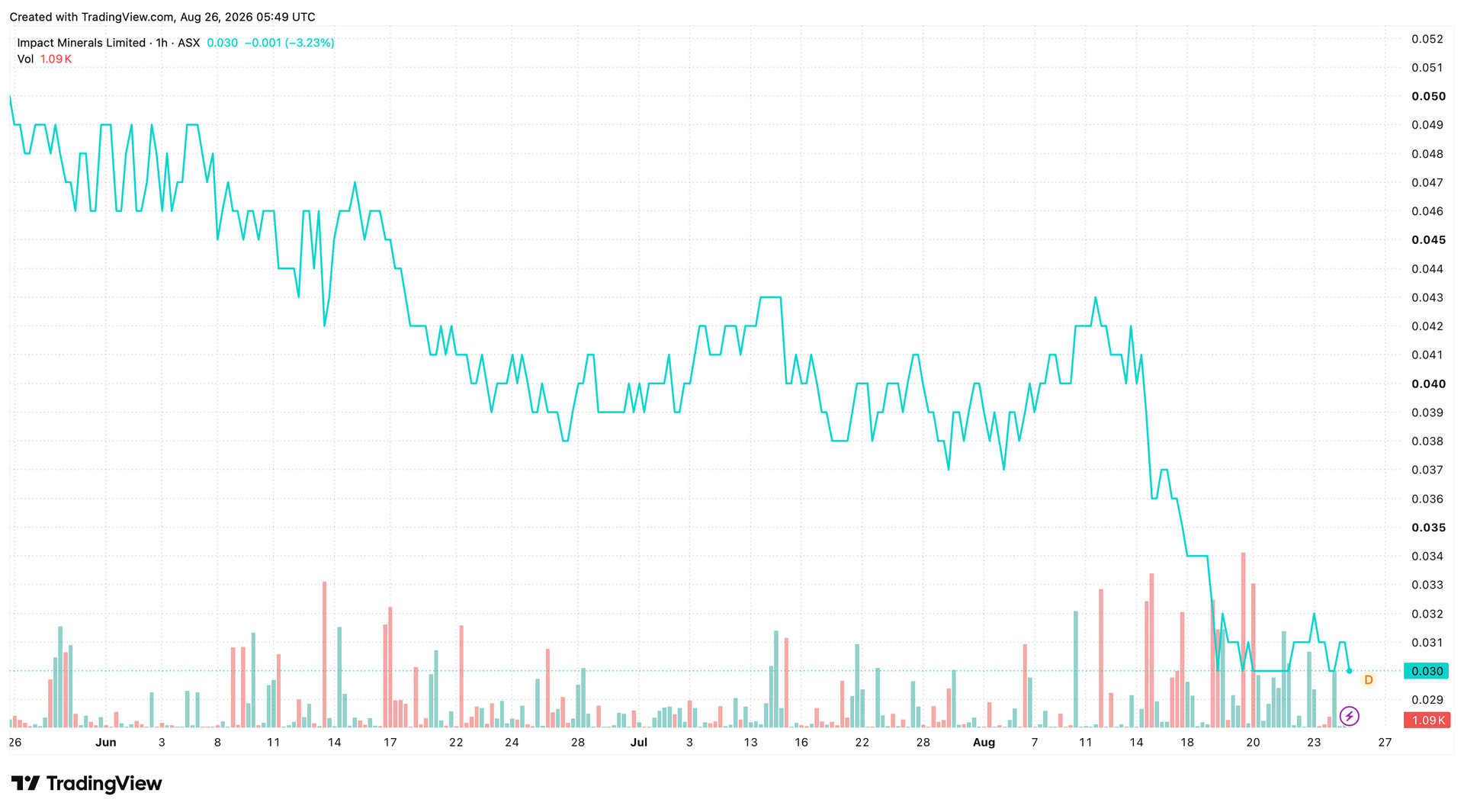
Get the latest on Impact Minerals (ASX: IPT), including stock performance, technical analysis, forecasts & key insights. See if IPO supports your goals.
