
Markets on Edge: What Investors Should Watch as Trump's Trade Policy Turns Unpredictable
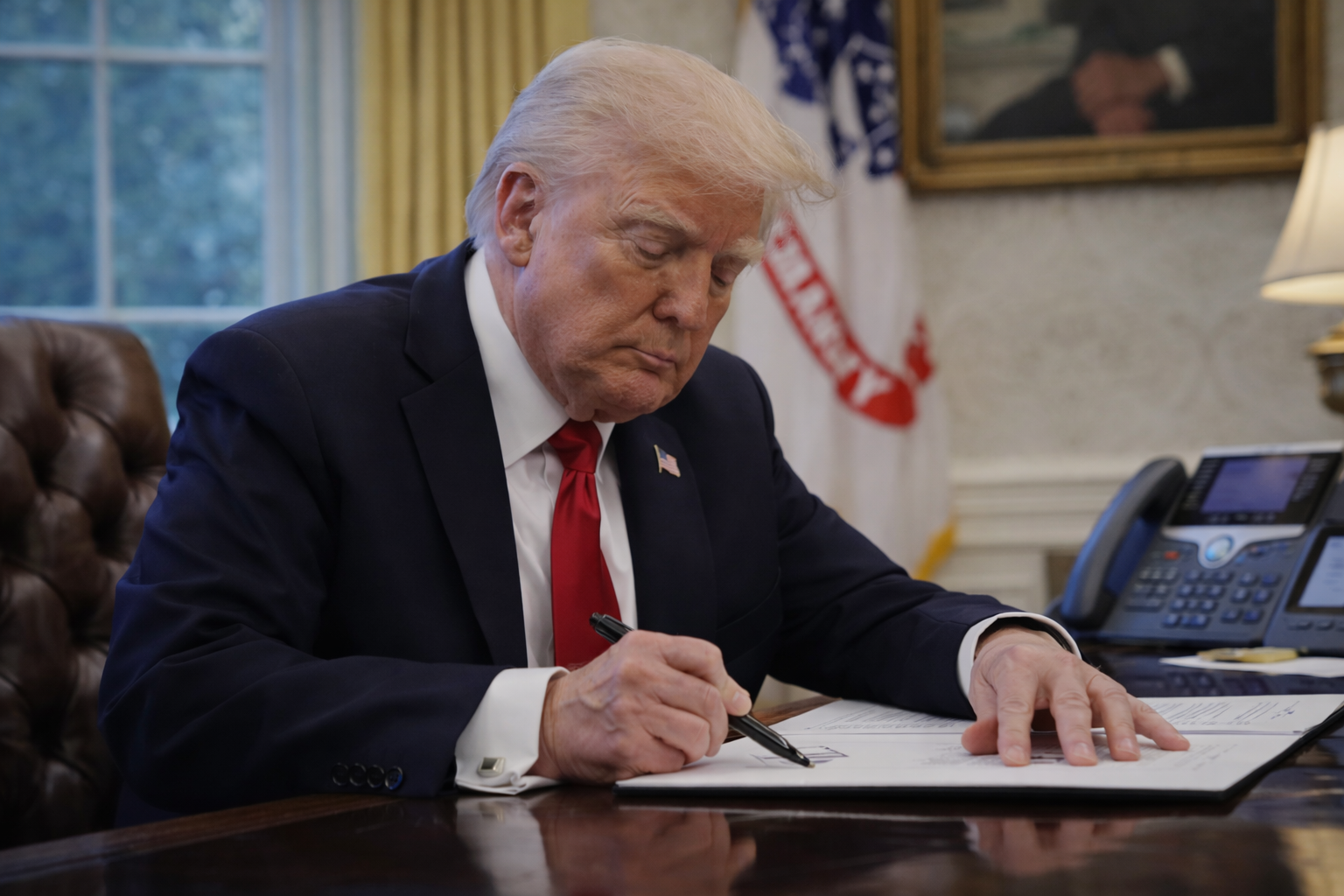
The Court won the legal battle, but tariffs advanced in practice. For investors attempting to interpret what this sequence of events means for markets, the priority is not forecasting an ultimate outcome. Legal contestation and policy fluidity make prediction challenging. A more constructive approach is to identify the economic and market indicators that now carry the clearest signal of risk and opportunity.
The New Tariff Regime: What Is Actually in Place
Before assessing market impact, it is important to separate signal from noise. The Supreme Court ruling invalidated tariffs imposed under IEEPA, including broad reciprocal duties that had dominated trade headlines since April 2025. The decision was narrowly scoped, leaving existing Section 232 tariffs on steel and aluminium and Section 301 tariffs on Chinese imports intact.
Within hours, the administration moved to invoke Section 122 of the Trade Act of 1974, a balance-of-payments provision never previously used for tariffs. A flat 10% duty took effect on 24 February, with escalation toward the 15% statutory ceiling signalled over the weekend. While the effective U.S. tariff rate has declined from IEEPA-era levels, the framework is temporary, expiring after 150 days unless extended by Congress. Policymakers have indicated the intention to layer Section 232 and Section 301 tariffs on top, changing the architecture while keeping the policy direction intact.
Investors should also track potential refunds on IEEPA tariffs. Estimates suggest U.S. importers could be owed substantial repayments, though the timeline is uncertain. The durability of Section 122 itself is also untested. The statute was designed to address currency imbalances rather than trade deficits, raising the possibility of further legal challenge and adding uncertainty to the policy environment.
Sector-level exposure is also evolving. Technology, consumer goods, automotive, and industrial sectors are particularly sensitive to changes in input costs under the new tariff framework. Companies with high import intensity or global supply chains could face margin pressure, while those producing domestically or sourcing from exempt jurisdictions may see limited impact. For investors, the distributional effect across sectors will be a critical determinant of portfolio risk.
What Markets Are Telling Us Right Now
The initial market response has been notable less for its magnitude than for its restraint. Global equities absorbed the news without broad risk-off selling. European indices opened modestly weaker before stabilising, U.S. futures dipped and recovered, and on the ASX, the new tariffs prompted a short rotation into defensive assets such as gold. There has been no panic or repeat of the sharp drawdowns seen after the April 2025 reciprocal tariffs.
Equities appear to be pricing in a disruptive but manageable tariff environment. This assumption depends heavily on the 150-day window resolving without further escalation. The first meaningful data points will emerge during March and April earnings season, when U.S. consumer-facing companies report the realised margin impact of higher import costs. Forward guidance from these updates will provide early insight into whether the market’s relative calm reflects confidence or growing complacency.
Currency and bond markets are adjusting. The U.S. dollar has softened, reflecting the stagflationary pressures tariffs introduce, which raise costs while suppressing growth. Inflation expectations across developed markets have risen slightly, affecting monetary policy outlooks and potentially delaying the anticipated path for rate cuts. Central bank statements over the next month will be closely watched for any shift in language around inflation persistence or growth expectations.
Gold continues to trade near record highs, supported by policy uncertainty and central bank accumulation rather than purely as an inflation hedge. Emerging markets present a divergence opportunity, as economies positioned to benefit from supply chain reallocation attract incremental capital inflows. Conversely, Europe represents a potential escalation risk. Any retaliatory action from the European Union could trigger more significant global trade disruption than seen so far, particularly in sectors reliant on transatlantic trade.
Commodity markets will also provide critical signals. Tariffs affect global shipping costs, input prices, and manufacturing margins, which ripple through energy and resource demand. Observing these indicators provides early insight into the economic impact of trade policy before official GDP or earnings data are released.
Scenarios for the Next 150 Days
The 150-day clock is the most important variable in global markets. Almost everything else is secondary to this central signal.
The
bull case sees Congress declining to extend Section 122, allowing tariffs to lapse and providing a clear signal of trade normalisation. Political realities make this scenario unlikely. With midterm elections approaching, few legislators are willing to take responsibility for repealing tariffs, making a legislative rollback challenging.
The base case, aligned with the administration’s stated intentions, envisions the 150-day period being used to consolidate a patchwork of durable tariffs under Sections 232 and 301. Markets are likely to grind sideways amid policy uncertainty, punctuated by occasional rallies and sell-offs as negotiations with individual trading partners evolve.
The bear case involves a full escalation spiral. Retaliation by the EU, a measured response from China, and a fragmentation of the global trade system could revive stagflationary pressures. This outcome is underpriced in current equity valuations, offering little compensation for a major trade shock.
Congressional positioning over May and June will provide the clearest indicator. Public statements regarding the July vote will offer early warning of potential outcomes, allowing investors to anticipate market direction before formal policy decisions.
What Australian Investors Should Specifically Watch
For Australian investors, direct exposure to Section 122 tariffs is limited. Critical minerals, LNG, and major agricultural exports remain exempt. However, the exemption list is fluid. Any revision could affect export earnings and related companies, creating immediate portfolio impact.
Indirect risks are more significant. Australia’s economy is sensitive to global commodity demand and Chinese industrial activity. A slowdown in China could weigh on iron ore, compressing earnings for BHP, Rio Tinto, and Fortescue, and affecting the ASX 200 and federal revenues. NAB’s head of FX strategy Ray Attrill described the tariff escalation as negative for the Australian dollar, reflecting combined headwinds from slower growth and tariff-driven cost pressures.
Key indicators include monthly iron ore prices and Chinese manufacturing PMI. A sustained decline in the AUD/USD would indicate risk-off pressures outweighing commodity support and may prompt a review of offshore hedging.
The Reserve Bank of Australia faces a more complex policy environment, balancing persistent domestic inflation against slower global growth and external tariff-driven pressures. Mentions of international inflation in the March statement could influence expectations for rate adjustments in 2026.
Australian investors should also review offshore equity exposures in superannuation portfolios, particularly U.S. consumer, retail, and technology holdings vulnerable to margin compression. On the upside, unresolved IEEPA refunds represent a potential earnings tailwind for U.S. multinationals, which could indirectly benefit Australian investors through international allocations. Understanding these exposures is essential for portfolio management.
Strategic Considerations for Investors
In a volatile policy environment, clarity on the outcome of the 150-day Section 122 window is unlikely before 24 July. Positioning across a range of potential scenarios allows investors to manage risk while maintaining flexibility amid uncertainty.
Avoid chasing relief rallies. Equity markets have absorbed the tariff news with composure, but this rests on the base case resolving benignly. The 15% Section 122 tariff is live, legally contested, and carries escalation risk. Buying the headline rather than the underlying reality is risky.
Stress-test against the bear case, not just the base. EU retaliation, Chinese counter-measures, and a stagflation impulse remain underpriced in current valuations. Modest resilience measures now are cheaper than reacting once the scenario materialises.
Reassess fixed income duration. Tariff-driven inflation introduces upside risk to yields. Investors with long-duration exposure may consider shifting toward shorter-duration or inflation-linked instruments until the July outcome is clear.
Treat gold as strategic allocation. Current drivers, central bank accumulation, a weaker U.S. dollar, and policy uncertainty, are structural. Maintaining a modest allocation provides genuine diversification if equities and bonds face simultaneous headwinds.
Look at emerging market divergence as an active opportunity.
Vietnam, India, and Mexico are genuine trade diversion beneficiaries attracting real capital inflows. Investors with existing EM exposure should consider whether it is positioned toward these supply chain winners or inadvertently concentrated in directly exposed economies.
Use the May–June signalling window actively. Public statements on the July vote offer early visibility. This 60-daywindow should inform tactical allocation decisions rather than be treated as background noise.
Avoid over-trading the news cycle. Headlines will be frequent. Investors who define scenarios, set clear triggers, and maintain discipline will navigate volatility more effectively than those reacting to daily developments.
Bottom Line
The trade conflict did not end on 20 February. It shifted jurisdiction, moved to a new statutory framework, and became more costly for global importers than before the Supreme Court ruling. The key takeaway is that the administration’s commitment to tariffs as a core policy tool is sufficient to absorb a legal setback and reconstitute the framework under a new statute.
In a context of uncertainty, forecasting the final outcome is less valuable than monitoring relevant signals. Investors should know what to watch, when to watch it, and how each signal affects portfolios.
For Australian investors, the direct impact is manageable, but indirect and structural risks remain underpriced. The most critical variable, the outcome of the 150-day period ending 24 July, remains unresolved. Market calm does not necessarily indicate accuracy. Vigilance, analysis, and scenario planning remain essential.
Subscribe to our newsletter
Disclaimer: This article does not constitute financial advice nor a recommendation to invest in the securities listed. The information presented is intended to be of a factual nature only. Past performance is not a reliable indicator of future performance. As always, do your own research and consider seeking financial, legal and taxation advice before investing.
Speak to an Advisor

Firmus’ proposed mega-IPO puts a spotlight on the cost, capital intensity and risks of building AI infrastructure as investors weigh the next phase of the AI boom.
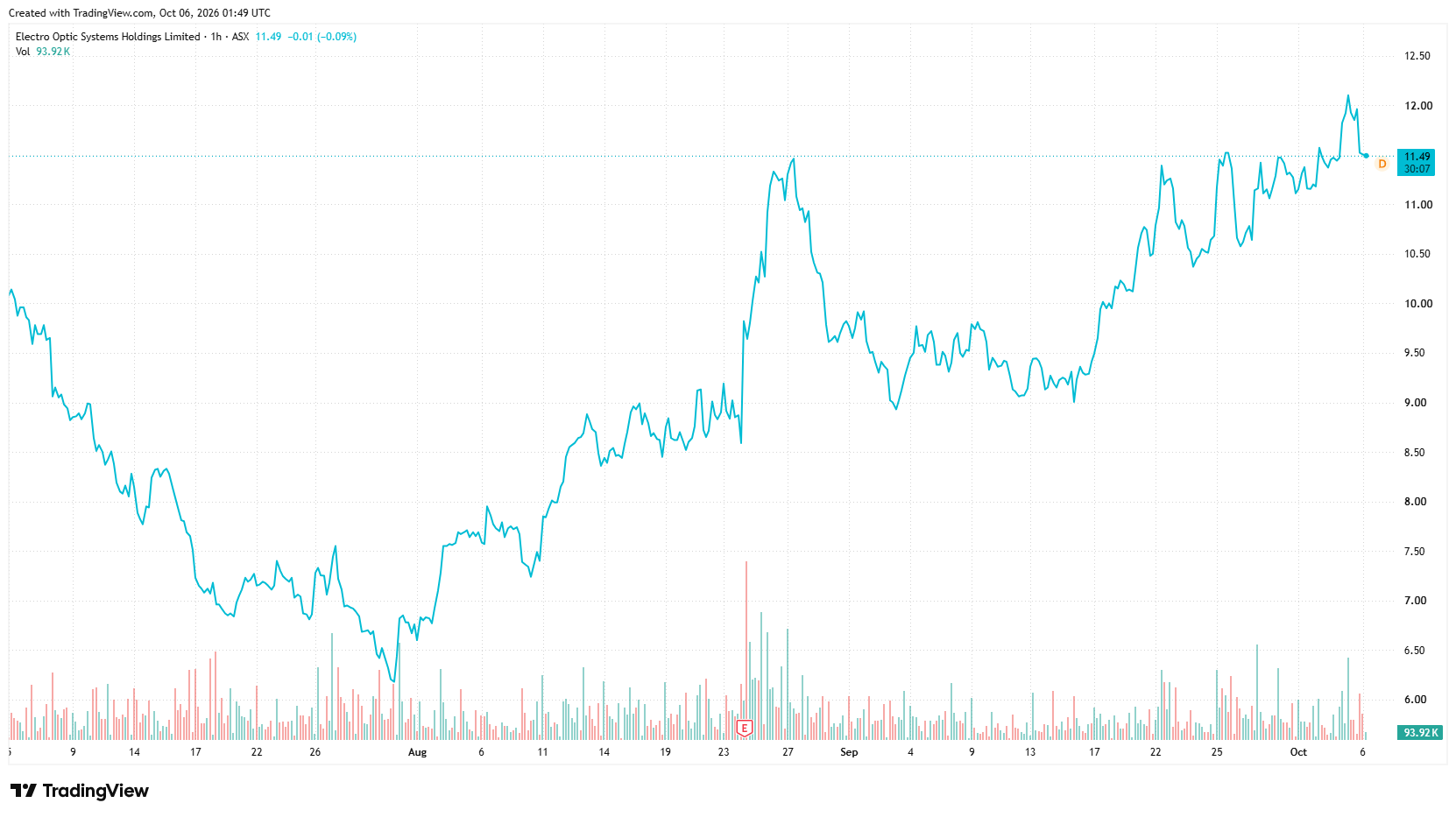
About Electro Optic Systems Holdings Ltd. Electro Optic Systems Holdings Limited engages in the development, manufacture, and sale of telescopes and dome enclosures, laser satellite tracking systems, remote weapon systems, and high laser weapon. It operates through Defense Systems and Space Systems segments. The company develops, manufactures, and markets fire control, surveillance, weapon systems, and high energy laser to military customers. It also provides passive optical and laser sensing equipment; optical, microwave and on-the-move radio and satellite products; and laser-based surveillance systems with space tracking capability. In addition, the company offers counter-drone, firepower, force protection, and UGV and marine lethality systems, as well as high energy laser weapon; optical tracking systems, space control, space domain awareness, satellite laser ranging, space sustainability, and precision optics. It operates in Australia, the United States, Singapore, the United Arab Emirates, the United Kingdom, New Zealand, the Netherlands, North America, Germany, and rest of Europe. Electro Optic Systems Holdings Limited was founded in 1983 and is based in Symonston, Australia. Source: EODHD Key Stats
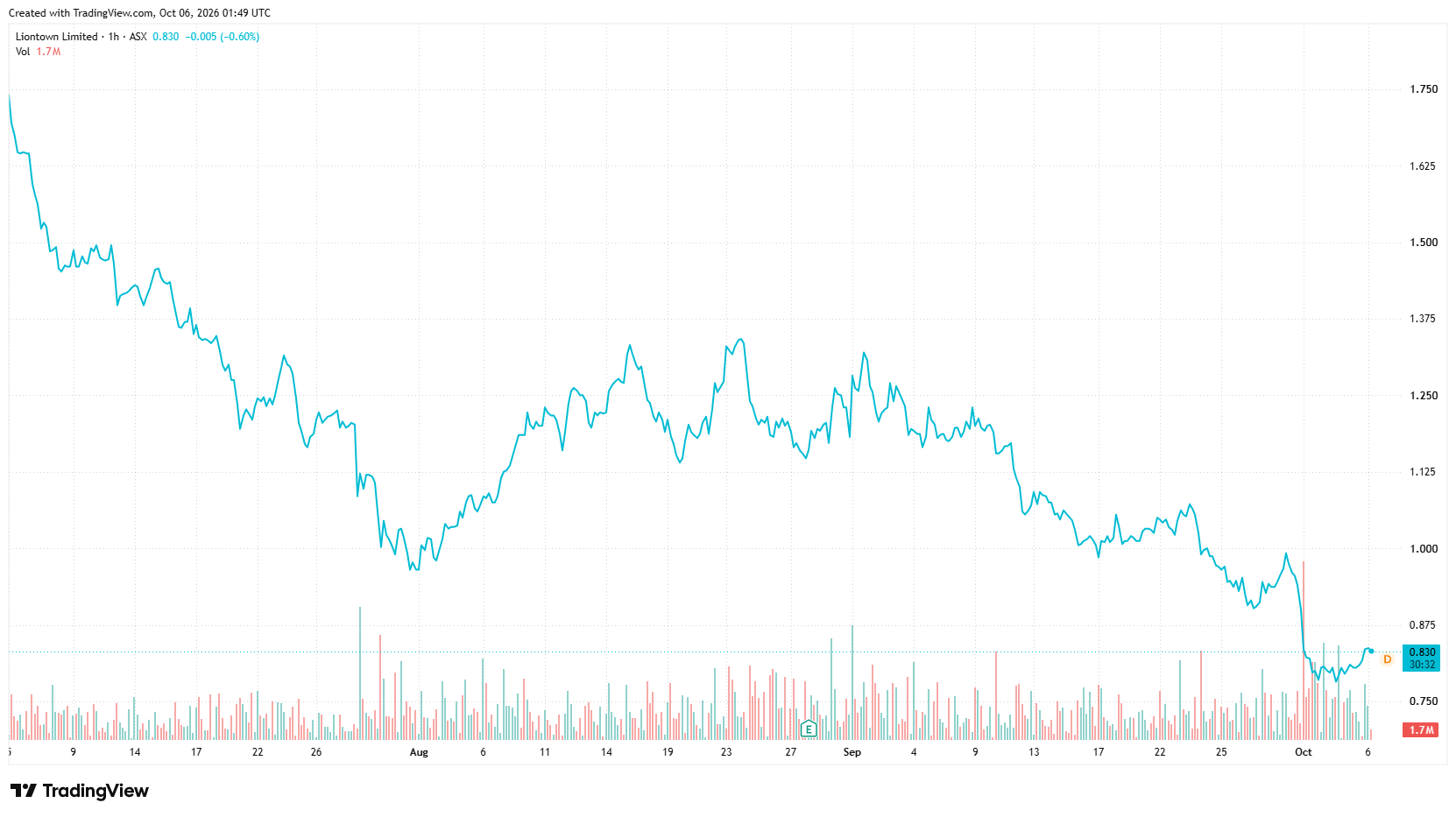
About Liontown Ltd. Liontown Limited engages in the exploration, evaluation, and development of mineral properties in Australia. It primarily explores for lithium, gold, and nickel deposits. The company's flagship property is the Kathleen Valley lithium project located in Perth, Western Australia. The company was formerly known as Liontown Resources Limited and change its name to Liontown Limited in November 2025. Liontown Limited was incorporated in 2006 and is headquartered in West Perth, Australia. Source: EODHD Key Stats

The RBA has raised rates to 4.60% as inflation pressures persist. Explore the impact of energy costs, AI demand and the key signals investors should watch next.

Discover how advances in genomics, AI, diagnostics and gene editing are creating a broader healthcare opportunity and where commercial value is emerging.

The AI trade is being forced to rethink the pace of progress. Here is what investors should watch across Nvidia, chips, AI spending, software and adoption.

Copper is at a record high, yet the global market still has a surplus. So where is all the copper, and why is it becoming harder to find?
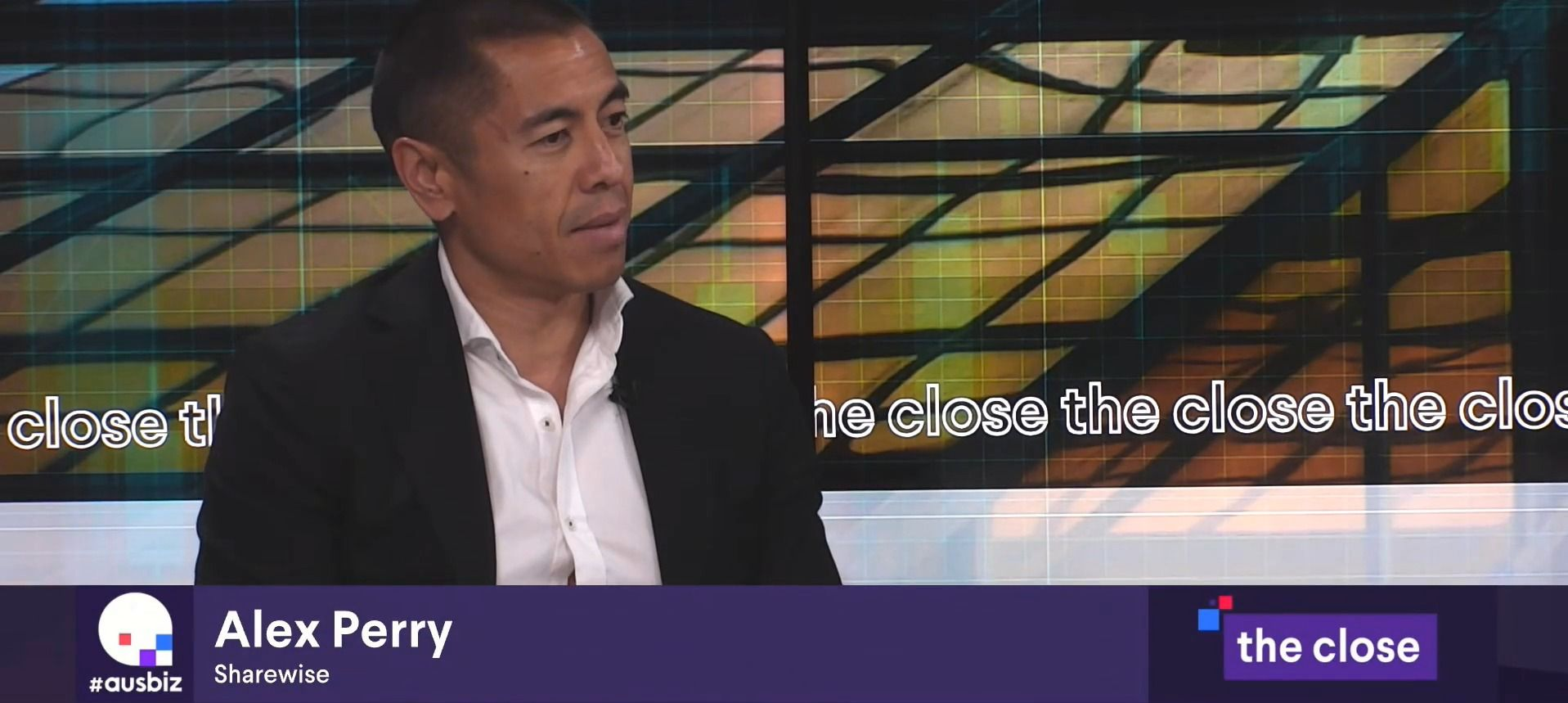
Sharewise CEO Alex Perry sat down with ausbiz to unpack how the platform approached FY26, a year in which it reported an ASX return of almost 11% and a US return above 32%. The conversation ranged from the AI infrastructure theme to specific names on Perry's radar in resources and quantum computing. Here's a rundown of the key points.

Warsh gave markets a framework, not a forecast. What his first Jackson Hole keynote means for inflation, rates, forward guidance and the outlook for equities.
Get the latest on Impact Minerals (ASX: IPT), including stock performance, technical analysis, forecasts & key insights. See if IPO supports your goals.
