Hawkish Hold: What the RBA's August Pause Really Signals
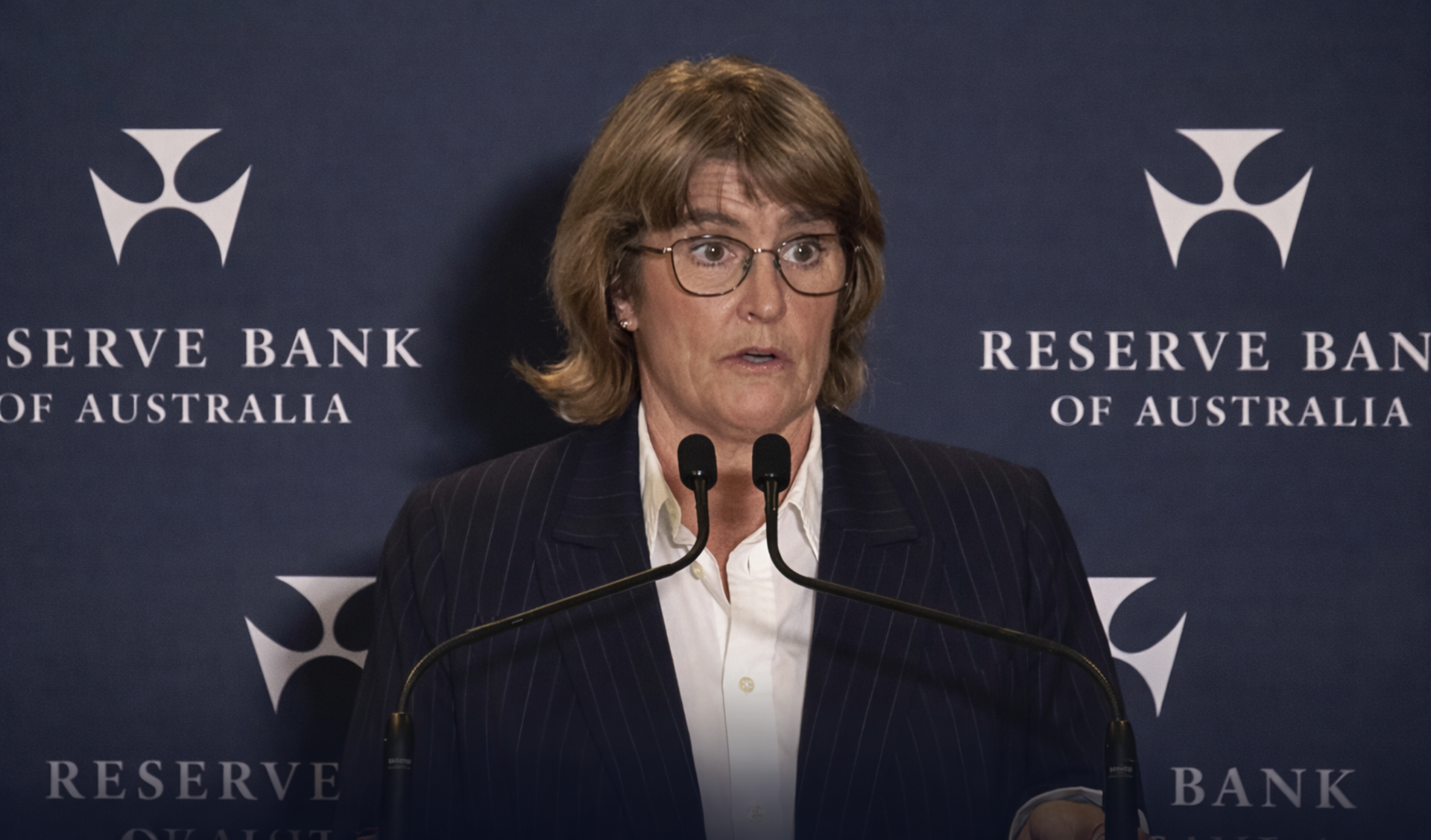
The Reserve Bank of Australia left the cash rate unchanged at 4.35% on 11 August, marking the second consecutive meeting at which the Board opted to hold. On the surface, there is not much to say when nothing moves. Rates stay where they are, mortgage repayments do not change overnight, and markets quickly turn their attention to the next headline.
But the decision itself only tells part of the story.
Behind the hold, the RBA is reading an economy sending genuinely mixed signals. Domestic demand is moderating, labour market conditions have eased and housing activity has weakened. Inflation, however, remains elevated, while the Board continues to see risks around the outlook. The result is a central bank that has paused, but has not ruled out further action if inflation proves more persistent than expected.
The RBA Holds: A Pause, Not a Shift in Direction
The August decision keeps the cash rate at 4.35%, following three increases earlier in the year. The RBA said financial conditions remain restrictive, with higher lending and deposit rates weighing on parts of the economy. It also noted that domestic demand has moderated and labour market conditions have eased by a little more than expected in recent months.
At the same time, the Board remains concerned that inflation is still too high. It said underlying inflation remains elevated and that higher costs associated with the Middle East conflict are adding to price pressures, although the pass-through to consumer prices has so far been more limited than previously expected.
This is where the term hawkish hold comes in. It describes a central bank that leaves rates unchanged while keeping the possibility of another increase open. It does not mean a rate hike is certain. Rather, the RBA is allowing itself room to respond if inflationary pressures do not ease as expected.
The distinction matters because a rate hold can signal different things depending on the circumstances. In this case, the RBA has not indicated that the inflation challenge is behind it or committed to a shift towards easier policy. Instead, it is allowing more time for previous rate increases to work through the economy while remaining prepared to respond if the outlook changes.
Inflation Is Still the Problem
The latest inflation figures explain the RBA's caution. Headline CPI inflation eased to 3.9% over the year to the June quarter, materially weaker than expected. Much of the surprise came from lower retail fuel and travel prices. The RBA's preferred underlying measure, trimmed mean inflation, rose to 3.6% year-on-year from 3.5% in the March quarter, but remained below the Bank's forecast of 3.8%.
The distinction matters. Headline inflation is heavily influenced by volatile items, while underlying measures provide a clearer indication of persistent price pressures. The RBA said the elevated trimmed mean reflects ongoing capacity pressures across the economy, alongside the pass-through of higher costs associated with the Middle East conflict.
The RBA's forecast track has underlying inflation remaining around 3% through mid-2027 before declining towards the midpoint of the 2–3% target range in early 2028. Even in the Bank's central outlook, inflation stays above the middle of the band for some time. For the Board to become more comfortable with cuts, wages growth would need to ease, labour market conditions would need to soften further, and the recent moderation in underlying price pressures would need to persist.
The Economy Is Starting to Feel the Pressure
Higher interest rates are beginning to weigh on activity. The RBA said growth in domestic demand has moderated broadly as expected, while labour market conditions have eased by a little more than anticipated in recent months. The unemployment rate remained at 4.4% in June, although the Board still assesses labour market conditions as somewhat tight relative to full employment.
Households are also feeling the effects of earlier rate increases. Higher scheduled mortgage repayments account for a relatively large share of household disposable income, while demand for new housing loans has eased. Housing market conditions have also softened, although the effects vary across different parts of the market.
The slowdown is not uniform. Business investment has remained relatively strong, with data-centre construction contributing to investment activity and creating additional capacity pressures in parts of the economy. The RBA expects GDP growth to remain subdued through 2026 before gradually recovering as some of the current headwinds ease.
This creates the central tension for monetary policy.
Higher rates are slowing parts of the economy, but inflation remains sufficiently elevated to keep policymakers cautious about easing.
If policy is eased too early, inflation could prove more persistent than expected. If restrictive conditions remain in place for too long, weaker demand and employment could become more pronounced.
What a Hawkish Hold Means for the ASX
The transmission of a rates outlook into equities is not uniform across sectors. It generally flows through three channels: funding costs, discount rates and the health of the underlying customer base. Understanding which channel dominates is key to assessing the effect on each sector.
Banks sit at the intersection of competing forces. Higher rates can support lending margins, but the benefit is not automatic. Competition for deposits, refinancing activity and weaker credit growth can put pressure on earnings, while a prolonged period of elevated rates can increase the risk of borrowers falling behind on repayments. Commonwealth Bank's FY26 result, released on 12 August, reported cash net profit of $10.98 billion, up 7% on FY25, with the underlying net interest margin broadly stable. The more forward-looking signal sat in the credit data. Home loan applications were running 17% below the prior year on a four-week rolling average to 31 July, with investor applications down 28% and owner-occupier applications down 9%. That is a real-time read on how the higher rate environment is flowing through to mortgage demand across the sector.
REITs and property stocks are among the more rate-sensitive areas of the market. Higher borrowing costs increase interest expenses, while higher market yields can place pressure on property valuations by lifting the capitalisation rate applied to rental income. The effect on individual companies depends on gearing, debt maturity profiles, hedging and the quality of underlying assets.
Consumer discretionary companies face the household cash-flow effect directly. Higher mortgage repayments and living costs can leave households with less disposable income, making spending patterns an important consideration for retailers, travel companies and other consumer-facing businesses. Reporting season commentary should provide a useful read on sales trends and management expectations.
Growth and technology stocks are sensitive to long-duration discount rates. Because a greater portion of their expected cash flows may sit further into the future, the present value assigned to those earnings can be more sensitive to changes in market interest rates. This does not mean higher rates automatically make growth companies less attractive, but it does make valuation more sensitive to shifts in the interest-rate outlook.
Resources and energy are generally less directly exposed to Australian monetary policy. Commodity prices, global demand, production costs and geopolitical conditions tend to be more important drivers of earnings. The Australian dollar is often the more relevant channel. A hawkish RBA tends to support the Australian dollar via the interest-rate differential, and a stronger currency reduces the Australian dollar value of US dollar-denominated revenues at the major miners and energy producers.
The important point is that a hawkish RBA stance is not automatically positive or negative for an entire sector. The effect depends on which of these channels matters most for each company.
What Could Happen Next?
The August decision leaves several possible paths for monetary policy.
If inflation continues to moderate, the RBA could maintain its current stance while waiting for clearer evidence that inflation is returning sustainably towards target. A further easing in underlying price pressures would reduce one of the main constraints on monetary policy.
If inflation remains sticky, the cash rate could stay restrictive for longer. This would be consistent with the RBA's current assessment that underlying inflation is likely to remain elevated for some time. Companies with strong balance sheets, resilient earnings and less exposure to highly rate-sensitive domestic demand could remain relatively better positioned in that environment.
If inflationary pressures increase again, the RBA has left the option of further tightening open. Higher energy prices, persistent domestic capacity pressures or stronger-than-expected demand could complicate the path back towards target. Further tightening would be expected to place greater pressure on highly leveraged and rate-sensitive areas of the market.
What Investors Should Watch
The next phase of the interest-rate cycle will depend on whether incoming economic data confirms the RBA's current expectations.
Inflation remains the most important indicator. The focus will be on whether underlying inflation continues to moderate rather than simply whether headline CPI moves higher or lower in any individual period.
Employment and wages will also matter. Labour market conditions have eased, but remain relatively tight, while wage pressures remain relevant to the outlook for domestic inflation. A further gradual easing could reduce domestic inflation pressure, while stronger wage growth could make the return to target more difficult.
Household spending and housing provide another measure of how strongly previous rate increases are affecting demand. Further weakness would indicate that monetary policy is continuing to flow through to households, while renewed strength could complicate the inflation outlook.
Finally, corporate earnings and guidance offer a real-world test of how the higher-rate environment is affecting Australian companies. Reporting season commentary can show whether businesses are experiencing weaker demand, higher funding costs or changes in customer behaviour, and whether those pressures are beginning to affect FY27 earnings expectations.
The balance between easing inflation and slowing domestic demand will be central to determining the next phase of monetary policy.
The August decision did not resolve the direction of Australian monetary policy. It reinforced the RBA's balancing act: inflation remains too high, while the effects of higher rates are becoming more visible across the economy.
For investors, the focus now shifts from the decision itself to the data that will determine whether those competing pressures move closer together or further apart. That makes earnings quality, balance-sheet strength and valuation discipline increasingly important as the next phase of the rate cycle takes shape.
Subscribe to our newsletter
Disclaimer: This article does not constitute financial advice nor a recommendation to invest in the securities listed. The information presented is intended to be of a factual nature only. Past performance is not a reliable indicator of future performance. As always, do your own research and consider seeking financial, legal and taxation advice before investing.
Speak to an Advisor