Jackson Hole 2026: Warsh Sets Out the Fed’s New Policy Framework
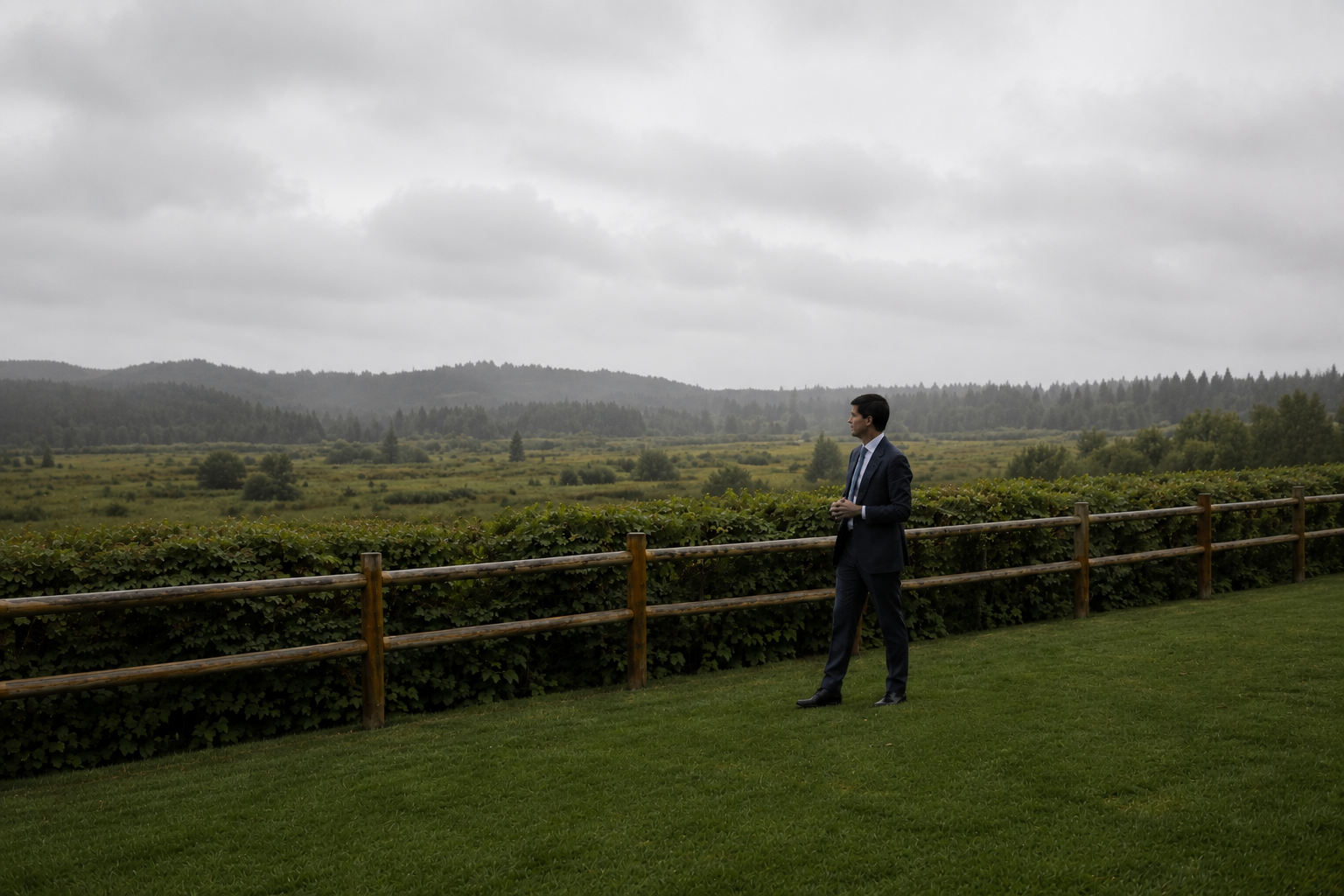
Kevin Warsh delivered his first keynote as Chairman of the US Federal Reserve at the Kansas City Fed’s Jackson Hole Economic Policy Symposium on Friday, 28 August, marking his 100th day in the role. Titled “In Our Time,” the address came at an important point for US monetary policy, with markets looking for clues about how the new Chair intends to approach inflation, growth and interest rates.
Jackson Hole has historically provided Fed chairs with an opportunity to signal a change in direction. Expectations were therefore high, particularly after Warsh spent his first three months signalling a different approach to Fed communication. He has placed less emphasis on prescribing the future path of policy and has declined to provide markets with the kind of forward guidance that has become familiar in recent years.
At Jackson Hole, Warsh maintained that approach. Rather than signalling where rates are headed, he explained how he is assessing the economy and the factors he believes should guide future decisions. Markets responded quickly, particularly in interest rates, giving investors an early indication of how they interpreted the new Chair’s framework.
Inflation Remains the Fed’s Top Priority
Warsh was clear that the Fed’s 2% inflation objective remains central to monetary policy, describing it as a “firm, fixed target.” He also clarified that the target is measured using the personal consumption expenditures price index, or PCE.
The latest readings remain well above that objective. The 12 month change in PCE stands at 3.7%, while the six month rate is running at 4.1%. Core measures of both PCE and CPI are also elevated. Warsh acknowledged that some recent inflation readings had been better than expected, but argued that they had not yet provided convincing evidence of a sustained improvement in the underlying trend.
He placed particular emphasis on the breadth of inflation. Across the 199 components of the PCE basket, 54% recorded price increases above 3% over the past 12 months. That compares with roughly 77% at the post pandemic peak and an average of 32% during the two decades before the pandemic. Over the past six months, the figure was still 49%.
The breadth measure helps explain why Warsh remains cautious about declaring victory on inflation. A decline in headline inflation can look encouraging even when price increases remain widespread across the economy. For now, the data leave the Fed with a familiar problem: inflation is well below its post pandemic peak, but still too high and too broad for policymakers to regard the job as finished.
A September Rate Hike Is Back on the Table
Warsh did not commit to a rate hike at the September meeting. Instead, he set a clear standard for policy: the Fed needs to be confident that underlying inflation is moving towards its objective clearly and at sufficient speed. If that progress is not evident, he said, the central bank has more work to do. He also acknowledged the Fed’s responsibility for 65 months of sustained, elevated inflation, a notable comment from a new Chair discussing the institution he now leads.
Markets responded quickly. Before the speech, futures implied roughly a 35% probability of a 25 basis point increase at the September FOMC meeting. That moved to around 60% following the speech, although pricing has continued to fluctuate. The current federal funds target range is 3.50% to 3.75%, meaning a 25 basis point hike would take the upper end to 4.00%.
The Treasury market provided the clearest response. The two year yield rose by roughly 12 basis points to around 4.35%, while the 10 year yield also moved higher and the 30 year yield was little changed at around 5.21%. The July FOMC meeting had already produced three dissents in favour of a hike, showing that the hawkish view was present before Jackson Hole. A September increase is now a meaningful market scenario, but the decision remains dependent on the data.
The Fed Is Moving Away from Forward Guidance
Warsh’s approach to forward guidance could prove to be one of the more important changes to the Fed’s communication style. He argued that forward guidance became useful during the Global Financial Crisis but has since “overstayed its welcome.”
His concern is not simply that forecasts can be wrong. When a central bank signals where rates are likely to go, it can limit its own flexibility when economic conditions change. Warsh pointed to 2021 as an example of how forward guidance may have slowed the policy response as inflation began to rise.
There is also a broader problem. If markets rely heavily on Fed guidance while the Fed uses market prices to assess financial conditions, both sides can end up watching each other instead of watching the economy. Warsh described this as a “hall of mirrors” problem and argued that it can increase the risk of policy error.
His preferred approach is more open ended. He wants the Fed to pay close attention to market prices, Treasury yields and trading volumes, the US dollar, credit availability and commodity prices. Investors, in turn, are expected to form their own expectations around growth, employment and inflation rather than waiting for the Fed to provide a roadmap.
That does not mean the Fed will stop communicating. It means the information value of any single statement or speech may become more limited when policymakers are deliberately avoiding a prescribed path. Economic releases and market pricing could carry more weight between FOMC meetings, particularly when investors are trying to assess the next move in rates.
The US Economy Remains Resilient
Warsh’s assessment of the US economy was relatively positive, helping explain why further tightening remains a credible option. Investment in equipment and intangibles has been growing at around a 9% pace on a four quarter basis, its fastest rate since 2021, while S&P 500 profits have increased by more than 20% over the past year. Real consumer spending has also risen by more than 2% over the past four quarters.
The labour market is broadly stable in Warsh’s assessment. Unemployment remains at 4.1% and four week average unemployment claims are near their lowest levels in decades. Private domestic final purchases have risen at nearly a 3% pace so far this year, providing another indication that underlying demand remains firm.
Financial conditions are also relatively easy. Credit spreads remain near the lower end of their historical ranges, corporate issuance has been strong and bank lending standards are comparatively accommodative. Warsh acknowledged weakness in areas such as housing and agriculture, but said he would be hard pressed to describe overall financial conditions as restrictive. That combination gives the Fed more room to keep policy tight while it waits for clearer evidence on inflation.
AI Could Reshape Growth and Productivity
Away from the immediate rate debate, Warsh devoted part of his keynote to the longer term economic impact of artificial intelligence, describing it as potentially “a new factor of production.” The scale of investment is already significant. He cited estimates that annualised token sales at the two leading AI labs have exceeded USD 100 billion, with growth of more than 500% year on year.
The investment cycle is also showing up in the broader economy. Warsh said more than half of this year’s capital expenditure growth can likely be attributed to the AI buildout, linking the technology boom directly to the strength in business investment he highlighted elsewhere in the speech.
The bigger question is whether that spending translates into sustained, economy wide productivity gains. Warsh raised questions around how quickly those gains might emerge, whether AI will complement or replace labour, and where the resulting returns will ultimately accrue. He highlighted AI labs, chipmakers, energy producers and cloud providers as businesses controlling scarce assets within the emerging ecosystem.
If AI lifts productivity, the economy could potentially grow faster without generating the same inflationary pressure. In the near term, however, the investment boom is adding to capital expenditure and demand, reinforcing the economic resilience that gives the Fed room to keep rates higher. The two effects point in opposite directions on different time horizons.
What Jackson Hole Means for Equities
For equity investors, the main question is how markets balance stronger economic activity against a potentially higher discount rate.
Higher rate expectations generally increase the discount rate applied to future corporate cash flows, which can put pressure on valuations. The effect is usually greater for companies whose valuations depend heavily on earnings expected further into the future. High multiple growth stocks and rate sensitive sectors such as real estate investment trusts (REITs) are therefore more exposed to a sustained increase in bond yields.
The other side of the equation is earnings. Corporate profits are growing, business investment remains strong and AI spending could support productivity and earnings over time. A stronger economy can therefore provide support for equities even as higher rates place pressure on valuations.
The initial market response reflected that balance. On Friday, 28 August, the S&P 500 fell around 0.2%, the Nasdaq declined 0.5% and the Dow was little changed. All three indices still finished the week higher. Bonds moved more sharply, suggesting that the immediate adjustment was concentrated in interest rate expectations rather than a broad reassessment of corporate earnings.
There was also a read through to Australia. The S&P/ASX 200 was lower in early Monday trading as global markets responded to the shift in US rate expectations. A stronger US dollar can place downward pressure on the Australian dollar, which may benefit some Australian exporters and commodity producers with US dollar revenues. The effect varies by company, particularly depending on the currency mix of revenues and costs.
The RBA also needs to be considered separately. A more hawkish Fed affects global funding conditions and exchange rates, but Australian monetary policy remains driven by domestic inflation, employment and growth.
The equity implications are therefore not one directional. Higher rates can weigh on valuations, while economic resilience and earnings growth can provide an offset. The relative impact will depend on the quality of individual businesses, their valuations and their sensitivity to changes in financing conditions.
The Next Move Is Data Dependent
With forward guidance playing a smaller role, the incoming data now carries greater importance. The next major test comes at the FOMC meeting on 15 and 16 September, with inflation, employment and financial conditions likely to shape the decision.
For investors, the key indicators are PCE inflation and its breadth, payrolls, wage growth, Treasury yields and credit conditions. A stronger labour market could support economic activity while making further monetary restraint easier to justify. A more convincing decline in inflation could shift the balance in the other direction.
The important change from Jackson Hole is not that Warsh has told markets what the Fed will do next. He has not. Instead, he has given investors a clearer sense of what he will be looking at when making that decision.
The next few weeks should provide a much better test of the framework he laid out in Wyoming. For now, the data matters more than the signal.
Subscribe to our newsletter
Disclaimer: This article does not constitute financial advice nor a recommendation to invest in the securities listed. The information presented is intended to be of a factual nature only. Past performance is not a reliable indicator of future performance. As always, do your own research and consider seeking financial, legal and taxation advice before investing.
Speak to an Advisor