Firmus and the Price of AI Infrastructure: Is Australia Ready for an AI Mega-IPO?
Firmus was expected to become one of the biggest IPOs in Australian history, bringing a large AI infrastructure developer to the ASX. The company initially priced its shares at AUD 11, implying an equity valuation of approximately AUD 43.7 billion and a potential raise of around AUD 7.1 billion, or approximately USD 5 billion. But the proposed listing has quickly become one of the most closely watched floats on the Australian market, with investors questioning the valuation, capital requirements, operating track record and execution risks. Reports this week indicate Firmus could cut the offer price to AUD 9, representing an AUD 8 billion reduction in market capitalisation, while other reports have suggested the valuation could fall as low as AUD 30 billion or that the IPO could be withdrawn altogether.
The debate is not about whether artificial intelligence needs more computing power. It is about how much of that future growth should be reflected in a company's valuation today, when much of the capacity is still to be built.
What Is Firmus Actually Building?
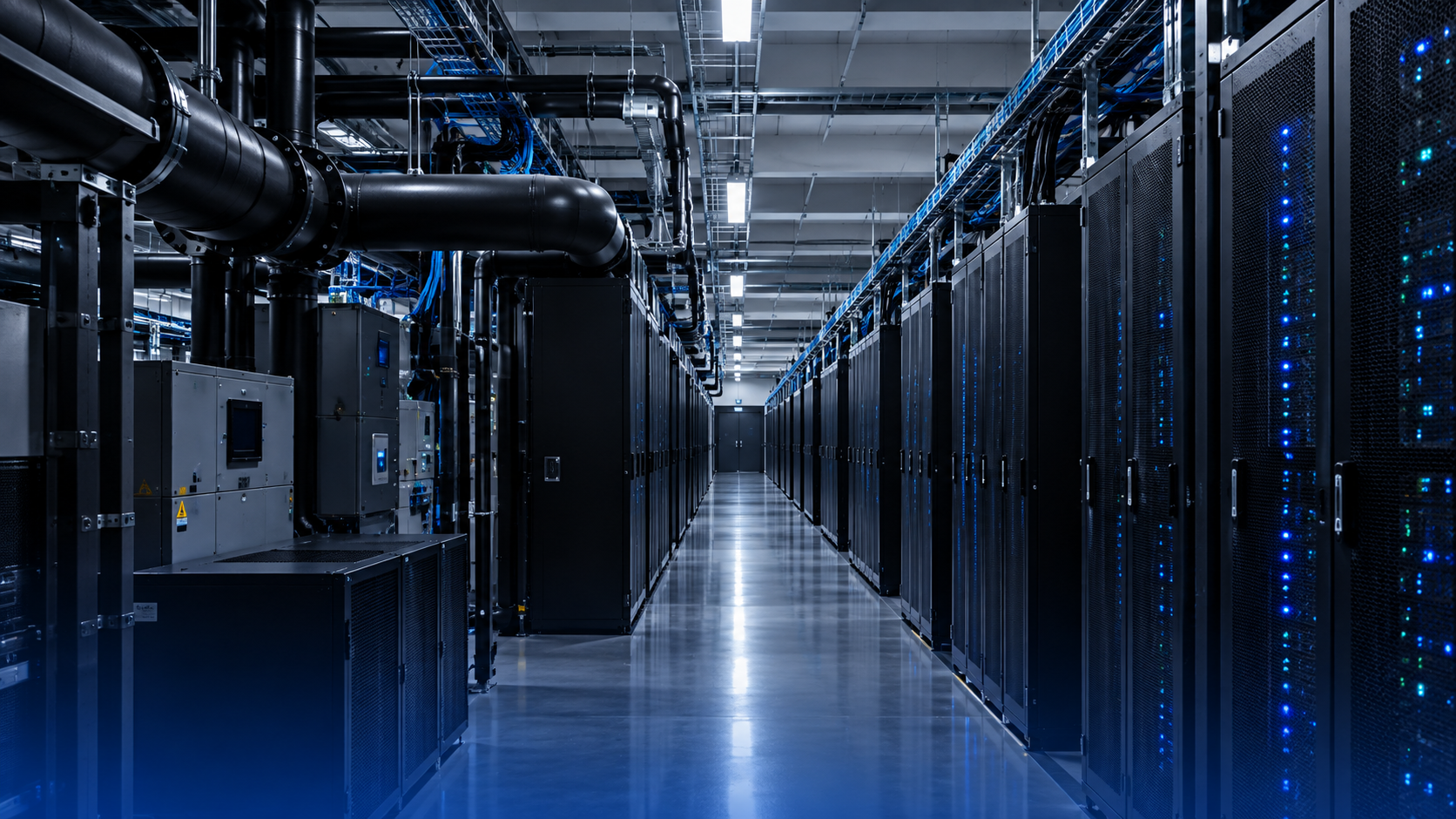
Firmus describes its facilities as "AI Factories", reflecting a business model designed specifically around the computing requirements of artificial intelligence. Rather than simply providing physical space for customers to install servers, the company aims to integrate computing hardware, power, cooling and networking into a single infrastructure platform.
That matters because AI workloads place heavy demands on physical infrastructure. High-performance GPUs draw large amounts of electricity and generate significant heat, requiring specialised cooling systems. As computing density rises, reliable power, suitable sites and grid connections become as important as the chips themselves.
Firmus currently has approximately 46MW of operating capacity, compared with another 865MW planned across five major projects. Its customer relationships include Nvidia, Meta and OpenAI, while the company has also announced a multi-year agreement to supply OpenAI from two planned Malaysian AI factories.
The scale of that development pipeline highlights both the opportunity and the execution challenge. Firmus is seeking to build a much larger infrastructure platform
than its current operating footprint, meaning a significant portion of its future value depends on delivering planned facilities and converting contracted demand into operating revenue.
Why AI Is Creating a New Infrastructure Cycle
The rapid adoption of generative AI is creating demand for computing infrastructure on a scale that few previous technology cycles have matched. Training increasingly sophisticated models requires enormous computing capacity, while the growth of AI applications is creating a second source of demand through inference.
The resulting infrastructure requirements extend well beyond GPUs. Additional computing capacity requires electricity generation, transmission and distribution infrastructure, cooling systems, networking equipment, data-centre facilities and access to suitable land and planning approvals.
As a result, the AI investment cycle increasingly resembles an infrastructure cycle rather than simply a technology cycle. Semiconductor manufacturers benefit from rising chip demand, but the companies deploying those chips also need physical infrastructure capable of supporting them. As AI workloads become more computationally intensive, the availability of power and suitable data-centre capacity can become constraints on the pace of expansion.
Firmus is positioned within this broader infrastructure cycle, with significant customer relationships and institutional backing. These provide support for the company's growth ambitions, but they do not remove the need to build, finance and operate the underlying assets.
The capital required is also large, creating a fundamental tension between growth and returns.
The Capital and Valuation Challenge
Firmus is a capital-intensive business. It must fund physical facilities, electrical infrastructure, cooling systems and computing hardware before those assets can generate revenue. SmartCompany tallies approximately AUD 51.7 billion of disclosed costs across five major projects, including the AUD 43 billion Batam development. The proposed IPO was intended to provide substantial funding, with approximately AUD 7.1 billion to be raised, including AUD 3.46 billion for servers, AUD 929 million for deployment infrastructure and AUD 2.21 billion for liquidity and financing costs.
Firmus' valuation has also risen sharply. The company was valued at approximately AUD 1.85 billion in September 2025 and reached around AUD 15 billion in its August 2026 funding round. Only two months later, the original AUD 11 IPO price implied a valuation of approximately AUD 43.7 billion. Startup Daily has reported that a potential AUD 9 offer would represent an AUD 8 billion reduction in market capitalisation from the original proposal, while SmartCompany has reported that the valuation could potentially fall as low as AUD 30 billion.
That repricing reflects a clear divide among investors. Some see Firmus as well positioned to benefit from accelerating AI infrastructure spending, supported by contracted capacity and strategic backing. Others are more cautious, questioning whether the proposed valuation adequately reflects the company's limited operating history, execution risks and the capital required to build its development pipeline.
The key issue is therefore not whether AI infrastructure demand will grow, but how much of that future growth should be reflected in Firmus' valuation today. The path from AI demand → contracted capacity → built capacity → operational capacity → revenue → earnings → cash flow contains multiple execution and financing risks. Firmus' long-term potential will depend on how efficiently it converts its development pipeline into operating assets and sustainable returns, making the valuation question ultimately one of execution as much as market opportunity.
The Risks Behind the AI Infrastructure Boom
The enthusiasm surrounding AI infrastructure can obscure several risks that become more important as the scale of investment increases.
- Power and community acceptance: AI factories require large, reliable electricity supplies, while grid connections can take years and community concerns around data centres' power and water use are increasing.
- Cost of capital: Infrastructure returns are sensitive to financing costs, particularly when projects require substantial upfront investment.
- Hardware economics: Rapid advances in GPUs can shorten the useful economic life of equipment purchased today, increasing depreciation and replacement costs.
- Customer concentration: Large AI companies provide the scale needed to support major projects but also have considerable negotiating power over pricing and contract terms.
- Execution: Firmus and CDC Data Centres ended their Project Southgate partnership, which was intended to scale to 1.6GW by 2028, with approximately 42MW deployed. Firmus has said the decision does not affect its current development plans, contracted capacity or strategy, but the change illustrates how quickly large infrastructure projects can evolve.
These risks do not necessarily undermine the broader AI infrastructure opportunity. They highlight that demand is only one part of the equation: the infrastructure must still be built, financed, operated and ultimately converted into sustainable cash flows.
What Firmus Could Mean for Australia's Capital Markets
The Firmus IPO matters beyond the company itself because it would bring a high-growth AI infrastructure business to a market traditionally dominated by banks, miners, energy companies and established industrials. Its proposed listing would test whether Australian capital markets can support businesses requiring large upfront investment while still demanding credible pathways to earnings and cash flow.
Firmus' rapid valuation progression and potential IPO repricing also highlight the challenge of valuing businesses whose largest opportunities remain ahead of them. Strong AI demand and strategic backing can support ambitious growth expectations, but public investors still need to assess how much of that future growth can be converted into operating capacity, earnings and cash flow.
The outcome could influence how future AI infrastructure businesses approach the Australian market. A successful listing could demonstrate that investors are willing to provide substantial capital for large-scale digital infrastructure, while a materially reduced valuation or withdrawn IPO could signal greater caution around businesses where significant capital expenditure and execution risk remain ahead.
For investors, Firmus provides a useful case study in how public markets are approaching the next phase of the AI boom. The larger question remains: can the returns from AI infrastructure justify the extraordinary capital required to build it?
Subscribe to our newsletter
Disclaimer: This article does not constitute financial advice nor a recommendation to invest in the securities listed. The information presented is intended to be of a factual nature only. Past performance is not a reliable indicator of future performance. As always, do your own research and consider seeking financial, legal and taxation advice before investing.
Speak to an Advisor