Stock Spotlight: Liontown Ltd (ASX:LTR)
About Liontown Ltd.
Liontown Limited engages in the exploration, evaluation, and development of mineral properties in Australia. It primarily explores for lithium, gold, and nickel deposits. The company's flagship property is the Kathleen Valley lithium project located in Perth, Western Australia. The company was formerly known as Liontown Resources Limited and change its name to Liontown Limited in November 2025. Liontown Limited was incorporated in 2006 and is headquartered in West Perth, Australia.
Source: EODHD
Key Stats
Key Stats
Source: EODHD. Data as of 06/10/26.
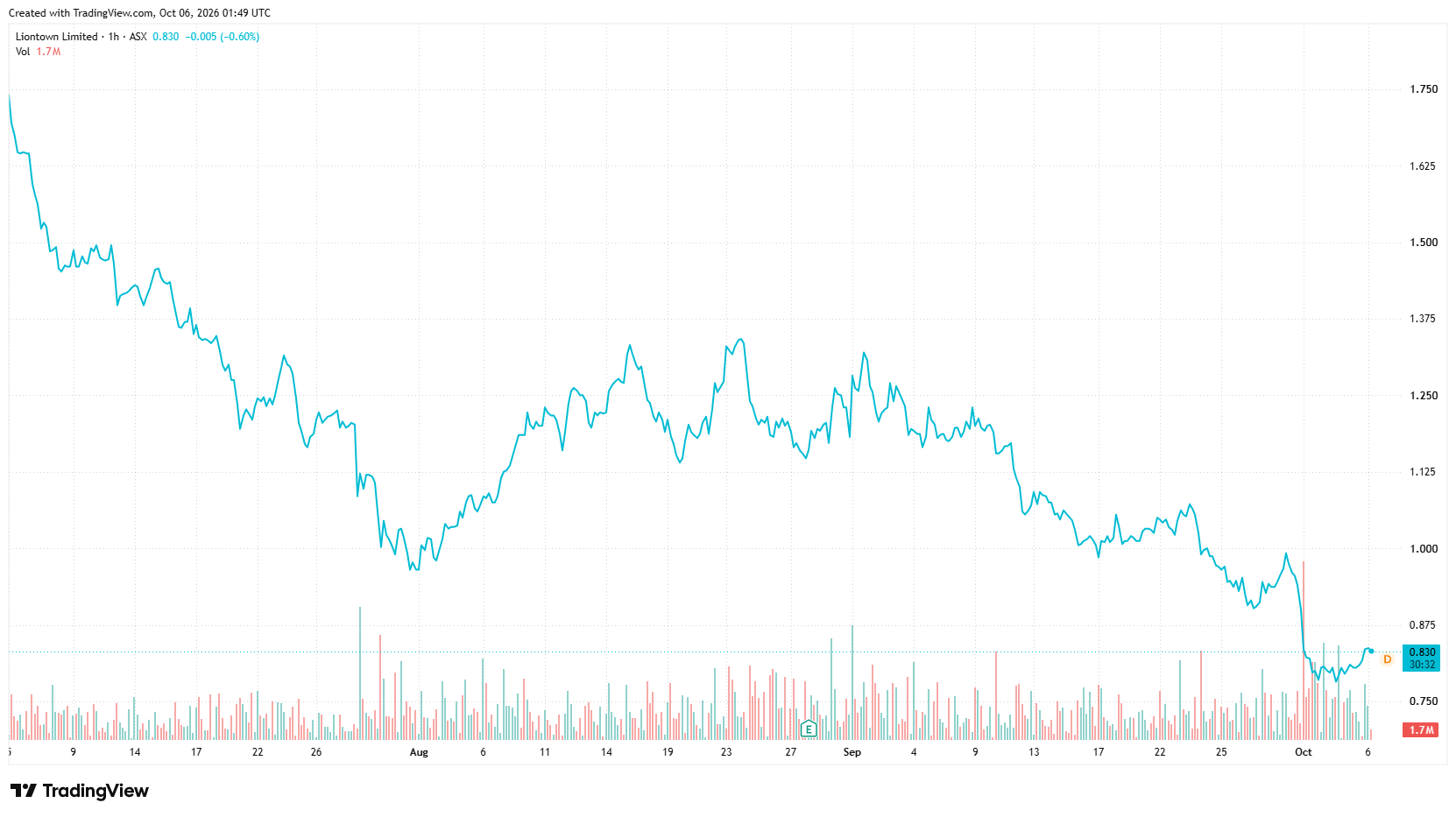
Price Performance
Growth Potential
- Irreplaceable Tier-1 hard-rock asset: A 147 Mt Mineral Resource at 1.33% Li2O supporting a 68.8 Mt Ore Reserve at 1.32% Li2O, with 68.5 Mt of that underground, gives Kathleen Valley a reserve life beyond 20 years at the 2.8 Mtpa rate and beyond 15 years at the expanded 4.1 Mtpa mining rate; the FID mine plan schedules 87 Mt, 78.5% of it in Ore Reserves, over a life of more than 20 years. There is no comparable permitted, built and powered hard-rock orebody available to a new entrant this decade.
- Pre-built capital moat for expansion: The process plant was built with the latent capacity to scale from 2.8 Mtpa to 4.2 Mtpa. The A$389m expansion approved at FID adds a 5.5 MW ball mill and debottlenecks the magnetic, flotation, tailings and paste circuits, with power, water and accommodation upgrades – filling in a flow sheet, not building one, which is why it is staged across FY27–FY29 and why its A$1,619/dmt capital intensity is the lowest of the five FID-approved brownfield expansions in the company's benchmark set.
- Offtake architecture re-alignment: The majority of the contracted book references lithium chemicals through CY2026, which has cost LTR realisation while spodumene has materially outperformed hydroxide. From January 2027 two-thirds of contracted volume flips to a spodumene index and only one legacy contract remains on hydroxide. That is a structural repricing of the revenue line that requires no change in the spodumene price.
- Renewable power cost insulation: The 95 MW hybrid wind, solar and battery microgrid delivered 80% renewable penetration in FY26 and is capable of 100% in optimal conditions. In a year when Middle East conflict lifted diesel costs across the industry, LTR held unit cost inside guidance. That is a structural, not cyclical, cost advantage.
Key Risks
- Underground productivity and stope development: The 2.8 Mtpa rate depends on opening seven new mine levels through FY27; any slip in cross-cut or ore drive development compounds directly into FY28 volume.
- FY27 unit cash cost air pocket: Guidance of A$1,050–A$1,250/dmt sold is a 17% midpoint increase on FY26. If costs settle at the top of the range and realised prices retrace, FY27E underlying EBITDA falls to roughly A$51m on our bear case – the operating leverage cuts both ways.
- Geraldton port and shipment timing: 1Q27 shipments are already deferred on significant surge events and planned port maintenance. Revenue recognition sits at bill of lading, so port friction moves revenue between periods and, in a rising price market, between price decks.
- Cyclical spodumene retracement:
Spot moved from US$630/dmt at 30 Jun-25 to US$2,210/dmt at 30 Jun-26. A price series capable of that move in twelve months is capable of retracing, and a sustained move below our US$1,238/dmt FY27E EBITDA breakeven would put the A$389m expansion, funded from cash and operating cash flow on consensus pricing, at risk of deferral.
Subscribe to our newsletter
Disclaimer: This article does not constitute financial advice nor a recommendation to invest in the securities listed. The information presented is intended to be of a factual nature only. Past performance is not a reliable indicator of future performance. As always, do your own research and consider seeking financial, legal and taxation advice before investing.
Speak to an Advisor