Is this our last dance with coal?

Sustainability has captured the attention of domestic and global politics. Indeed, the top-down push for hydro, wind, and solar energy is now deemed by governments to be preferable to traditional sources of energy like coal. Thus, questions arise surrounding the long-term utility of coal as as source for energy.


Holding a Chunk of Coal with both hands

Source: GeoScience Australia


So, what is coal and why is there such a backlash against its use?


Firstly, coal is non-renewable energy source and leads to environment effects such as erosion and harmful emissions. Notwithstanding protest against its use, it still stands as one of the most abundant energy sources and relied upon as a sufficient supply of electricity for the world's largest economies like China, India, Russia, the United States and importantly Australia.


The continued viability of coal is reflected in its global consumption, which rose nearly 6% in 2021, contributing to the biggest annual increase of energy related CO2 emissions on record (WSJ, 2022). Notably, China's emissions between 2015-2021 increased 11% with coal remaining at an elevated level worldwide this year (WSJ, 2022). Whilst legal instruments like the non-binding 2015 Paris Climate Change Agreement serve to reduce emissions, China can still increase its emissions to 2030 with talks of China building coal-fired plants of 100 gigawatts. Climate progress has stalled in recent months given the increase in rising energy prices and cutbacks in Russian natural gas exports. Countries are restarting coal plants and creating new expensive infrastructure to ship natural gas from US to Europe. In conjunction, many US states have suspended the gas tax. While only short reforms, it illustrates how coal should not be dismissed yet given its price benefits.


Despite growing acceptance of the benefits of renewable energies, there is inherent inefficiencies in its use with experts finding coal is still needed to fill in the gaps. Complete reliance on hydro, wind, and solar energy would be possible in an ideal world, however in reality, coal is still a cornerstone of many economies as a source of energy, employment, and investment. In Australia, coal remains used to produce 80% of the nation's electricity requirements. Investors must also be aware of the use of coal in cement manufacturing, food processing, paper manufacturing and alumina refineries.


Therefore, as an investor, ask yourself: Is coal really going to be swept out in the short-term? How important is coal to global economies? What is its current level of consumption?


Subscribe to our newsletter

Disclaimer: This article does not constitute financial advice nor a recommendation to invest in the securities listed. The information presented is intended to be of a factual nature only. Past performance is not a reliable indicator of future performance. As always, do your own research and consider seeking financial, legal and taxation advice before investing.

Speak to an Advisor

November 4, 2026
The RBA lifted the cash rate to 4.85% in a split vote. Here’s how higher rates flow through ASX sectors, company earnings, dividends and valuations.
October 29, 2026
Inside Anthropic’s IPO filing: explore its soaring revenue, computing commitments, reported losses and governance structure, and what the disclosures mean for investors.
October 21, 2026
Big Tech reports next week. Learn how to read earnings releases and filings, and what to look for in AI spending, cloud growth, cash flow and guidance.
October 14, 2026
Understand how AI investment could affect global financial stability, as the IMF and RBA warn of rising debt, market concentration and funding risks.
October 8, 2026
Firmus’ proposed mega-IPO puts a spotlight on the cost, capital intensity and risks of building AI infrastructure as investors weigh the next phase of the AI boom.
October 6, 2026
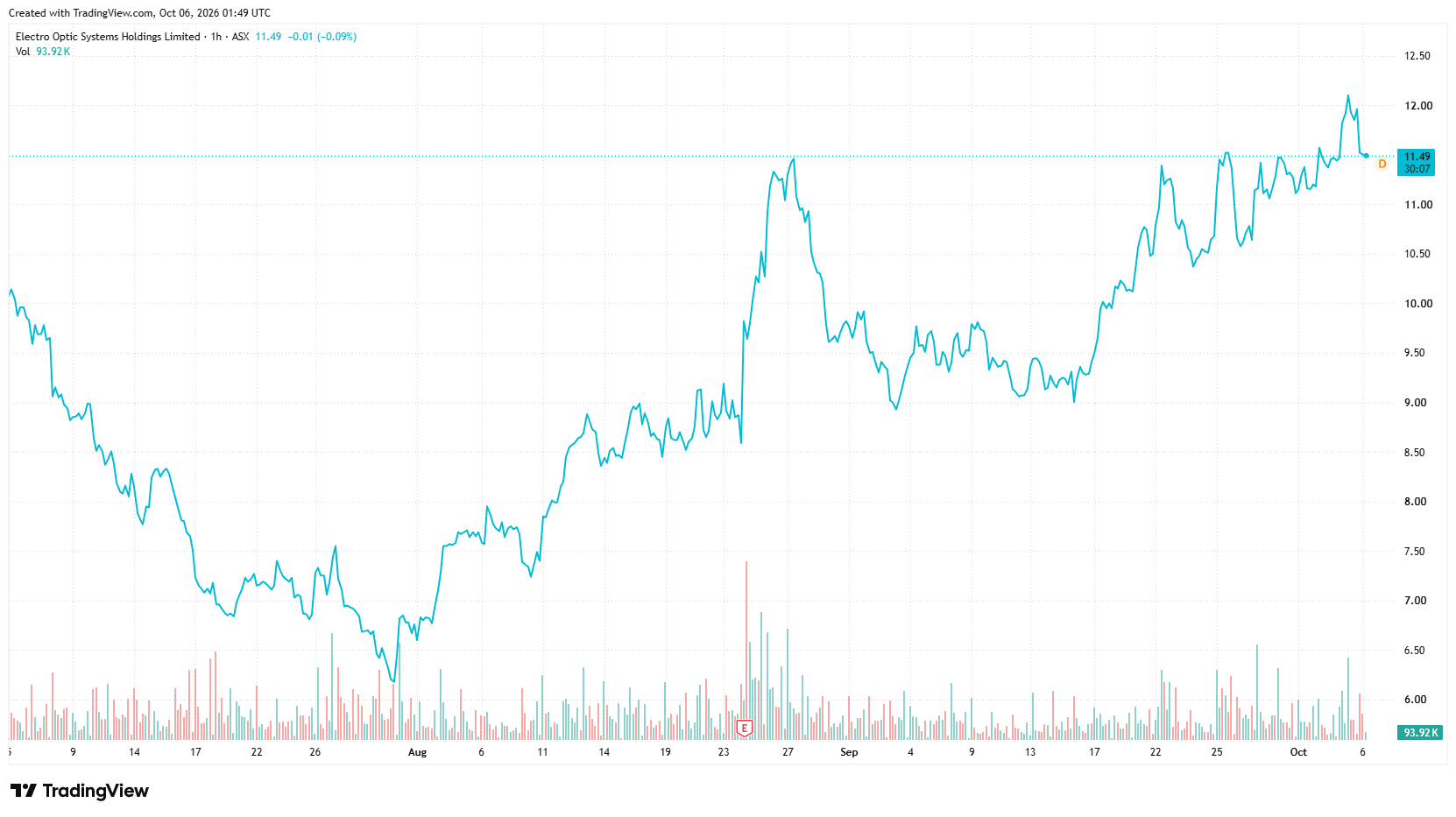
About Electro Optic Systems Holdings Ltd. Electro Optic Systems Holdings Limited engages in the development, manufacture, and sale of telescopes and dome enclosures, laser satellite tracking systems, remote weapon systems, and high laser weapon. It operates through Defense Systems and Space Systems segments. The company develops, manufactures, and markets fire control, surveillance, weapon systems, and high energy laser to military customers. It also provides passive optical and laser sensing equipment; optical, microwave and on-the-move radio and satellite products; and laser-based surveillance systems with space tracking capability. In addition, the company offers counter-drone, firepower, force protection, and UGV and marine lethality systems, as well as high energy laser weapon; optical tracking systems, space control, space domain awareness, satellite laser ranging, space sustainability, and precision optics. It operates in Australia, the United States, Singapore, the United Arab Emirates, the United Kingdom, New Zealand, the Netherlands, North America, Germany, and rest of Europe. Electro Optic Systems Holdings Limited was founded in 1983 and is based in Symonston, Australia. Source: EODHD Key Stats
October 6, 2026
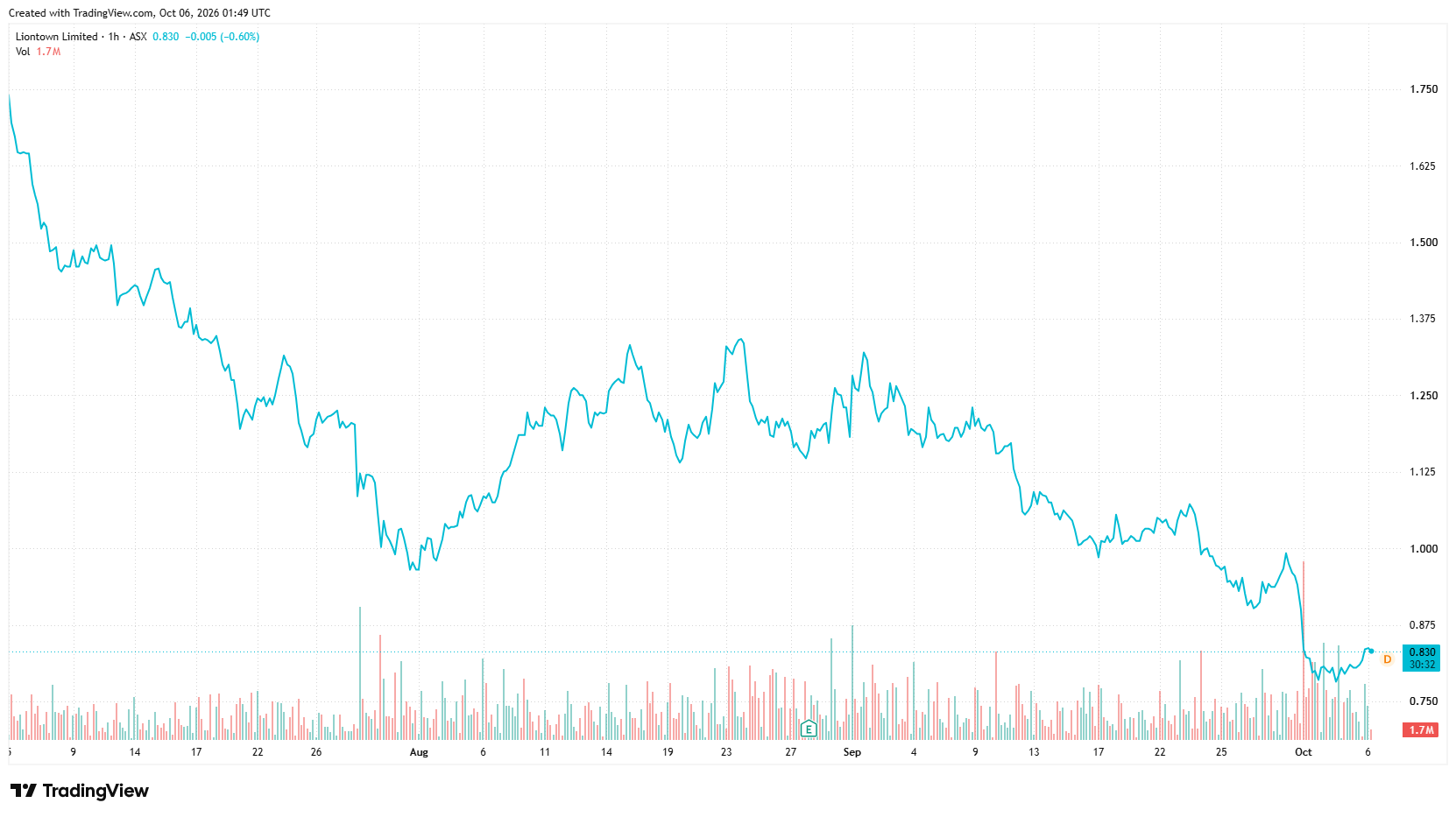
About Liontown Ltd. Liontown Limited engages in the exploration, evaluation, and development of mineral properties in Australia. It primarily explores for lithium, gold, and nickel deposits. The company's flagship property is the Kathleen Valley lithium project located in Perth, Western Australia. The company was formerly known as Liontown Resources Limited and change its name to Liontown Limited in November 2025. Liontown Limited was incorporated in 2006 and is headquartered in West Perth, Australia. Source: EODHD Key Stats
September 30, 2026
The RBA has raised rates to 4.60% as inflation pressures persist. Explore the impact of energy costs, AI demand and the key signals investors should watch next.
September 22, 2026
Discover how advances in genomics, AI, diagnostics and gene editing are creating a broader healthcare opportunity and where commercial value is emerging.
September 15, 2026
The AI trade is being forced to rethink the pace of progress. Here is what investors should watch across Nvidia, chips, AI spending, software and adoption.