RPMGlobal ASX: The $1.1B Caterpillar Takeover Case Study
Caterpillar-RPMGlobal Deal: What ‘Long-Term Investing' Actually Looks Like In Practice
Most of the coverage on RPMGlobal (ASX: RUL) arrived in February 2026, the morning Caterpillar tabled a $5.00-per-share takeover offer and the stock moved accordingly. For the investors who had been holding for years, it wasn't a surprise. It was a conclusion. The Caterpillar-RPMGlobal deal is one of the cleaner case studies in recent ASX history of what long-term investing actually looks like in practice; not as a concept, but as a lived sequence of decisions, patience, and eventual payoff. To understand why it played out the way it did, you need to understand three things:
- What RPMGlobal had quietly built
- What Caterpillar was looking for
- Why market took so long to close the gap between the two.
What RPMGlobal actually was
RPMGlobal Holdings Ltd is an Australian mining software and services company with more than five decades of operating history. Its products help mining companies manage the full lifecycle of their operations, from early-stage planning and scheduling through to asset management and ESG reporting.
It wasn't a miner. It had no direct commodity exposure. Its revenue came from the companies that ran mines, not from the mines themselves, which meant its income didn't swing with iron ore prices or coal contracts the way most resources-adjacent ASX stocks do. For most of its listed life, it sat quietly in the small-cap part of the market. Relevant to those looking closely. Easy to miss for everyone else. That's often where the opportunity sits.
The shift that took years to price in
The most important change in RPMGlobal’s business over the past decade wasn’t a single announcement. It was a gradual, deliberate transition away from project-based services revenue; inherently lumpy, hard to forecast, margin-variable toward a SaaS subscription model where clients paid recurring fees for ongoing access to its software platforms.
That kind of transition takes time. It shows up slowly in the financials. And it tends to be undervalued by a market that pays closer attention to current earnings than to forward revenue quality.
By 2025, the transition had run its course. Annual Recurring Revenue had passed $69 million. The contracted revenue backlog sat at roughly $200 million. Most new software sales were on subscription terms. Nine of the world's top ten mining companies were using RPMGlobal's AMT product.
The business had moved from a services firm with some software on the side to a genuine software platform with enterprise-level penetration across the global mining industry. The share price hadn’t fully caught up yet. It would.
What Caterpillar saw & why it paid $5.00
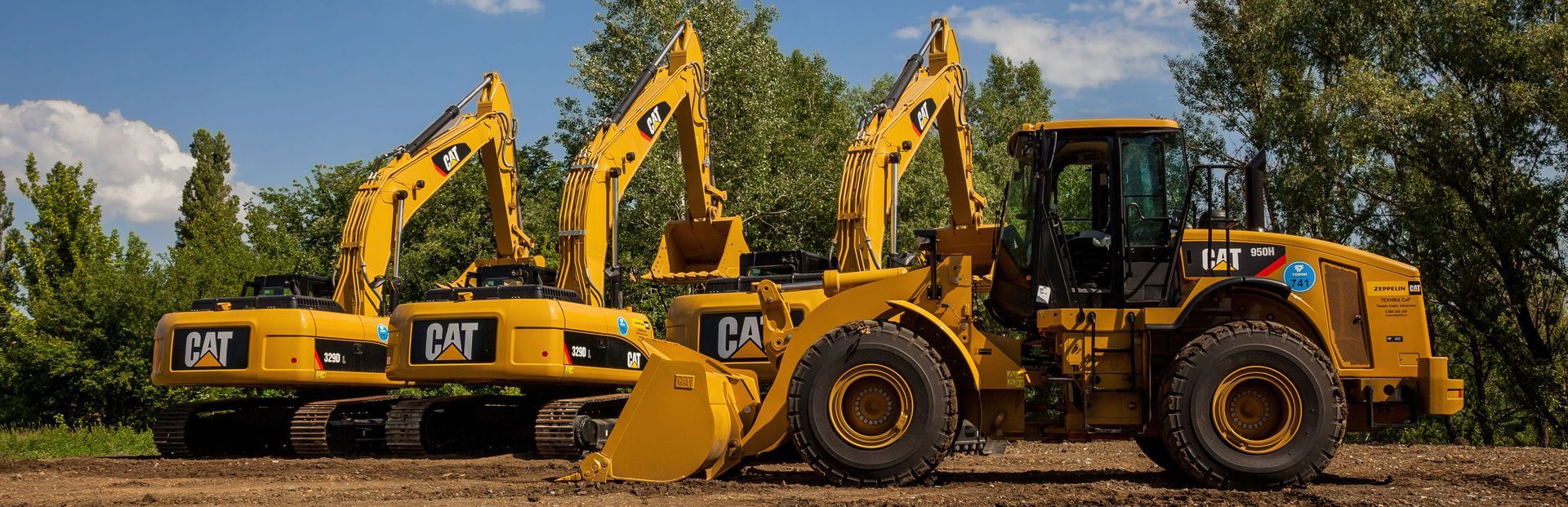
Caterpillar Inc. is a $150 billion industrial company best known for yellow machinery. But for the past decade, it has been building something less visible: the technology layer that sits on top of its physical equipment.
The concept is the 'Smart Mine’; a fully connected mining operation where autonomous equipment, real-time data, and operational software work together in a single integrated system. Predictive maintenance. Remote coordination. Planning decisions reflected in live equipment behaviour. It's the digital transformation of one of the world's oldest and most capital-intensive industries.
To execute that vision at scale, Caterpillar needed software that was already embedded inside the world's largest mining operations. Software that operators trusted. Software that had been running at the centre of mine management for years and was too deeply integrated to be easily replaced. RPMGlobal had exactly that.
Consider the alternative: trying to build or acquire that position from scratch. The world's top ten mining companies don't adopt new operational software casually. The sales cycles are long, the switching costs are high, and the relationships take years to build. RPMGlobal had done that work over five decades.
The $5.00 acquisition price wasn't generous in spite of the business fundamentals. It reflected them directly. A debt-free balance sheet with a positive cash position. A contracted backlog of $200 million. An ARR base growing toward $70 million. And a customer list that no amount of organic investment could have replicated in a reasonable timeframe.
For Caterpillar, this was strategic infrastructure acquisition: not a financial one.
What the five-year hold actually looked like
Holding a stock through its quiet period sounds straightforward in retrospect. In practice, it requires a clear original thesis, the discipline to revisit it without reacting to price movement, and a tolerance for extended periods where nothing seems to be happening because something usually is.
RPMGlobal didn't move in a straight line. There were stretches where the software transition was underway but not yet showing up in earnings in a way the market found compelling. The stock was a small-cap ASX software name in a sector that doesn't attract retail attention or analyst coverage the way consumer-facing companies do.
The business kept executing. Recurring revenue grew. The customer base held. The balance sheet stayed clean. Nothing dramatic but just a company doing what it said it would do, year after year.
Markets tend to price what's visible right now: this quarter's earnings, this year's growth rate. Strategic acquirers think differently. They're pricing what it would cost to build the same position from scratch; the customer relationships, the installed base, the years of trust inside some of the world's largest mining operations.
That gap doesn't close gradually. When the right buyer shows up, it closes all at once.
What this pattern looks like across the ASX
RPMGlobal is no longer listed. But the pattern it followed isn't unique to mining software, and it shows up across the ASX with some regularity.
Small-cap ASX software stocks that build genuine enterprise relationships in traditional industries; mining, energy, agriculture, logistics often trade for years at valuations that don't reflect their strategic value. They're not glamorous. The revenue transitions take time. The sector coverage is thin.
The businesses that eventually attract acquisition premiums typically share a few characteristics:
- Software or systems that become deeply embedded in day-to-day operations and difficult to replace
- Recurring revenue that builds over time rather than resetting with each project cycle
- A customer base concentrated at the enterprise level; large operators who rely on the platform
- A clean balance sheet that makes the acquisition structurally simple
- A position inside a traditional industry undergoing genuine digital transformation
RPMGlobal had all five. That's not a coincidence, it's a pattern worth recognising.
The broader lesson for long-term investors
The RPMGlobal story doesn't offer a formula. Markets are more complicated than case studies make them appear. But it does illustrate something that holds more broadly: the most durable investment returns on the ASX often come from businesses that the market is structurally slow to reprice.
Not because they're hidden. The annual reports were public. Management was transparent about the transition. The customer concentration was disclosed. The ARR figures were reported every half year.
The signal was there. What required patience was staying with the business while the market caught up, and then while the right strategic buyer arrived to close the gap entirely. For investors thinking about long-term ASX investments, the more useful question isn't which stock moved most last year. It's which businesses are building the kind of recurring revenue, customer depth, and strategic positioning that tend to attract exactly this kind of attention; over a five-year horizon rather than a five-month one.
Key Stats
- Ticker: ASX: RUL (now delisted)
- Industry: Mining software and services
- Business model: SaaS and professional services hybrid
- Annual Recurring Revenue (2025): ~$69 million
- Contracted revenue backlog: ~$200 million
- Balance sheet: Debt-free with cash reserves
- Acquisition: Caterpillar Inc. (February 2026)
- Takeover price: $5.00 per share
Subscribe to our newsletter
Disclaimer: This article does not constitute financial advice nor a recommendation to invest in the securities listed. The information presented is intended to be of a factual nature only. Past performance is not a reliable indicator of future performance. As always, do your own research and consider seeking financial, legal and taxation advice before investing.
Speak to an Advisor