After Hormuz, Now Bab al-Mandeb: Could Another Strait Shake Global Markets?
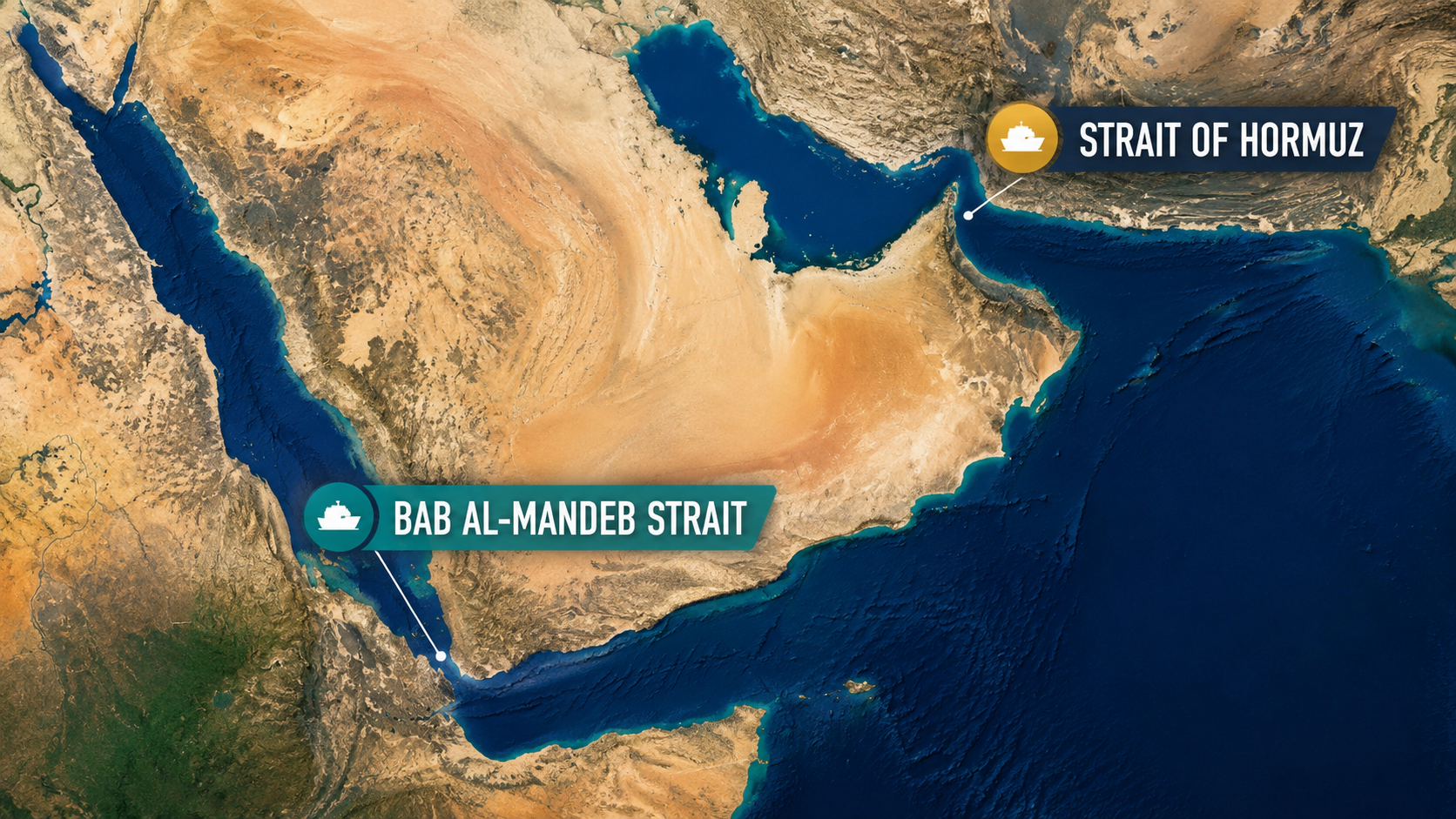
Since the outbreak of the US-Iran conflict in late February, the Strait of Hormuz has dominated headlines and market commentary. As the conduit for roughly a fifth of global oil consumption, its effective closure forced energy markets, central banks and equity investors to reprice risk almost overnight. Oil majors, tanker operators and inflation-sensitive assets moved on little more than the prospect of disruption, long before any physical shortage materialised.
Now, just as markets begin to digest the implications of the Strait of Hormuz, another maritime chokepoint has emerged as a fresh source of uncertainty.
Yemen's Iran-backed Houthi movement has declared a maritime blockade targeting Saudi-linked shipping through the Bab al-Mandeb Strait, the narrow gateway connecting the Red Sea to the Gulf of Aden. While it remains unclear how extensively the Houthis can enforce the blockade, reports indicate that several Saudi oil tankers have already altered course or delayed voyages in response to the threats. Saudi Arabia has condemned the announcement and pledged to safeguard its maritime interests.
The development matters less as a standalone geopolitical story and more as a compounding one. A second constrained corridor, layered on top of an already disrupted Hormuz, raises the stakes for energy security, freight costs and the inflation outlook in ways a single isolated event would not.
Why the Bab al-Mandeb Strait Matters
Before considering the market implications, it is worth understanding why this relatively narrow waterway plays such an outsized role in global trade and energy markets.
The Bab al-Mandeb Strait lies between Yemen and the Horn of Africa, connecting the Red Sea to the Gulf of Aden and, ultimately, the Indian Ocean. At its narrowest point, it spans less than 30 kilometres, funnelling vessels through two narrow shipping channels as they transit to and from the Suez Canal. Despite its modest size, it is one of the world's busiest maritime corridors, carrying an estimated 12% of global trade and around a quarter of all container traffic passing through the Suez Canal. Oil flows through the strait averaged 9.3 million barrels a day in 2023, before the earlier Houthi shipping campaign cut that to around 4.1 million barrels a day in 2024. Flows had recovered to roughly 7.4 million barrels a day by June 2026 as Saudi Arabia increased its use of the Red Sea route, underscoring how central Bab al-Mandeb has already become to the kingdom's export logistics, and how exposed those volumes now are.
Its importance to global energy markets is equally significant. Crude oil, refined petroleum products and LNG cargoes routinely pass through the strait, including substantial Saudi Arabian exports transported via the East-West Pipeline, or Petroline. With a capacity of around 7 million barrels per day, the pipeline carries crude from Saudi Arabia's eastern oil fields to the Red Sea port of Yanbu, where it is loaded for export to international markets. Since disruptions to the Strait of Hormuz, Petroline has become Saudi Arabia's principal alternative export route. That is why any threat to the Bab al-Mandeb Strait carries disproportionate significance. It is not merely another shipping lane at risk, but the primary maritime outlet for one of the world's largest oil producers.
For investors, the significance extends beyond the physical volume of oil moving through the waterway. Markets often respond to the possibility of disruption well before supplies are materially affected. The prospect of delayed shipments, higher insurance premiums or longer shipping routes can lift freight costs and introduce a geopolitical risk premium into energy prices. In that sense, strategic chokepoints such as Bab al-Mandeb are driven as much by market expectations as by physical flows, making them a critical consideration for investors assessing global energy markets.
What It Means for Global Energy Markets
A common misconception is that oil prices only rise when production falls. In reality, energy markets are equally sensitive to transportation risks. Even if oil fields continue operating at full capacity, uncertainty over how supplies reach global markets can quickly tighten conditions.
Shipping disruptions affect markets through cost and time, not just volume. Vessels forced to reroute, often around the Cape of Good Hope, face materially longer voyages, higher fuel consumption and elevated war risk insurance premiums. These costs are ultimately passed through to buyers, while extended transit times reduce effective supply availability. In an environment where a significant share of Saudi export capacity already depends on a single overland pipeline, any additional constraint on maritime routes amplifies the pricing response.
Markets are inherently forward looking, which is why energy prices often move on perceived supply risk rather than confirmed shortages. A credible threat to a meaningful share of global oil and gas flows is sufficient to shift positioning, even if disruptions prove partial or short lived. While Saudi Arabia continues to export crude via Yanbu and the Bab al-Mandeb Strait remains open, reports of vessels altering routes underscore how quickly uncertainty can ripple through global energy markets. Should disruptions broaden or persist, higher freight costs, insurance premiums and a geopolitical risk premium could place further upward pressure on oil prices.
From Oil Prices to Your Portfolio
The transmission from a shipping disruption to portfolio outcomes tends to follow a familiar chain. Higher freight and insurance costs push up energy prices, which feed into inflation. If inflation proves sticky, central banks may keep interest rates higher for longer, increasing borrowing costs and placing pressure on corporate earnings. The result is often greater market volatility, illustrating why geopolitical events can quickly influence equity valuations well beyond the energy sector.
For Australian investors, the effects are both direct and indirect. While Australia is a major energy exporter, it still relies heavily on imported refined fuel, leaving households and businesses exposed to global price swings.
Potential beneficiaries
- Energy producers, supported by stronger oil prices.
- LNG exporters, if global demand for secure energy supplies increases.
- Energy infrastructure operators with contracted or regulated revenues.
- Defence companies, as geopolitical tensions can drive higher defence spending.
- Tanker and shipping companies, which may benefit from longer routes and higher freight rates.
Potential headwinds
- Airlines facing higher aviation fuel costs.
- Transport and logistics operators absorbing rising freight expenses.
- Manufacturers with energy-intensive operations or imported inputs.
- Consumer discretionary retailers, as higher living costs weigh on household spending.
Not every company within these sectors will respond in the same way. Businesses with strong pricing power, resilient balance sheets and diversified revenue streams are generally better positioned than those with thin margins or elevated debt.
Lessons From Previous Global Supply Shocks
History suggests markets often react more quickly than the underlying economic impact ultimately justifies. The 2021 grounding of the Ever Given in the Suez Canal temporarily blocked one of the world's busiest trade routes, with Lloyd's List estimating around USD 9.6 billion of trade was disrupted each day. Oil prices and equity markets responded swiftly, but the disruption proved short lived once shipping resumed, and later academic analysis found the realised economic cost, once rerouting and time costs were properly accounted for, was a fraction of that initial headline estimate. By contrast, the Russia-Ukraine energy crisis represented a structural supply shock, driving sustained increases in energy prices, inflation and interest rates as Europe reduced its dependence on Russian energy.
The Red Sea shipping disruptions that began in late 2023 sat somewhere between these two extremes. Freight costs and war risk insurance premiums increased as vessels rerouted around the Cape of Good Hope, but markets gradually adapted as businesses adjusted to the new operating environment. The lesson for investors is straightforward: markets often price in worst case scenarios initially, but the lasting impact depends on whether the disruption proves temporary or structural.
What Investors Should Watch Next
Rather than tracking every headline out of the region, a more disciplined approach is to monitor the indicators that translate geopolitical developments into economic and market outcomes:
- Brent crude oil prices, as the most immediate barometer of perceived supply risk
- Global shipping and freight rates, which capture the practical cost of rerouting
- Inflation expectations, both market-based and survey measures
- Bond yields, particularly at the short end, which reflect shifting rate expectations
- Central bank commentary, given how directly energy costs feed into policy decisions
- Corporate earnings guidance, where management commentary on input costs and margins provides a real-economy read on the disruption's actual bite
These metrics tend to offer a clearer picture of economic impact than the geopolitical headlines themselves, which are prone to overshoot in either direction.
Key Takeaways
The developments in the Bab al-Mandeb Strait are a reminder that geopolitical events can quickly ripple through global energy markets, inflation, interest rates and corporate earnings, even when the disruption occurs thousands of kilometres away. Markets often react to the risk of supply disruption long before any physical shortages emerge, making strategic chokepoints an important consideration for investors.
Diversification across sectors and geographies, alongside exposure to quality businesses with genuine pricing power, remains the most reliable way to navigate periods of elevated geopolitical risk. Understanding how chokepoints such as Hormuz and Bab al-Mandeb interact with global energy markets allows investors to respond to developments with informed positioning, rather than reacting to headlines in isolation.
Subscribe to our newsletter
Disclaimer: This article does not constitute financial advice nor a recommendation to invest in the securities listed. The information presented is intended to be of a factual nature only. Past performance is not a reliable indicator of future performance. As always, do your own research and consider seeking financial, legal and taxation advice before investing.
Speak to an Advisor