Has the housing market reached its top?
This year 31,439 auctions were held from April to June. Auction volumes remain substantially high with the June 2022 quarter as the second highest volume on record behind June 2021.
Whilst this auction volume demonstrates that the market is still extremely active, clearance rates are beginning to fall drastically according to RPdata. It is reported that the preliminary clearance rate for July has fallen substantially in all major Australian cities. More importantly, the preliminary July numbers show that there could potentially be a higher total auction volume this quarter than last year which indicates a larger supply of properties for sale than last year (see figure 1).
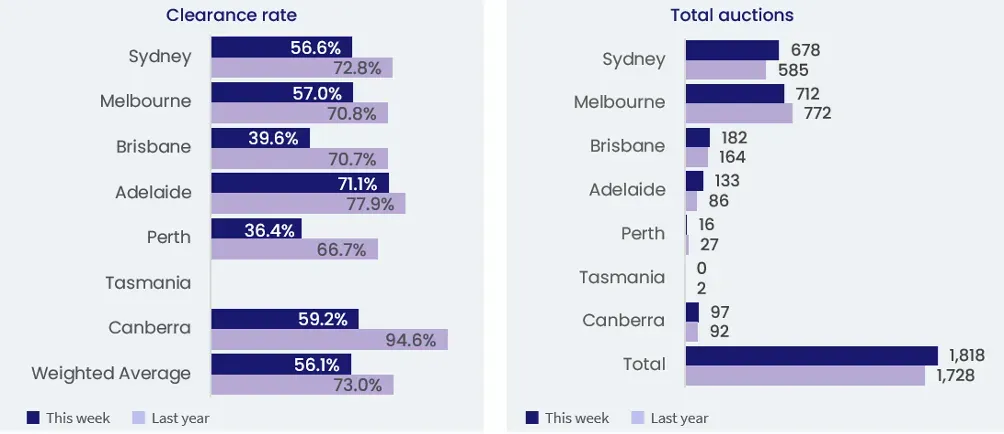
Figure 1. Demonstrates the fall in clearance rates from a week in July in 2021 compared to 2022. Source: RPdata
What does this mean for the housing market?
Currently the RBA cash rate has risen to 1.35%. Subsequently, we are seeing bank interest rates for home loans rise steadily over the last few months to account for these changes. This means that the everyday Australians have a reduced capacity to borrow and spend because it will be harder to service the debt. Accessible debt is becoming more expensive, more people are trying to sell as indicative by auction volume.
However, RPdata indicates that the clearance rate remains below 60%, indicating fewer people are looking to buy. In a housing market where the supply of homes on the market is rising and clearance rates are down from previous highs (demand falling), analysts at CoreLogic have predicted a downtrend in the housing market. Sydney house prices have dropped 1.6% in the past month and Melbourne fell 1.1%. This trend will likely continue into the foreseeable future as the RBA continues to lift interest rates making debt move expensive.
Subscribe to our newsletter
Disclaimer: This article does not constitute financial advice nor a recommendation to invest in the securities listed. The information presented is intended to be of a factual nature only. Past performance is not a reliable indicator of future performance. As always, do your own research and consider seeking financial, legal and taxation advice before investing.
Speak to an Advisor