AI's Data Centre Boom: Inside the Infrastructure Powering the Digital Economy


From the Background to the Front Page


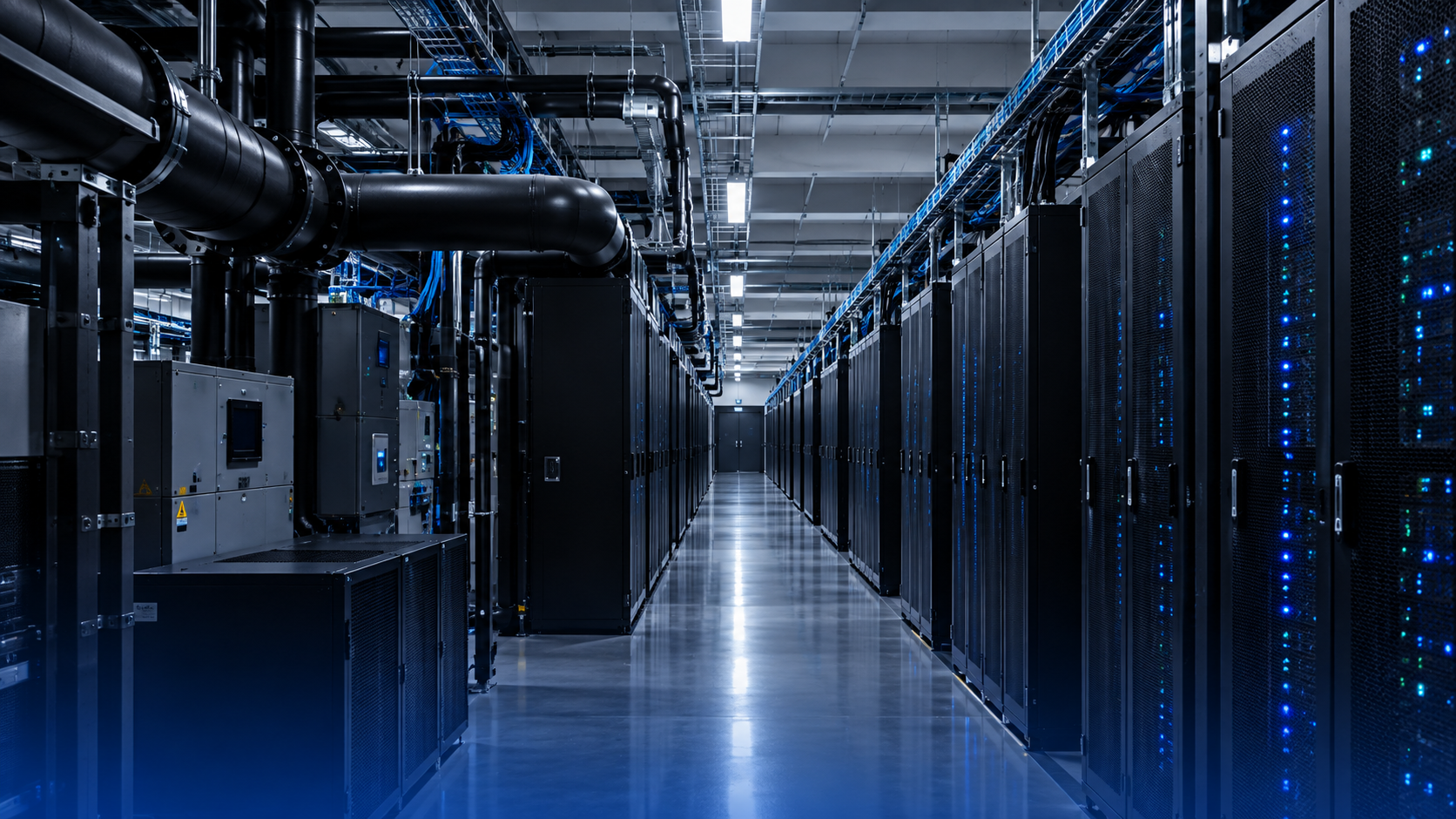
Once regarded as little more than warehouses filled with servers, data centres have become one of the world's most valuable forms of digital infrastructure. Artificial intelligence has transformed these facilities from largely invisible components of the technology sector into one of the defining investment themes of this market cycle. First quarter 2026 results underscored the scale of this shift, with Amazon, Alphabet, Meta, Microsoft and Oracle collectively expected to invest approximately USD 725 billion in capital expenditure during 2026, representing an increase of roughly 64% from the previous year. Developers are racing to secure land, electricity and construction resources, while governments are increasingly treating AI infrastructure as a strategic national priority.


This surge in investment reflects more than a temporary technology cycle. Every AI model, chatbot and enterprise application ultimately depends on computing infrastructure capable of processing enormous volumes of data around the clock. As demand for AI computing accelerates, data centres are becoming as essential to the digital economy as power stations are to the electricity grid. Understanding why this infrastructure has become so valuable, and which businesses are helping to build it, provides a broader perspective on one of the world's fastest-growing investment themes.


The Digital Factories Behind Every AI Model


Every ChatGPT prompt, recommendation algorithm, cloud application and online transaction runs through a physical facility somewhere in the world. Not through an abstract cloud, but through a highly specialised building filled with servers, networking equipment, cooling systems and backup power. Although largely invisible to the public, these data centres quietly process, store and deliver the digital services that underpin modern life.


Artificial intelligence has fundamentally changed their role. Traditional data centres were built to host websites, store enterprise data and support cloud applications with relatively predictable workloads. AI systems, by contrast, require enormous computing power to train large language models and respond to millions of user requests in real time. The result is a new generation of high performance computing facilities designed to process vast numbers of calculations simultaneously.


This is why AI data centres are increasingly described as the factories of the digital economy. Rather than manufacturing physical goods, they convert electricity and specialised computing hardware into the intelligence powering an expanding share of business operations and everyday digital experiences. What was once viewed as back-end technology has become one of the most important pieces of infrastructure supporting the next generation of digital innovation.


AI Is Rewriting the Blueprint for Data Centres


Building an AI data centre is no longer purely a technology project. It has become one of the world's largest multidisciplinary infrastructure undertakings, transforming not only the technical design of these facilities but also the industries required to bring them to life.


The technical changes are substantial. Traditional CPU based server racks are giving way to dense clusters of graphics processing units (GPUs), which consume substantially more electricity and generate far greater heat. Supporting these workloads requires faster networking, more resilient electrical systems and increasingly sophisticated liquid cooling technologies capable of operating continuously at scale. Many new developments now extend well beyond a single building, evolving into integrated campuses designed to accommodate future expansion, dedicated substations and higher computing densities.


The transformation extends well beyond engineering. Developing a modern AI campus requires close coordination between construction firms, electrical equipment manufacturers, utility providers, water infrastructure specialists and fibre network operators, all working together on projects whose scale increasingly resembles major industrial or energy developments. What was once a specialised technology facility has become critical infrastructure, built with the same long-term planning and capital intensity traditionally associated with power stations, airports and advanced manufacturing facilities.


Why Location Is Becoming the New Competitive Advantage


Building an AI data centre is no longer just about finding available land. As facilities become larger and more power intensive, location has become a strategic advantage in its own right. Reliable electricity is now one of the first considerations in site selection, alongside high capacity fibre connectivity, water resources for cooling, planning approvals and access to long-term infrastructure capable of supporting future expansion.


These requirements are reshaping the global map of AI infrastructure. Northern Virginia remains the world's largest data centre market thanks to its extensive fibre network and established digital ecosystem, while Texas continues to attract investment through abundant land, a competitive energy market and a business-friendly regulatory environment. In Asia, Malaysia has emerged as a growing regional hub by combining lower development costs with expanding digital infrastructure. Australia is carving out a smaller but increasingly important role, supported by growing cloud investment, reliable connectivity and government-certified facilities capable of hosting sensitive workloads.


The underlying economics have fundamentally changed. In the AI era, the most valuable locations are no longer simply those with the lowest costs, but those capable of supporting large scale computing infrastructure reliably for decades. Sites with secure grid connections, long-term water access and strong digital connectivity are increasingly commanding a premium, highlighting how geography has become a competitive advantage in the race to build the infrastructure powering artificial intelligence.


Beyond the Data Centre: The Infrastructure Powering AI


When artificial intelligence dominates market headlines, investor attention naturally gravitates towards companies designing advanced semiconductors or developing AI software. Yet the infrastructure supporting AI extends far beyond those familiar names. Looking at the ecosystem by the role each company plays, rather than by its industry classification, provides a clearer picture of where capital is actually flowing.


At the centre are semiconductor companies such as NVIDIA, AMD and Broadcom, whose processors provide the computing power behind AI workloads. Surrounding them is an extensive ecosystem of infrastructure providers. Server manufacturers assemble high performance computing systems, networking companies including Arista Networks and Cisco Systems enable thousands of processors to communicate with minimal latency, while cooling specialists such as Vertiv and Johnson Controls help manage the immense heat generated by increasingly dense AI clusters. Behind the scenes, electrical equipment manufacturers including Eaton, Schneider Electric and GE Vernova supply the transformers, switchgear and power distribution systems that keep these facilities operating reliably.


Above this foundational infrastructure sit the cloud providers themselves. Microsoft, Amazon, Alphabet, Meta and Oracle are among the largest investors in AI infrastructure, funding the expansion of data centre capacity through their cloud platforms and enterprise AI offerings. Their capital expenditure flows through the entire ecosystem, creating demand for everything from semiconductors and networking equipment to electrical infrastructure and specialised engineering services.


Viewed collectively, the AI economy resembles a complex industrial ecosystem rather than a traditional technology sector. Many of the businesses benefiting from this investment cycle do not build AI models at all. Instead, they supply the foundational infrastructure that makes artificial intelligence possible, a layer that has proven considerably more difficult and time consuming to scale than software alone.


The Quiet Winners of the AI Infrastructure Boom


Some of the clearest beneficiaries of the AI infrastructure build-out sit outside the companies traditionally associated with technology. Global data centre operators such as Equinix and Digital Realty provide the specialised facilities that underpin cloud computing and AI workloads, while infrastructure suppliers including Vertiv, Eaton and Schneider Electric deliver the power, cooling and electrical systems that keep these facilities operating reliably. As AI infrastructure investment expands, demand for these specialised facilities and critical components is growing alongside it.


A similar dynamic is emerging on the ASX. NextDC has established itself as one of Australia's leading independent data centre operators, expanding AI-ready capacity to support hyperscale cloud providers and enterprise customers. Goodman Group has taken a different approach, leveraging its expertise in industrial property and logistics to develop data centre projects across key global markets. Although neither company develops AI models or manufactures advanced semiconductors, both are positioned to participate in the growing demand for the infrastructure supporting artificial intelligence.


The Next Phase: From Data Centres to AI Infrastructure Networks


The next phase of AI infrastructure is already taking shape, and it looks less like a collection of standalone facilities and more like an integrated network. Developers are increasingly building AI campuses that combine multiple data halls, dedicated substations, battery storage and extensive fibre connectivity into highly integrated computing environments. Some are also exploring complementary energy solutions, including on-site gas generation and, over the longer term, small modular nuclear reactors, to improve reliability where grid capacity may struggle to keep pace with future demand. At the same time, greater automation is improving how these facilities are operated, while edge computing is bringing AI infrastructure closer to users to support applications that require faster response times.


Final Thoughts


Artificial intelligence may be built on software, but its future depends on physical infrastructure. Data centres, power networks, cooling systems and fibre connectivity have become as essential to AI as algorithms and advanced chips, and as computing demands continue to expand, the businesses building, powering and operating that infrastructure are likely to play an increasingly important role in the digital economy. The AI revolution will ultimately be shaped as much by the infrastructure built to support it as by the models themselves.

Subscribe to our newsletter

Disclaimer: This article does not constitute financial advice nor a recommendation to invest in the securities listed. The information presented is intended to be of a factual nature only. Past performance is not a reliable indicator of future performance. As always, do your own research and consider seeking financial, legal and taxation advice before investing.

Is a Share Advisor

right for you?

July 16, 2026
This week's Stock Spotlight is NYSE-listed Wells Fargo & Company. About Wells Fargo & Company. Wells Fargo & Company, a financial services company, provides diversified banking, investment, mortgage, and consumer and commercial finance products and services in the United States and internationally. It operates through four segments: Consumer Banking and Lending; Commercial Banking; Corporate and Investment Banking; and Wealth and Investment Management. The company's financial products and services includes checking and savings accounts, and credit and debit cards, as well as home, auto, personal, and small business lending services. It also provides personalized wealth management, brokerage, financial planning, lending, private banking, trust and fiduciary products and services; and financial solutions to private, family owned and public companies through products and services including banking and credit products across multiple industry sectors and municipalities, secured lending and lease products, and treasury management. In addition, it offers a suite of capital markets, banking, and financial products and services, such as corporate banking, investment banking, treasury management, commercial real estate lending and servicing, equity, and fixed income solutions, as well as sales, trading, and research capabilities services to corporate, commercial real estate, government, and institutional clients. Wells Fargo & Company was founded in 1852 and is headquartered in San Francisco, California. Source: EODHD  Key Stats
July 16, 2026
This week's Stock Spotlight is NYSE-listed Bank of America Corp. About Bank of America Corp. Bank of America Corporation, through its subsidiaries, provides various financial products and services for individual consumers, small and middle-market businesses, institutional investors, large corporations, and governments worldwide. It operates through four segments: Consumer Banking, Global Wealth & Investment Management (GWIM), Global Banking, and Global Markets. The Consumer Banking segment offers traditional and money market savings accounts, certificates of deposit and IRAs, checking accounts, and investment accounts and products; credit and debit cards; residential mortgages and home equity loans; and direct and indirect loans. The GWIM segment provides investment management, brokerage, banking, and trust and retirement products and services; wealth management solutions; and customized solutions, including specialty asset management services. The Global Banking segment offers lending products and services, including commercial loans, leases, commitment facilities, trade finance, and commercial real estate and asset-based lending; treasury solutions, and underwriting and advisory services. The Global Markets segment provides market-making, financing, securities clearing, settlement, and custody services; securities and derivative products; and risk management products using interest rate, equity, credit, currency and commodity derivatives, foreign exchange, fixed-income, and mortgage-related products. Bank of America Corporation was founded in 1784 and is based in Charlotte, North Carolina. Source: EODHD Key Stats
July 16, 2026
This week's Stock Spotlight is NYSE-listed Citigroup Inc. About Citigroup Inc. Citigroup Inc., a diversified financial service holding company, provides various financial products and services to consumers, corporations, governments, and institutions. It operates through five segments: Services, Markets, Banking, U.S. Personal Banking, and Wealth. The Services segment includes treasury and trade solutions, which provides cash management, trade, and working capital solutions to multinational corporations, financial institutions, and public sector organizations; and securities services, such as cross-border support for clients, local market expertise, post-trade technologies, data solutions, and various securities services solutions. The Markets segment offers sales and trading services for equities, foreign exchange, rates, spread products, and commodities to corporate, institutional, and public sector clients; and market-making services, including asset classes, risk management solutions, financing, and prime brokerage. The Banking segment includes investment banking services comprising equity and debt capital markets-related strategic financing solutions; advisory services related to mergers and acquisitions, divestitures, restructurings, and corporate defense activities; and corporate lending consists of corporate and commercial banking. The U.S. Personal Banking segment provides proprietary and co-branded card portfolios; and traditional banking services to retail and small business customers. The Wealth segment offers financial services to high-net-worth clients through banking, lending, mortgages, investment, custody, and trust product offerings; professional industries, including law firms, consulting groups, accounting, and asset management; and affluent and high net worth clients. The company operates in North America, the United Kingdom, Japan, North and South Asia, Australia, Europe, the Middle East, and Africa. Citigroup Inc. was founded in 1812 and is headquartered in New York, New York. Source: EODHD Key Stats
July 15, 2026
About Capstone Copper Corp. Capstone Copper Corp., a copper mining company, mines, explores for, and develops mineral properties in the United States, Chile, and Mexico. The company primarily explores copper, silver, gold, molybdenum, zinc, iron, cobalt, and other base metals. Capstone Copper Corp. is headquartered in Vancouver, Canada. Source: EODHD Key Stats
July 15, 2026
About Qualcomm Inc. QUALCOMM Incorporated engages in the development and commercialization of foundational technologies for the wireless industry worldwide. It operates through three segments: Qualcomm CDMA Technologies (QCT); Qualcomm Technology Licensing (QTL); and Qualcomm Strategic Initiatives (QSI). The QCT segment develops and supplies integrated circuits and system software with connectivity and computing technologies for use in mobile devices; automotive systems for connectivity, digital cockpit, and ADAS/AD; and IoT, including consumer electronic devices, industrial devices, and edge networking products. The QTL segment grants licenses or provides rights to use portions of its intellectual property portfolio, which include various patent rights useful in the manufacture and sale of wireless products comprising products implementing LTE, and/or OFDMA-based 5G products and derivatives; to use cellular standard-essential patents, including 3G, 4G and 5G for cellular devices. The QSI segment invests in early-stage companies in various industries, including 5G, artificial intelligence, automotive, consumer, enterprise, cloud, IoT, and extended reality, and investments, including non-marketable equity securities and, to a lesser extent, marketable equity securities, and convertible debt instruments. It also provides development, and other services and sells related products to the United States government agencies and their contractors. In addition, the company is also involved in Qualcomm government technologies and data center businesses. Further, it provides security and intelligence services for unmanaged networks through software-based network security solutions. QUALCOMM Incorporated was incorporated in 1985 and is headquartered in San Diego, California. Source: EODHD Key Stats
July 7, 2026
AI spending is accelerating in 2026. Learn how to read AI earnings, spot overhyped stocks and find companies converting AI investment into real profit.
July 2, 2026
Wall Street posted its strongest quarter since 2020. Discover what's driving the rally, why the US outperformed the ASX, and what it means for Australian investors.
June 30, 2026
About Oracle Corporation Oracle Corporation offers products and services that build, run and support enterprise information technology frameworks worldwide. Its Oracle cloud software as a service offering includes various cloud software applications, including Oracle Fusion cloud enterprise resource planning ERP, Oracle Fusion cloud enterprise performance management EPM, Oracle Fusion cloud supply chain and manufacturing management SCM, Oracle Fusion cloud human capital management HCM, and NetSuite applications suite, Oracle Health applications, as well as Oracle Fusion Sales, Service, and Marketing. The company also offers cloud-based industry solutions for various industries; Oracle cloud license and on-premise license; and Oracle license support services. In addition, it provides cloud and license business' infrastructure technologies, such as the Oracle Database and MySQL Database; Java, a software development language; and middleware, including development tools and others. The company's cloud and license business' infrastructure technologies also comprise cloud-based compute, storage, and networking capabilities; and Oracle autonomous database, as well as AI, Internet-of-Things, machine learning, digital assistant, and blockchain. Further, it provides hardware products and other hardware-related software offerings, including Oracle engineered systems, enterprise servers, storage solutions, industry-specific hardware, virtualization software, operating systems, management software, and related hardware support services, and consulting and advanced customer services. It markets and sells its cloud, license, hardware, support, and services offerings directly to businesses in various industries, government agencies, and educational institutions, as well as through indirect channels. Oracle Corporation has a strategic alliance with Metron, Inc. The company was founded in 1977 and is headquartered in Austin, Texas. Source: EODHD  Key Stats
June 25, 2026
About HDFC Bank Limited HDFC Bank Limited provides banking and financial products and services to individuals and businesses in India, Bahrain, Hong Kong, Singapore, and Dubai. The company operates through Treasury, Retail Banking, Wholesale Banking, Other Banking Business, Insurance Business, and Other segments. It offers savings, salary, current, rural, public provident fund, pension, and demat accounts; fixed and recurring deposits; and safe deposit lockers, as well as offshore accounts and deposits, and overdrafts against fixed deposits. The company also provides personal, home, car, two-wheeler, business, doctor, educational, gold, consumer, and rural loans; loans against properties, securities, mutual funds, rental receivables, and assets; loans for professionals; government sponsored programs; and loans on credit card, as well as working capital and commercial/construction equipment finance, healthcare/medical equipment, commercial vehicle finance, dealer finance, and term loans. In addition, it offers credit, debit, prepaid, forex, and kisan gold cards; payment and collection, export, import, remittance, bank guarantee, letter of credit, trade, hedging, and merchant and cash management services; and insurance and investment products. Further, the company provides short term finance, bill discounting, structured finance, export credit, loan repayment, custodial, and documents collection services; online, mobile, and phone banking services; unified payment interface, immediate payment, national electronic funds transfer, and real time gross settlement services; channel financing, vendor financing, reimbursement account, money market, derivatives, employee trusts, cash surplus corporates, tax payment, and bankers to rights/public issue services; and financial solutions for supply chain partners and agricultural customers. It operates branches and automated teller machines in various cities/towns. The company was incorporated in 1994 and is headquartered in Mumbai, India. Source: EODHD Key Stats
June 25, 2026
About Woodside Energy Group Woodside Energy Group Ltd engages in the exploration, evaluation, development, production, marketing, and sale of hydrocarbons in the Asia Pacific, Africa, the Americas, and the Europe. It produces liquefied natural gas, pipeline gas, crude oil and condensate, and natural gas liquids. The company holds interests in the Pluto LNG, North West Shelf, Wheatstone and Julimar-Brunello, Bass Strait, Ngujima-Yin FPSO, Okha FPSO, Pyrenees FPSO, Macedon, Shenzi, Mad dog, Greater Angostura, as well as Scarborough, Sangomar, Trion, Calypso, Browse, Liard, Ruby, Sangomar, Atlantis, Woodside Solar opportunity, and Sunrise and Troubadour. It is also involved in the development of new energy products and lower-carbon services. The company was formerly known as Woodside Petroleum Ltd and changed its name to Woodside Energy Group Ltd in May 2022. Woodside Energy Group Ltd was founded in 1954 and is headquartered in Perth, Australia. Source: EODHD Key Stats