
Dividends as Strategy: Structuring Income Portfolios for 2026 and Beyond

The transformation in the fixed income environment has prompted many investors to reconsider their approach to income generation. While bonds offer renewed competition after years of financial repression, dividend strategies present unique attributes that merit serious consideration within a comprehensive asset allocation framework. Dividends are no longer simply about yield enhancement. They are increasingly used to stabilise returns, manage liquidity, and reinforce capital discipline across portfolios. Looking ahead, the central challenge is not whether dividends belong in portfolios, but how income allocations should be structured to remain resilient, flexible and aligned with evolving objectives.
The Strategic Case for Dividends
Dividend strategies offer more than a source of current income. They provide a mechanism for resilience and long-term wealth accumulation. Unlike fixed coupon payments, dividends retain the potential to grow over time, offering a partial hedge against inflation. Historical experience shows that companies with consistent dividend growth have delivered stronger real returns across extended periods, particularly during inflationary episodes when bond income loses purchasing power. With inflation expectations still elevated relative to the 2010 to 2020 period, this characteristic has regained importance.
From a valuation perspective, dividend-paying equities occupy a relatively attractive position in 2026. While the S&P 500 forward price to earnings ratio has eased from recent extremes, it continues to trade above its long-term average. In this context, high-quality dividend payers often present more compelling risk-adjusted return profiles than growth-oriented equities that rely heavily on valuation expansion. The discipline imposed by consistent dividend payments tends to align management behaviour with shareholder outcomes, discouraging inefficient capital allocation and supporting stronger balance sheets and more predictable cash flows.
The behavioural dimension further reinforces the strategic role of dividends. Dividend income delivers tangible returns that are not dependent on market pricing at any given moment. This predictability is particularly valuable during periods of volatility, when mark-to-market swings can distort portfolio values. Reliable income reduces the need to liquidate assets during market dislocations and supports more stable planning around distributions and reinvestment.
Over longer horizons, dividends remain a meaningful contributor to total return. Reinvested dividends have historically accounted for a substantial share of equity returns, enhancing compounding and cushioning portfolios during drawdowns. In a post-inflation environment marked by uneven growth and structurally higher interest rates, dividends continue to anchor equity exposure within diversified portfolios by combining income visibility with participation in capital appreciation.
Portfolio Construction Framework
Effective dividend portfolio construction in 2026 requires sophistication beyond high-yield screening. The objective is to build income streams that remain durable across economic cycles while preserving capital and supporting long-term return outcomes.
Quality Over Yield
The central principle of dividend investing remains unchanged. Sustainability matters more than headline yield. High yields often disguise underlying capital risk, particularly when dividends are not supported by recurring cash flows. Dividend quality is best assessed through free cash flow generation, balance sheet strength and management behaviour. Companies with clear capital allocation frameworks and a demonstrated commitment to shareholder returns tend to deliver more consistent outcomes over time.
Prioritising quality frequently means accepting lower initial yields in exchange for greater durability. While this approach may appear conservative, it has historically delivered stronger risk-adjusted results across full market cycles. A modest yield supported by resilient fundamentals often proves more valuable than an elevated yield exposed to earnings pressure or structural decline.
Sector Diversification with Strategic Tilts
Traditional income sectors such as utilities, consumer staples and real estate investment trusts continue to play an important role in income portfolios. Excessive concentration in these areas, however, increases exposure to interest rate sensitivity and sector-specific risks. A balanced approach incorporates multiple income sources across sectors and business models.
Technology companies have increasingly embraced shareholder returns, with established platforms offering modest yields alongside strong dividend growth potential. Healthcare companies with defensible intellectual property and recurring demand provide defensive characteristics with moderate growth. Select financial institutions benefit from higher interest rates, particularly those with stable deposit franchises and conservative balance sheets. Industrial companies exposed to infrastructure investment and supply chain reconfiguration offer income combined with participation in multi-year capital cycles. The objective is not to optimise for a single macro outcome, but to construct a dividend stream that remains resilient across a range of scenarios.
Geographic Diversification and Currency Considerations
Dividend opportunities are no longer concentrated in the United States. European companies have adopted more shareholder-friendly policies, with many large-cap multinationals offering higher yields while trading at valuation discounts. United Kingdom equities also present attractive income characteristics, although structural considerations must be assessed alongside yield.
Asian dividend payers, particularly in developed markets like Singapore, Hong Kong, and Australia, provide geographic diversification and exposure to different economic cycles and demographic profiles. Many Asian companies maintain conservative payout policies, suggesting runway for dividend growth as shareholder return cultures evolve.
Currency considerations require careful analysis. Unhedged foreign dividend exposure provides natural diversification and potential currency appreciation, but introduces volatility in dollar-denominated income streams. The optimal approach depends on client-specific circumstances, income stability requirements, and portfolio-level currency exposures. For income-focused mandates prioritizing payment predictability, selective currency hedging may prove appropriate despite the associated costs.
Balancing Growth and Income
Pure high-yield strategies risk eroding long-term purchasing power by prioritising near-term income over capital durability. A more effective approach blends established dividend payers with a track record of disciplined cash flow alongside companies offering lower initial yields but stronger growth potential. This combination allows income streams to rise organically while maintaining exposure to equity appreciation.
Over time, the compounding effect of dividend growth strengthens portfolio resilience, making income less dependent on market timing or asset sales to fund distributions. By focusing on underlying business quality, balance sheet strength and disciplined reinvestment, this approach aligns current income needs with future purchasing power, supporting stable cash flows and long-term wealth accumulation across market cycles.
Integrating Dividends into a Broader Portfolio Framework
Dividends should be considered within a holistic portfolio context. When combined with other income-generating assets such as corporate bonds, preferred securities and private credit, dividend-paying equities enhance diversification and improve risk-adjusted outcomes. Regular portfolio review and rebalancing help ensure income objectives remain aligned with market conditions, interest rate dynamics and sector developments.
Risk Management and Portfolio Resilience
Dividend strategies strategies are often viewed as defensive, yet they remain exposed to distinct risks that require active management and disciplined portfolio construction.
Interest rate sensitivity remains a key risk. Dividend strategies are often perceived as defensive, yet traditionally income-oriented sectors such as utilities, REITs and infrastructure remain vulnerable to higher bond yields. In a post-2020 environment characterised by structurally higher interest rates, portfolio resilience depends on maintaining sector balance and managing exposure to rate-sensitive cash flows rather than relying on yield alone.
Economic downturns test dividend sustainability. Recessions typically pressure revenues, margins and liquidity, making stress testing an essential part of dividend analysis. Companies with strong balance sheets, conservative leverage and non-cyclical or counter-cyclical revenue streams have historically been better positioned to sustain dividends through downturns. Prior market dislocations reinforce this pattern, with dividend cuts often followed by prolonged recovery periods for both payouts and investor confidence.
Regulatory and policy risk adds complexity. Changes to corporate taxation, dividend tax treatment or sector-specific regulation can materially affect dividend capacity and after-tax returns. Utilities operate within regulated return frameworks, healthcare companies face pricing and reimbursement pressures, financial institutions manage evolving capital requirements, and technology platforms face increasing regulatory scrutiny. Diversification across sectors and regulatory regimes reduces dependence on any single policy outcome.
Active monitoring helps avoid yield traps. Dividend portfolios should not be treated as static, “set-and-forget” allocations. Regular review of earnings momentum, cash flow coverage and balance sheet strength allows early identification of deteriorating fundamentals. Elevated yields relative to sector peers often signal market concern rather than opportunity, reinforcing the importance of discipline around quality, sustainability and diversification to protect income and capital across market cycles.
Conclusion: Dividends as a Strategic Allocation Tool
As investors look beyond 2026, dividends are reasserting their role as a core component of portfolio construction rather than a peripheral income source. In an environment shaped by uncertainty, higher interest rates and uneven growth, dividend strategies offer a combination of income visibility, capital discipline and long-term return potential.
The most effective dividend portfolios are not those that maximise yield, but those that balance quality, diversification and growth. By focusing on sustainable cash flows, disciplined capital allocation and thoughtful portfolio design, investors can build income streams that endure through market cycles while participating in equity appreciation. Risk management and implementation discipline further enhance resilience, ensuring dividends contribute meaningfully to both stability and total return.
For investors exploring dividend opportunities, click
here
to access your free dividend stocks report featuring a curated list of ASX dividend-paying companies.
Subscribe to our newsletter
Disclaimer: This article does not constitute financial advice nor a recommendation to invest in the securities listed. The information presented is intended to be of a factual nature only. Past performance is not a reliable indicator of future performance. As always, do your own research and consider seeking financial, legal and taxation advice before investing.
Speak to an Advisor

Big Tech reports next week. Learn how to read earnings releases and filings, and what to look for in AI spending, cloud growth, cash flow and guidance.

Understand how AI investment could affect global financial stability, as the IMF and RBA warn of rising debt, market concentration and funding risks.

Firmus’ proposed mega-IPO puts a spotlight on the cost, capital intensity and risks of building AI infrastructure as investors weigh the next phase of the AI boom.
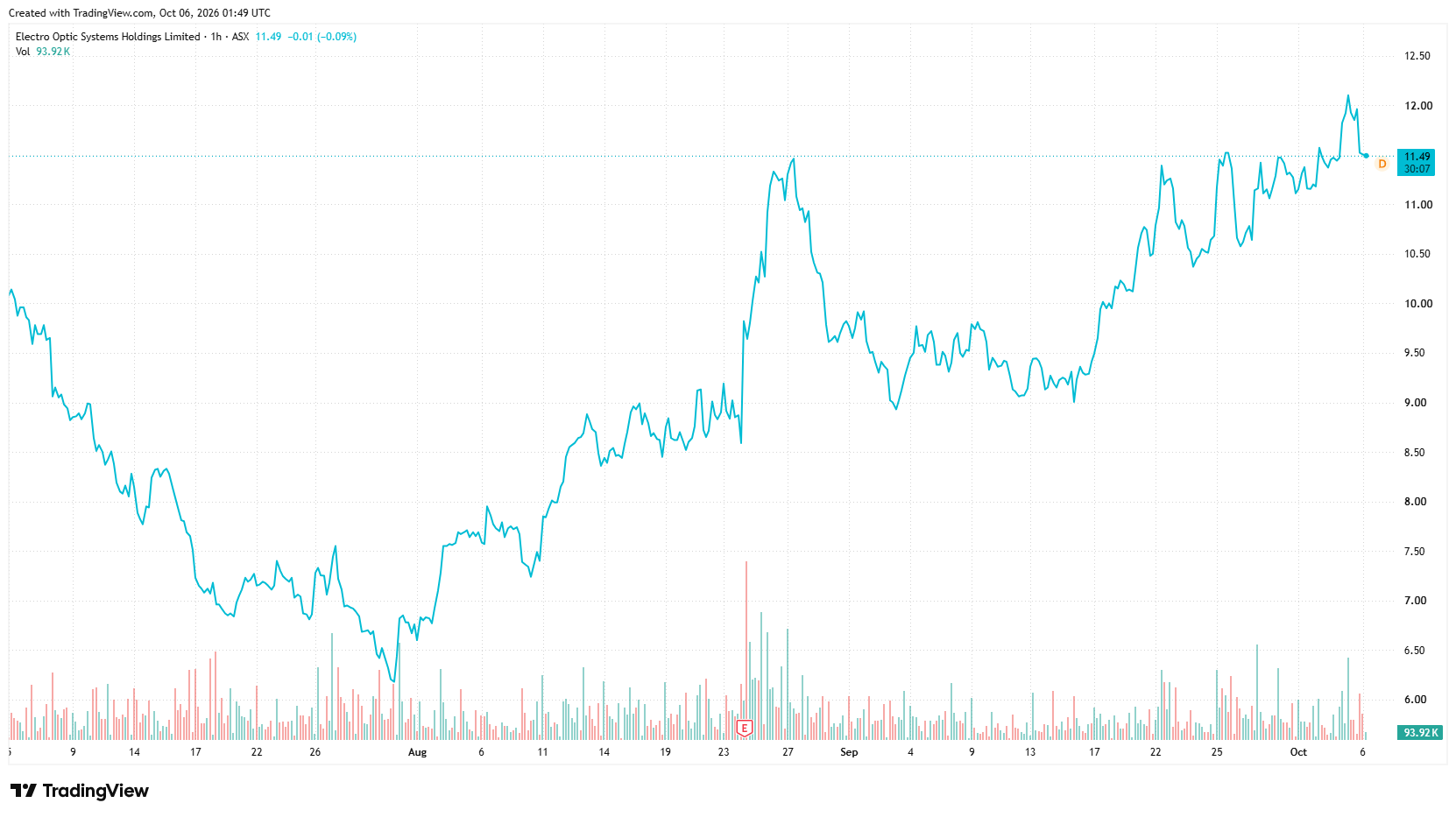
About Electro Optic Systems Holdings Ltd. Electro Optic Systems Holdings Limited engages in the development, manufacture, and sale of telescopes and dome enclosures, laser satellite tracking systems, remote weapon systems, and high laser weapon. It operates through Defense Systems and Space Systems segments. The company develops, manufactures, and markets fire control, surveillance, weapon systems, and high energy laser to military customers. It also provides passive optical and laser sensing equipment; optical, microwave and on-the-move radio and satellite products; and laser-based surveillance systems with space tracking capability. In addition, the company offers counter-drone, firepower, force protection, and UGV and marine lethality systems, as well as high energy laser weapon; optical tracking systems, space control, space domain awareness, satellite laser ranging, space sustainability, and precision optics. It operates in Australia, the United States, Singapore, the United Arab Emirates, the United Kingdom, New Zealand, the Netherlands, North America, Germany, and rest of Europe. Electro Optic Systems Holdings Limited was founded in 1983 and is based in Symonston, Australia. Source: EODHD Key Stats
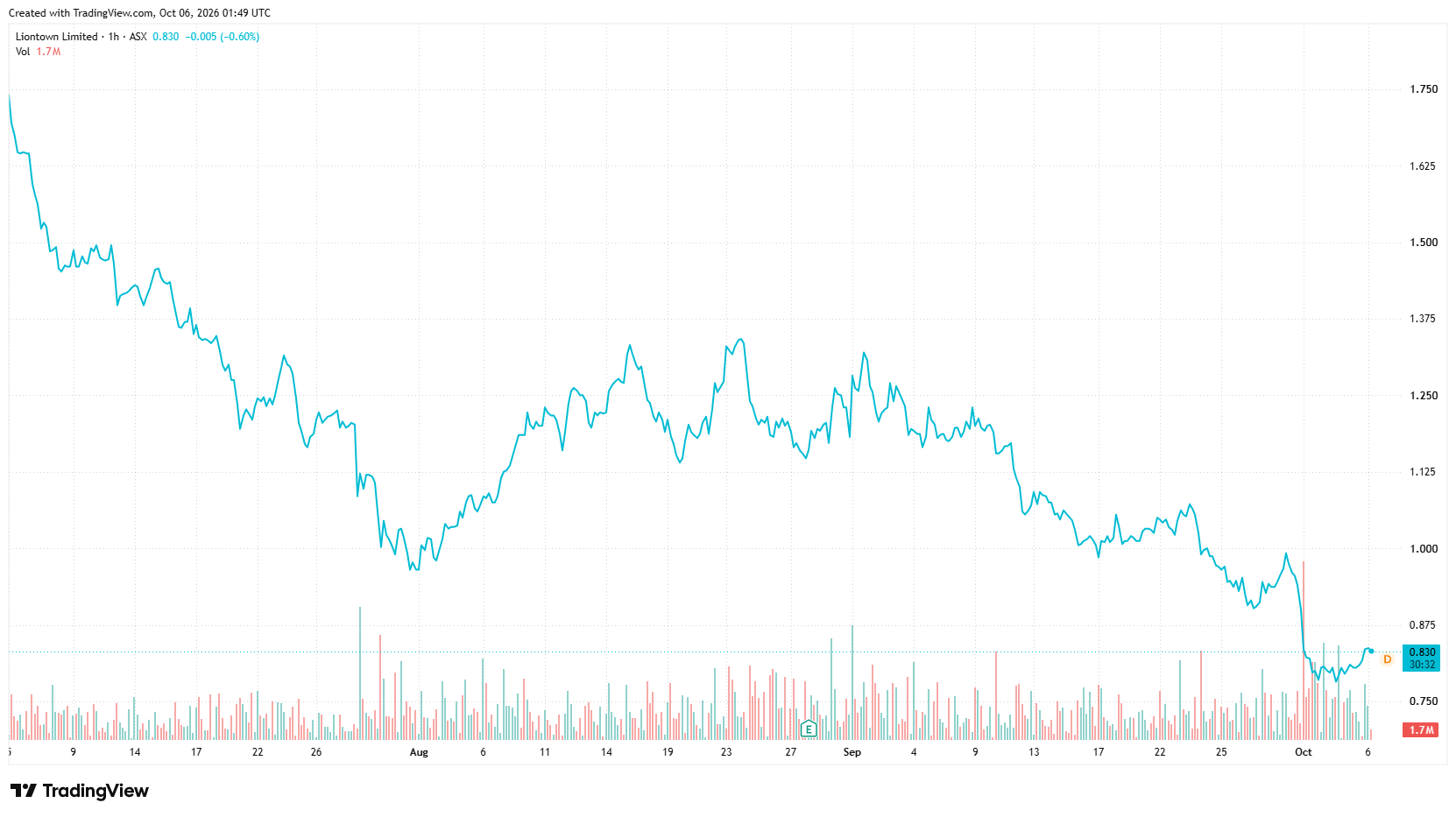
About Liontown Ltd. Liontown Limited engages in the exploration, evaluation, and development of mineral properties in Australia. It primarily explores for lithium, gold, and nickel deposits. The company's flagship property is the Kathleen Valley lithium project located in Perth, Western Australia. The company was formerly known as Liontown Resources Limited and change its name to Liontown Limited in November 2025. Liontown Limited was incorporated in 2006 and is headquartered in West Perth, Australia. Source: EODHD Key Stats

The RBA has raised rates to 4.60% as inflation pressures persist. Explore the impact of energy costs, AI demand and the key signals investors should watch next.

Discover how advances in genomics, AI, diagnostics and gene editing are creating a broader healthcare opportunity and where commercial value is emerging.

The AI trade is being forced to rethink the pace of progress. Here is what investors should watch across Nvidia, chips, AI spending, software and adoption.

Copper is at a record high, yet the global market still has a surplus. So where is all the copper, and why is it becoming harder to find?

Sharewise CEO Alex Perry sat down with ausbiz to unpack how the platform approached FY26, a year in which it reported an ASX return of almost 11% and a US return above 32%. The conversation ranged from the AI infrastructure theme to specific names on Perry's radar in resources and quantum computing. Here's a rundown of the key points.
