
Greenland in Focus: Trump’s Arctic Play and the Market Implications

Trump’s remarks on Greenland echo his first presidency’s brief consideration of acquiring the territory. They coincided with threats of tariffs on eight NATO countries, starting at 10% from February and potentially rising to 25% by mid-year unless Denmark engages in Greenland negotiations. This approach reflects deliberate use of economic and geopolitical leverage rather than a literal acquisition strategy. From an investment perspective, these events signal elevated Arctic and European geopolitical risk, underscore the strategic importance of critical minerals, and create potential knock-on effects across commodities, trade-sensitive equities, inflation expectations, and currency volatility. Markets are reacting to uncertainty, leverage, and realignment rather than the probability of a territorial transfer.
For investors, this episode exemplifies a new paradigm in which major powers pursue critical resources, reconfigure alliances, and deploy economic coercion as statecraft. It introduces a persistent geopolitical risk premium across commodities, defence equities, European markets, and inflation expectations, demanding explicit recognition in pricing, allocation, and risk frameworks.
Greenland: Strategic Location and Resource Optionality
Greenland occupies a critical position at the intersection of North American security, Arctic competition and global supply chain vulnerability. Geographically, it forms part of the Greenland Iceland United Kingdom gap, a key naval chokepoint controlling access between the Arctic Ocean and the Atlantic. The United States has maintained a permanent military presence at Thule Air Base since 1951, providing early warning radar and space surveillance capabilities central to continental defence.
The island’s resource endowment enhances its strategic relevance. Greenland holds the world’s eighth-largest rare earth reserves, substantial uranium, and commercially viable deposits of zinc, gold, and copper. These materials underpin defence systems, semiconductor production, renewable energy, and electric vehicles. China controls roughly 80% of global rare earth processing, creating a strategic bottleneck. Greenland offers theoretical supply chain diversification, though infrastructure development would require USD100 billion in investment and a 10–15 year timeline.
Climate change serves as both catalyst and complication. Melting ice improves access to mineral deposits and enables port development, yet environmental concerns remain paramount for Greenland's 57,000 residents, 85% of whom oppose American acquisition. The island's government has prioritized sustainable development over rapid extraction, creating a paradox for investors: Greenland's strategic value is undeniable and rising, yet political and operational barriers to realizing that value remain formidable.
The broader Arctic context intensifies these dynamics. Russia has expanded military infrastructure along its northern coast and operates more than 40 icebreakers, compared with a limited functional US fleet. China has positioned itself as a near Arctic state, investing in regional infrastructure across circumpolar nations through its Polar Silk Road initiative. This triangular competition introduces persistent uncertainty around resource access and shipping security, reinforcing Greenland’s strategic value while constraining its near term investability.
Why Trump is Interested: Strategic Signaling Over Acquisition
Trump’s Greenland focus is best understood as strategic signalling rather than territorial ambition. Denmark has unequivocal European backing and the probability of a negotiated sale is negligible. The value of the rhetoric lies in its signalling effect across alliances and competitors.
First, the message to European NATO members is that security guarantees are no longer unconditional. By linking tariffs to territorial discussions, the US establishes a framework where alliance commitments are increasingly transactional. This forces European governments to reassess defence spending, energy policy and industrial strategy under the assumption that US support may be conditional on alignment.
Second, the rhetoric signals to China and Russia that the US intends to pursue resource security aggressively. The willingness to apply pressure on allies highlights that supply chain control and strategic minerals now take precedence over trade liberalisation or multilateral cohesion. For Beijing, this reinforces competitive pressure in critical minerals and may accelerate alternative sourcing through Belt and Road investments.
Third, the approach fits Trump’s established negotiating pattern. Maximalist demands, public disruption and economic pressure have historically preceded tactical compromise. During his first term, similar tactics were applied to NATO funding, NAFTA renegotiation and bilateral trade disputes. The likely objective is not ownership, but enhanced military access, preferential resource development rights or deeper Danish cooperation on Arctic security infrastructure.
For markets, the signal outweighs the outcome. The precedent that economic coercion can be applied to allies reshapes expectations around how future resource competition may unfold. Lithium in Chile, cobalt in the Democratic Republic of Congo and semiconductor inputs in Taiwan all become candidates for similar pressure as supply chain security rises on the strategic agenda
Tariffs as a Strategic Tool: Economic Coercion Meets Negotiation Leverage
The tariffs announced on January 17 represent a clear fusion of trade policy and geopolitical pressure. Eight European nations would face 10% duties on all exports to the United States from February, escalating to 25% by mid-year unless Denmark negotiates over Greenland. Combined with existing measures, effective tariff rates on selected goods could exceed 35%.
The legal basis relies on the International Emergency Economic Powers Act (IEEPA), historically used for financial sanctions rather than trade policy. This authority is under Supreme Court review, with scepticism over whether it permits unilateral tariff imposition without congressional approval. The ruling, expected within weeks, represents a binary market catalyst with repricing potential across rates and risk assets.
Europe’s response has been unified. Governments have rejected any linkage between trade and Greenland’s status, while the European Commission has signalled coordinated retaliation if tariffs proceed. Limited European military deployments to Greenland, framed as Arctic training exercises, underline political and security solidarity with Denmark.
Tariffs raise import costs, compress corporate margins, and feed through to consumer prices. Estimates suggest tariffs implemented during 2025 lifted core inflation materially above central bank targets, limiting Federal Reserve flexibility. Pricing power persistence collides with slowing growth, raising stagflation risk. Retaliatory measures would amplify these effects, particularly for US exporters in agriculture, aerospace, and technology. Past trade conflicts suggest tariff removal should not be assumed, reinforcing uncertainty as the dominant market outcome until a deal is reached to buy Greenland.
Market and Investment Implications Across Asset Classes
The combination of Greenland related strategic signalling and tariff escalation introduces clear cross-asset implications, primarily through higher geopolitical risk premia, inflation persistence and volatility.
Commodities and critical minerals
benefit from strategic repricing rather than immediate supply changes. Rare earths, uranium and industrial metals are supported as markets price Western efforts to diversify away from China through subsidised domestic or friend-shored supply chains. Uranium stands out, supported by both energy security and nuclear policy momentum. Copper, zinc and silver gain from electrification, infrastructure and defence related demand, with preference for producers holding non-Chinese processing exposure or government backed offtake agreements.
Defence and aerospace
remain structural beneficiaries as Arctic security, surveillance, and logistics gain priority. US contractors with polar-capable platforms and space-based systems are best positioned. European defence spending is rising, though alliance fragmentation and programme coordination risks warrant selective exposure rather than broad sector bets.
European equities
face uneven tariff exposure. Export oriented industrials and autos remain vulnerable, while domestically focused defensives such as utilities, healthcare and consumer staples offer relative insulation. Currency weakness compounds earnings risk, reinforcing the case for sector rotation and selective FX hedging while trade uncertainty persists.
Fixed income and rates
positioning becomes increasingly important. Sticky, tariff driven inflation limits central bank flexibility, favouring shorter duration sovereign exposure and inflation linked securities. Investment grade credit is preferred over high yield given margin pressure and growth uncertainty. A Supreme Court ruling constraining tariff authority represents a near term catalyst that could rapidly reprice duration and rate sensitive assets.
Inflation
dynamics remain the core constraint. Tariff induced price pressures are supply driven and difficult for monetary policy to offset without damaging growth. This environment favours equities with pricing power and defensive demand characteristics, while long duration growth assets remain vulnerable to sustained higher discount rates.
Volatility and risk premia
are structurally elevated. Options markets price higher forward volatility, increasing hedging costs. Institutional investors may favour selective downside protection strategies, while private wealth portfolios may prioritise higher liquidity and cash buffers. The key discipline is separating discrete, tradeable catalysts from persistent geopolitical noise that does not alter fundamentals.
Portfolio Positioning and Strategic Outlook
The convergence of Greenland strategic signalling and U.S.-Europe tariff threats highlights elevated geopolitical and trade uncertainty, requiring portfolios to focus on structural positioning rather than headline driven reactions. Diversification across regions and asset classes remains critical, with selective exposure to commodities and critical minerals, defence and aerospace, and energy transition plays providing potential upside from policy driven demand and supply chain realignment. Defensive equities (utilities, healthcare and domestic focused staples) offer resilience, while currency hedging may mitigate euro and Nordic exposures.
Fixed income positioning should balance inflation and duration risk. Short duration government bonds, TIPS and investment grade corporate credit provide hedging against tariff driven cost pressures and interest rate volatility, while binary events such as the Supreme Court ruling on IEEPA could trigger sudden repricing. Volatility management through options structures, tactical cash allocation or protective overlays can further safeguard portfolios during spikes in market uncertainty, particularly around policy announcements or implementation deadlines.
Trump’s Greenland rhetoric and tariff actions are largely signalling exercises, but the market response is tangible. The era of deepening globalisation, stable alliances, and predictable trade rules has ended. Portfolios must now be resilient to fragmentation, capable of performing when supply chains reorganise around geopolitical logic, and positioned for persistent geopolitical risk. Trump’s Greenland focus marks a milestone in the transition to the geopolitical risk premium era. Investors who recognise signal over substance while acting on the market consequences of that signal will be best positioned for the decade ahead.
Subscribe to our newsletter
Disclaimer: This article does not constitute financial advice nor a recommendation to invest in the securities listed. The information presented is intended to be of a factual nature only. Past performance is not a reliable indicator of future performance. As always, do your own research and consider seeking financial, legal and taxation advice before investing.
Speak to an Advisor

Big Tech reports next week. Learn how to read earnings releases and filings, and what to look for in AI spending, cloud growth, cash flow and guidance.

Understand how AI investment could affect global financial stability, as the IMF and RBA warn of rising debt, market concentration and funding risks.

Firmus’ proposed mega-IPO puts a spotlight on the cost, capital intensity and risks of building AI infrastructure as investors weigh the next phase of the AI boom.
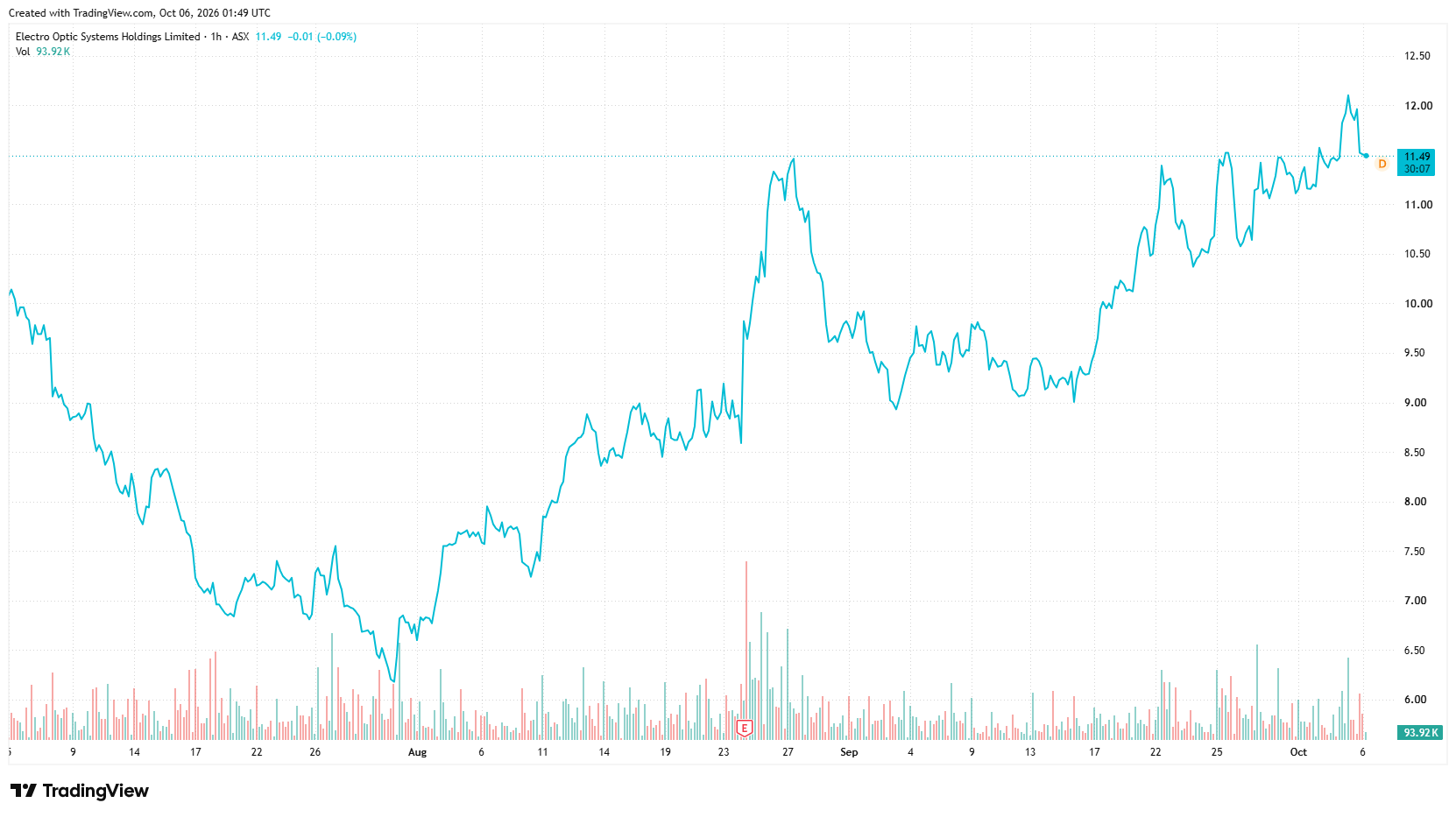
About Electro Optic Systems Holdings Ltd. Electro Optic Systems Holdings Limited engages in the development, manufacture, and sale of telescopes and dome enclosures, laser satellite tracking systems, remote weapon systems, and high laser weapon. It operates through Defense Systems and Space Systems segments. The company develops, manufactures, and markets fire control, surveillance, weapon systems, and high energy laser to military customers. It also provides passive optical and laser sensing equipment; optical, microwave and on-the-move radio and satellite products; and laser-based surveillance systems with space tracking capability. In addition, the company offers counter-drone, firepower, force protection, and UGV and marine lethality systems, as well as high energy laser weapon; optical tracking systems, space control, space domain awareness, satellite laser ranging, space sustainability, and precision optics. It operates in Australia, the United States, Singapore, the United Arab Emirates, the United Kingdom, New Zealand, the Netherlands, North America, Germany, and rest of Europe. Electro Optic Systems Holdings Limited was founded in 1983 and is based in Symonston, Australia. Source: EODHD Key Stats
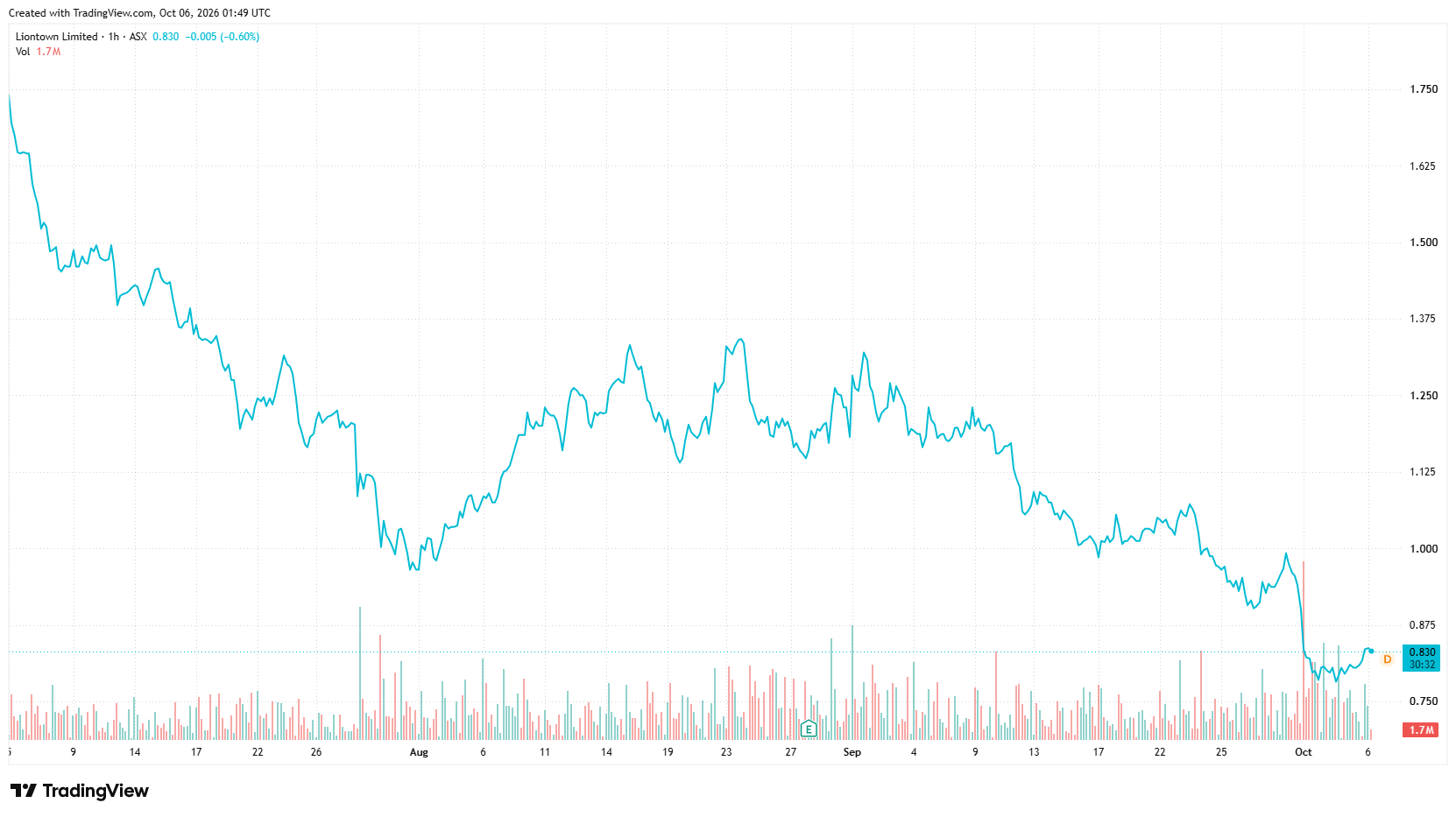
About Liontown Ltd. Liontown Limited engages in the exploration, evaluation, and development of mineral properties in Australia. It primarily explores for lithium, gold, and nickel deposits. The company's flagship property is the Kathleen Valley lithium project located in Perth, Western Australia. The company was formerly known as Liontown Resources Limited and change its name to Liontown Limited in November 2025. Liontown Limited was incorporated in 2006 and is headquartered in West Perth, Australia. Source: EODHD Key Stats

The RBA has raised rates to 4.60% as inflation pressures persist. Explore the impact of energy costs, AI demand and the key signals investors should watch next.

Discover how advances in genomics, AI, diagnostics and gene editing are creating a broader healthcare opportunity and where commercial value is emerging.

The AI trade is being forced to rethink the pace of progress. Here is what investors should watch across Nvidia, chips, AI spending, software and adoption.

Copper is at a record high, yet the global market still has a surplus. So where is all the copper, and why is it becoming harder to find?
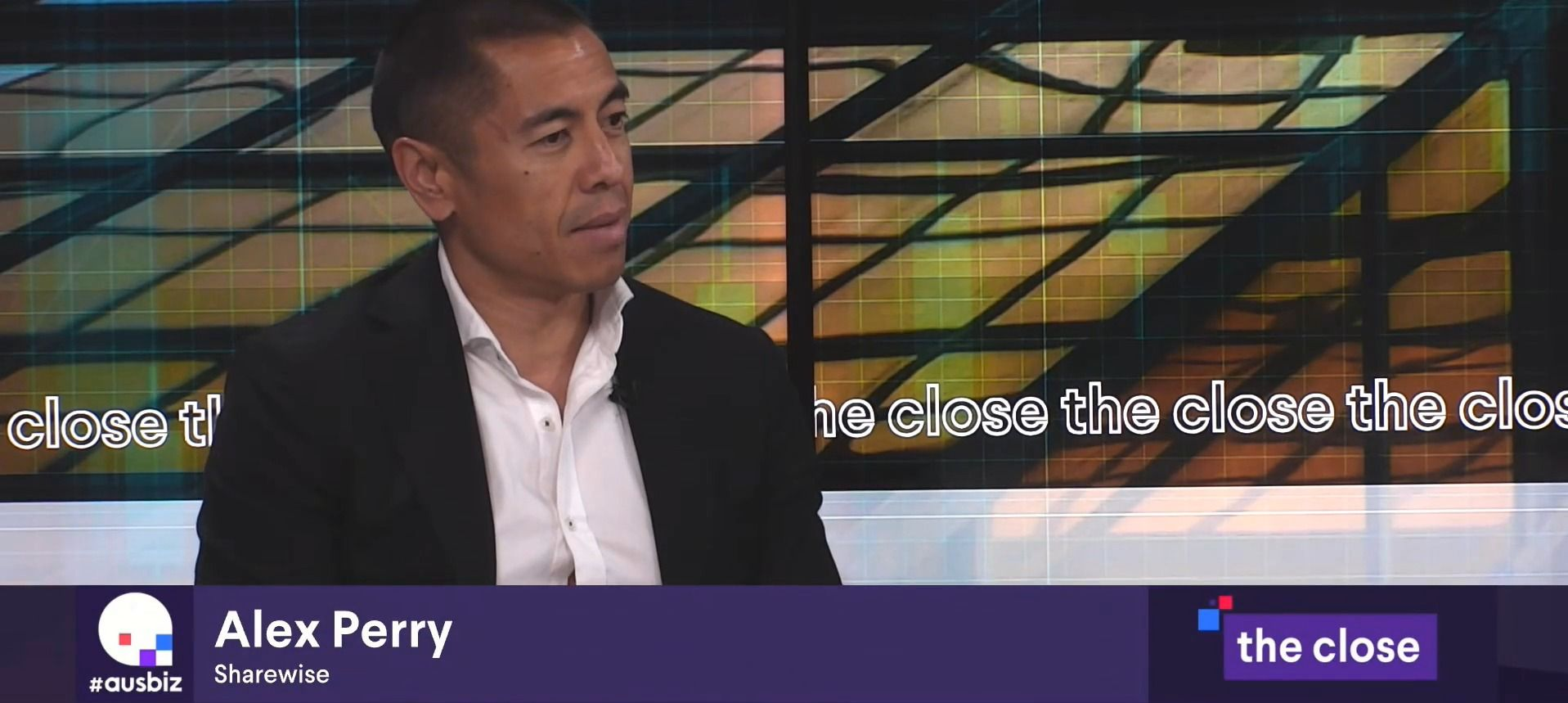
Sharewise CEO Alex Perry sat down with ausbiz to unpack how the platform approached FY26, a year in which it reported an ASX return of almost 11% and a US return above 32%. The conversation ranged from the AI infrastructure theme to specific names on Perry's radar in resources and quantum computing. Here's a rundown of the key points.
