
Finding Balance as Global Liquidity Shifts: What Investors Should Watch

As markets move through late 2025 and into 2026, global liquidity conditions are changing in ways that are subtle, uneven and easy to overlook. This is not a dramatic collapse in liquidity, nor a return to crisis-era stress. Instead, it is a shift away from the unusually generous conditions of the post-pandemic years toward a more balanced, selective environment. For investors, understanding that shift matters more than many headlines suggest.
What Investors Mean by “Liquidity”
In simple terms, liquidity is about how easily money can move through the financial system. It reflects how available funding is, how willing lenders are to provide credit, and how readily investors can buy and sell assets without disrupting prices.
Interest rates influence the cost of money. Liquidity influences its availability. The two are related, but not the same. Rates can be stable while liquidity tightens, particularly if lenders become more cautious, balance sheets are constrained or capital is absorbed elsewhere.
Liquidity comes from multiple sources. Central banks play a role through balance sheet policies and lending facilities. Banks matter through their willingness and ability to lend. Investors matter through their appetite for risk and preference for cash versus assets. Governments matter through borrowing needs that compete for capital.
When all of these elements align, liquidity feels abundant. When they do not, liquidity becomes more selective, even if headline policy settings appear benign.
Why Liquidity Matters More Than It Sounds
Market commentary tends to focus on growth, inflation and interest rates. Liquidity rarely receives the same attention, yet it often explains why markets behave the way they do when the economic narrative appears unchanged. Strong earnings can struggle to lift equities if liquidity is tightening. Weak data can be shrugged off when liquidity is abundant.
Liquidity influences how sensitive markets are to information. In high-liquidity environments, capital is readily available, setbacks are forgiven quickly and risk assets are well supported. When liquidity becomes scarcer, investors demand higher compensation for risk, funding becomes more selective and asset prices can move sharply even in the absence of major news.
The current environment sits between those extremes. Liquidity is no longer expanding aggressively, but it has not disappeared. That nuance is important. Investors who treat liquidity as either “on” or “off” risk missing the more relevant question: where is liquidity becoming tighter, where is it holding up, and what does that mean for markets?
From Abundance to Balance: How the Backdrop Has Changed
The post-pandemic years were defined by extraordinary liquidity. Central banks expanded balance sheets aggressively, governments issued debt at scale and financial systems were flooded with cash. That environment supported asset prices, compressed volatility and reduced the penalty for risk-taking.
That phase has now passed. Central banks are no longer injecting liquidity at the same pace and, in some cases, are allowing balance sheets to contract. Governments remain active borrowers, but markets are increasingly required to absorb new issuance without the same degree of central bank support. Investors, meanwhile, have become more selective as returns on cash and low-risk assets have improved.
This shift does not imply an abrupt tightening or a systemic shortage of liquidity. Rather, it marks a transition toward balance. Capital remains available, but it is more price-sensitive and more discriminating. Markets that relied heavily on abundant liquidity for valuation support are more exposed, while those underpinned by strong cash flows and resilient balance sheets are better positioned.
Where Liquidity Is Shifting
Global liquidity is no longer expanding in a coordinated or uniform way. The extraordinary monetary accommodation that followed the pandemic is steadily giving way to a more neutral backdrop, as major central banks step back from balance sheet expansion and allow liquidity to normalise. This is not an abrupt tightening cycle, but a deliberate move away from the excesses of recent years toward conditions that are intended to be supportive without fuelling asset inflation or risk mispricing.
In the United States, the Federal Reserve has reduced its balance sheet meaningfully from its peak, withdrawing excess reserves from the financial system even as the pace of runoff has moderated. Europe has followed a similar path, with the European Central Bank allowing assets to mature without reinvestment and encouraging financial markets to operate with less reliance on central bank liquidity. Japan remains the most cautious, reflecting its long history of ultra-loose policy, but even there the direction has shifted away from incremental stimulus.
At the same time, global liquidity is increasingly shaped by divergence rather than synchronisation. Some central banks are closer to neutral settings, others remain focused on containing inflation, while several emerging markets have already moved toward easing to support domestic growth. This divergence means liquidity conditions are no longer defined by a single global cycle, but by relative policy stances, economic resilience and investor confidence across regions.
The result is a more fragmented liquidity environment. Capital is still available, but it is more selective, more price-sensitive and more responsive to regional differences than in the post-pandemic period. For markets, this increases the importance of understanding where liquidity is tightening, where it remains supportive, and how those shifts influence capital flows and asset pricing beneath the surface.
Australia’s Place in the Global Liquidity Cycle
Australia sits at the intersection of global capital flows rather than at their centre. As a small, open economy with deep financial markets, domestic liquidity conditions are heavily influenced by offshore funding markets and global investor sentiment. This means shifts in global liquidity often reach Australia faster and with greater intensity than in larger, more closed economies.
While the Reserve Bank of Australia plays an important role in setting domestic policy, Australian financial conditions are not determined in isolation. Local banks rely meaningfully on wholesale and offshore funding, making them sensitive to changes in global funding costs, US dollar liquidity and risk appetite. As a result, even modest tightening in global liquidity can flow through to higher funding costs, more conservative lending behaviour and changes in asset pricing, independent of moves by the RBA.
The Australian dollar acts as an important transmission mechanism in this process. Currency movements often reflect shifts in global liquidity and capital flows before those changes are fully evident in domestic economic data. Periods of global liquidity tightening tend to place downward pressure on the currency, cushioning the economy but also signalling tighter financial conditions beneath the surface.
For investors, this sensitivity reinforces the importance of viewing Australian assets through a global lens. Liquidity conditions offshore matter as much as domestic policy settings, shaping outcomes across equities, credit and property markets. Understanding Australia’s place in the global liquidity cycle helps explain why local markets can respond sharply to changes in global conditions, even when the domestic economic narrative appears relatively stable.
What Shifting Liquidity Means for Markets
Liquidity conditions shape how markets respond to information. In equities, liquidity influences valuations as much as earnings. When liquidity is abundant, investors are willing to pay more for future growth. When it tightens, valuation discipline returns and market leadership narrows toward companies with strong balance sheets and reliable cash flows.
This does not necessarily imply broad market weakness. Rather, it suggests greater differentiation. Some segments may struggle, while others prove resilient. Volatility can increase even in the absence of recessionary conditions, simply because markets become more sensitive to marginal changes in sentiment and funding.
In fixed income, reduced central bank support places greater emphasis on credit risk, issuance dynamics and investor demand. Yield levels may appear attractive, but spreads can widen if liquidity becomes constrained or risk appetite fades.
Real assets and alternatives face a similar tension. Long-term fundamentals may remain sound, but near-term performance can be influenced by funding availability and investor liquidity preferences.
What Investors Should Watch
Liquidity conditions tend to change slowly, but their market impact can be sudden. The goal for investors is not to track every data point, but to focus on a small number of signals that reveal whether capital is becoming more available or more constrained beneath the surface.
Central bank balance sheet trends remain a foundational indicator. Changes in asset holdings and reserve levels influence how much liquidity is available to support financial markets, even when policy rates appear stable. A slowing or reversal in balance sheet contraction can ease pressure on risk assets, while continued runoff tends to increase market sensitivity to shocks.
Money market fund flows provide insight into investor risk preferences.
Elevated allocations to cash-like instruments often reflect caution and a desire for liquidity, particularly in late-cycle environments. Persistent strength in these flows suggests capital is available, but not yet willing to move decisively into risk assets.
Short-term funding markets can reveal stress before it becomes visible elsewhere. Activity in repo markets and increased use of central bank facilities may signal emerging balance sheet constraints or funding pressures that are not captured by headline policy settings or economic data.
For Australian investors, domestic funding conditions are especially important. Bank funding spreads, offshore issuance costs and deposit competition offer timely insight into how global liquidity shifts are flowing through to the local financial system. These dynamics directly influence lending behaviour, mortgage pricing and broader credit availability.
Cross-border capital flows and currency movements often act as early warning signals. A stronger US dollar typically tightens financial conditions for non-US economies, including Australia, by increasing the cost of foreign funding and dampening risk appetite across markets.
Taken together, these signals help investors look beneath market headlines and better assess whether liquidity is becoming more supportive or more restrictive, often well before the impact is fully reflected in asset prices.
How Investors Can Think About Positioning
Liquidity analysis is not about timing markets. It is about understanding the environment in which decisions are being made. In a world where liquidity is no longer uniformly abundant, flexibility matters more than precision.
Balance sheet strength, cash flow resilience and funding durability become more valuable when liquidity is selective. Diversification across different liquidity regimes can be just as important as diversification across asset classes. Above all, liquidity should be viewed as a risk management lens rather than a short-term signal.
The post-pandemic era demonstrated how powerful abundant liquidity can be. The next phase is likely to reward investors who understand where liquidity is tightening, where it remains supportive and how that balance shapes market behaviour. In a more normalised world, that understanding may prove to be one of the most underappreciated sources of investment insight.
Subscribe to our newsletter
Disclaimer: This article does not constitute financial advice nor a recommendation to invest in the securities listed. The information presented is intended to be of a factual nature only. Past performance is not a reliable indicator of future performance. As always, do your own research and consider seeking financial, legal and taxation advice before investing.
Speak to an Advisor

Big Tech reports next week. Learn how to read earnings releases and filings, and what to look for in AI spending, cloud growth, cash flow and guidance.

Understand how AI investment could affect global financial stability, as the IMF and RBA warn of rising debt, market concentration and funding risks.

Firmus’ proposed mega-IPO puts a spotlight on the cost, capital intensity and risks of building AI infrastructure as investors weigh the next phase of the AI boom.
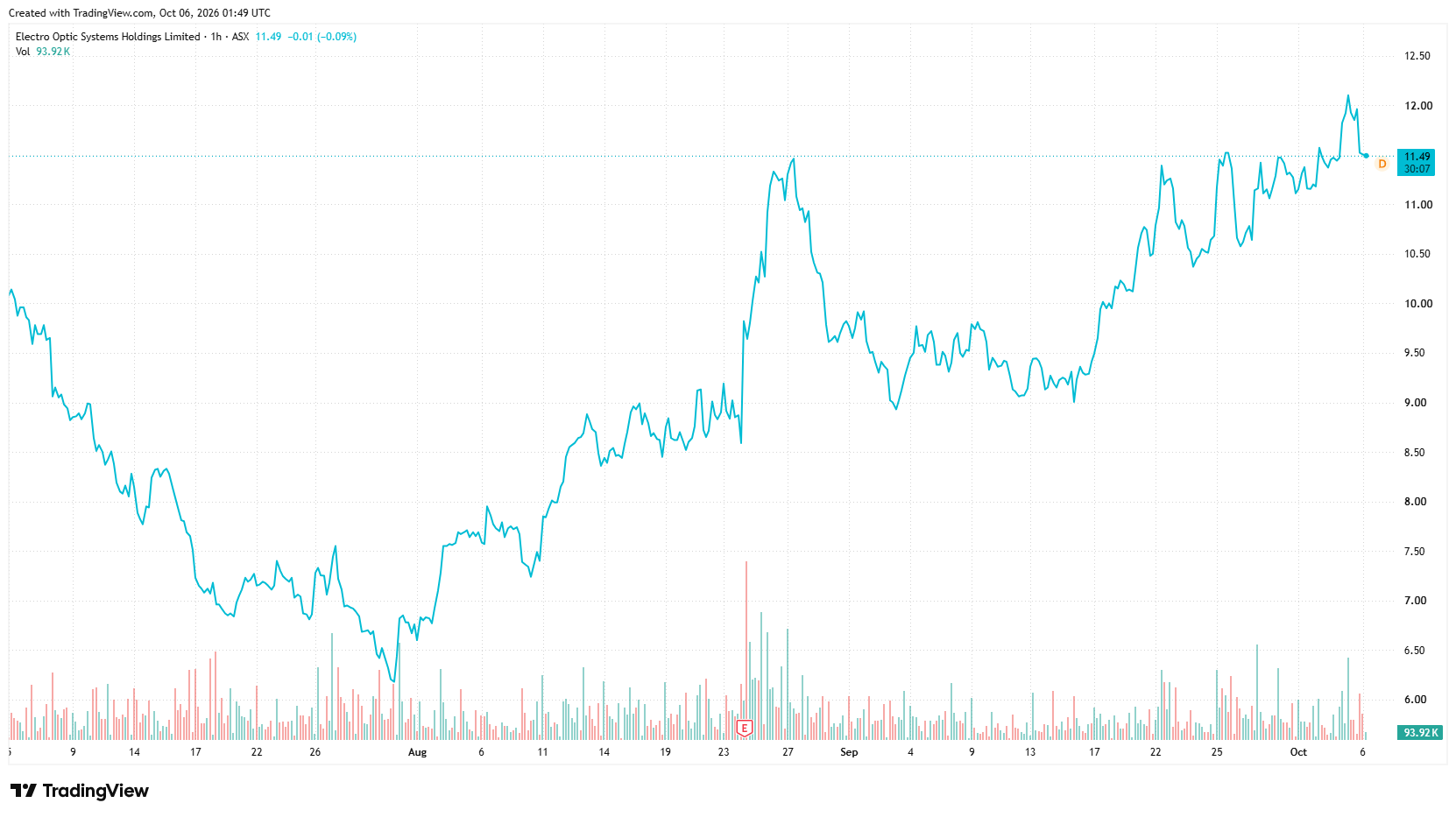
About Electro Optic Systems Holdings Ltd. Electro Optic Systems Holdings Limited engages in the development, manufacture, and sale of telescopes and dome enclosures, laser satellite tracking systems, remote weapon systems, and high laser weapon. It operates through Defense Systems and Space Systems segments. The company develops, manufactures, and markets fire control, surveillance, weapon systems, and high energy laser to military customers. It also provides passive optical and laser sensing equipment; optical, microwave and on-the-move radio and satellite products; and laser-based surveillance systems with space tracking capability. In addition, the company offers counter-drone, firepower, force protection, and UGV and marine lethality systems, as well as high energy laser weapon; optical tracking systems, space control, space domain awareness, satellite laser ranging, space sustainability, and precision optics. It operates in Australia, the United States, Singapore, the United Arab Emirates, the United Kingdom, New Zealand, the Netherlands, North America, Germany, and rest of Europe. Electro Optic Systems Holdings Limited was founded in 1983 and is based in Symonston, Australia. Source: EODHD Key Stats
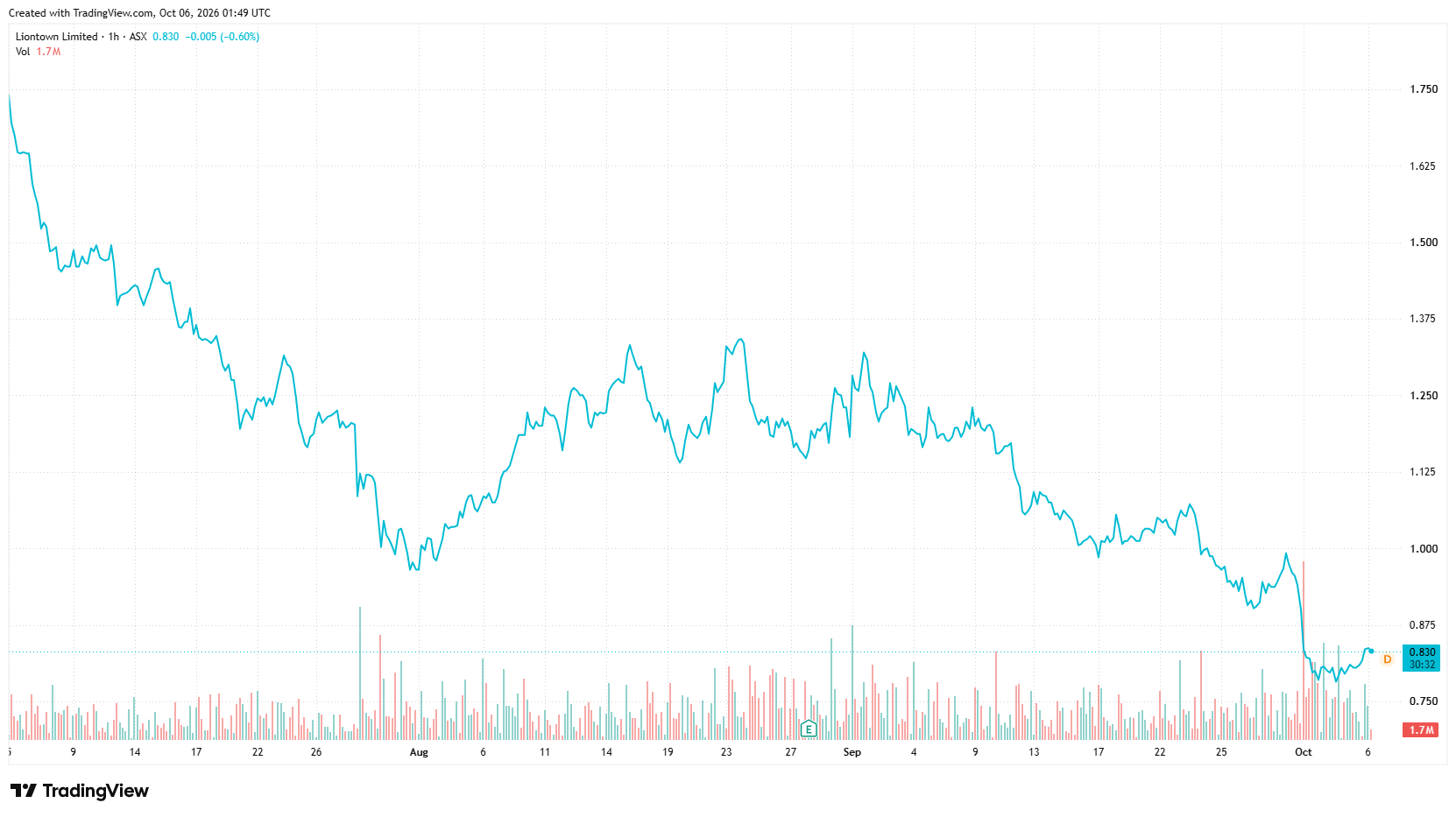
About Liontown Ltd. Liontown Limited engages in the exploration, evaluation, and development of mineral properties in Australia. It primarily explores for lithium, gold, and nickel deposits. The company's flagship property is the Kathleen Valley lithium project located in Perth, Western Australia. The company was formerly known as Liontown Resources Limited and change its name to Liontown Limited in November 2025. Liontown Limited was incorporated in 2006 and is headquartered in West Perth, Australia. Source: EODHD Key Stats

The RBA has raised rates to 4.60% as inflation pressures persist. Explore the impact of energy costs, AI demand and the key signals investors should watch next.

Discover how advances in genomics, AI, diagnostics and gene editing are creating a broader healthcare opportunity and where commercial value is emerging.

The AI trade is being forced to rethink the pace of progress. Here is what investors should watch across Nvidia, chips, AI spending, software and adoption.

Copper is at a record high, yet the global market still has a surplus. So where is all the copper, and why is it becoming harder to find?

Sharewise CEO Alex Perry sat down with ausbiz to unpack how the platform approached FY26, a year in which it reported an ASX return of almost 11% and a US return above 32%. The conversation ranged from the AI infrastructure theme to specific names on Perry's radar in resources and quantum computing. Here's a rundown of the key points.
