
Quantum Computing: The Next Frontier for Tech Investment — Reality or Hype?

Despite this renewed attention, the central question remains unresolved. Is quantum computing approaching a genuine commercial inflection point, or is it another example of technological ambition running ahead of economic reality? Assessing where quantum sits today, and how it may translate into long-term investment returns, requires a clear distinction between scientific progress and market narrative.
Why Quantum Computing Has Returned to the Spotlight
Quantum computing is not a new concept. Its theoretical foundations date back to the 1980s, and early systems have been under development for decades. What has changed is the convergence of several powerful forces reshaping investor expectations.
The rapid commercialisation of artificial intelligence has recalibrated how markets view frontier technologies. The speed at which AI moved from research labs to revenue-generating platforms has encouraged the belief that other advanced computing paradigms could follow a similar trajectory. At the same time, national security considerations have elevated quantum computing to a strategic priority. Governments increasingly regard quantum capability as critical infrastructure, given its implications for encryption, defence systems and cyber security. Finally, major technology companies now have both the balance sheets and strategic incentives to invest patiently in long-duration research programs.
Together, these dynamics have shifted quantum computing from an abstract scientific ambition into a visible capital markets theme, though one that remains difficult to assess using conventional valuation frameworks.
Understanding Quantum Computing in Practical Terms
At a high level, quantum computing differs from classical computing in how information is processed. Classical computers rely on bits that exist as either zero or one. Quantum computers use qubits, which can exist in multiple states simultaneously through superposition. When combined with entanglement, where the state of one qubit is linked to another, quantum systems can in theory process certain categories of problems far more efficiently than classical machines.
This does not imply quantum computers are faster across all tasks. For most everyday computing needs, classical systems remain superior. The potential advantage of quantum computing lies in solving highly complex optimisation problems, modelling molecular interactions, and addressing calculations that scale exponentially with size. These challenges quickly become impractical for even the most powerful classical supercomputers.
For investors, the relevance lies less in the underlying physics and more in whether these capabilities can be harnessed reliably, at scale, and at a cost that supports commercial adoption.
The Current State of the Technology
Despite notable progress, quantum computing remains firmly in the development phase. Existing quantum machines operate with limited numbers of qubits, are highly sensitive to errors, and require extreme operating conditions, including cryogenic temperatures close to absolute zero.
Multiple hardware approaches are being pursued, including superconducting qubits, trapped ions, photonic systems and neutral atoms. Each offers distinct advantages and trade-offs, and there is no consensus on which architecture will ultimately prevail. Error correction remains one of the most significant challenges. Achieving fault-tolerant quantum computing is likely to require thousands or millions of physical qubits to produce a much smaller number of reliable logical qubits.
As a result, timelines for meaningful commercial deployment remain extended. While some research groups have demonstrated quantum advantage in narrow experimental settings, these breakthroughs have yet to translate into economically useful applications. For most use cases, quantum computing remains a 10 to 20 year development story rather than an imminent disruption.
Potential Areas of Economic Value
Key use cases include cryptography, optimisation, materials science and drug discovery. Sufficiently powerful quantum computers could theoretically compromise current encryption standards, prompting adoption of quantum-resistant security protocols. This creates both systemic risk and commercial opportunities across government, defence and financial sectors.
Quantum algorithms could also improve logistics, route planning, supply chain efficiency, and portfolio optimisation where large numbers of variables exist. In pharmaceuticals and materials science, quantum systems may enable more precise molecular modelling, potentially accelerating the development of new drugs and advanced materials.
Currently, revenue in the sector comes primarily from research contracts, cloud access programs, and government grants rather than scalable commercial deployment. The market opportunity is substantial, but monetisation pathways remain uncertain.
Who Is Leading the Quantum Race
Quantum computing development is dominated by large, diversified technology companies with the financial capacity and time horizons required for sustained research investment. IBM remains one of the most visible leaders through its IBM Quantum division, offering cloud-based access to quantum systems while steadily expanding qubit capacity. Google continues to advance quantum hardware and algorithms through its Quantum AI unit, while Microsoft and Amazon are embedding quantum experimentation into their cloud platforms via Azure Quantum and AWS Braket. For these companies, quantum represents a strategic option rather than a near-term earnings driver.
Alongside these incumbents, a smaller group of publicly listed pure-play companies offers more direct but higher-risk exposure. IonQ, Rigetti Computing and D-Wave Quantum are among the best-known names, each pursuing different hardware approaches. While these firms have attracted investor interest during periods of heightened technology enthusiasm, revenues remain limited and business models are still dependent on research contracts, partnerships and future commercial breakthroughs.
The broader ecosystem also includes well-funded private players such as Quantinuum, PsiQuantum and Xanadu, supported by increasing government and defence involvement in the United States and Europe. This landscape reinforces an important investment reality: quantum exposure today is less about identifying near-term winners and more about recognising where sustained capital, intellectual property and strategic patience are being deployed.
Market Dynamics and the Hype Cycle
From an investment perspective, quantum computing displays many features of an early-stage technology hype cycle. Periodic surges in enthusiasm, often triggered by research milestones, policy initiatives or high-profile partnerships, have driven sharp re-ratings in a small number of listed equities. These moves tend to be narrative-led, with valuations reflecting long-term potential rather than current earnings capacity. Share price volatility across quantum-focused stocks has therefore tracked changes in sentiment more closely than underlying commercial progress.
There are clear parallels with earlier technology cycles, including artificial intelligence, cloud infrastructure and the early internet. In each case, extended periods of volatility and capital misallocation preceded the emergence of durable business models. For quantum computing, the central challenge remains timing. Technological progress does not automatically translate into investable outcomes, particularly when revenues remain modest and profitability sits well into the future. History suggests that early exposure to transformative themes is often best achieved indirectly, through enabling technologies, infrastructure providers and software platforms, rather than through early-stage pure plays with limited commercial track records.
Portfolio Implications for Investors
For most investors, quantum computing is best viewed as a long-duration option rather than a near-term earnings driver. Indirect exposure through large technology platforms, semiconductor suppliers, advanced materials companies and software providers offers participation in the theme while limiting concentration and execution risk. Such companies can benefit from increased quantum-related investment without relying on its commercial success to justify valuations.
Direct investment in pure-play quantum companies may be appropriate for investors with higher risk tolerance and long time horizons, but careful position sizing and diversification remain essential. History suggests that early exposure to transformative technologies is often best achieved through enablers and infrastructure providers, rather than early-stage specialists with limited commercial track records. Ultimately, quantum exposure should be framed within broader portfolio objectives, not as a standalone expression of technological inevitability.
Reality, Hype, or Both?
Quantum computing sits at the intersection of scientific credibility and commercial uncertainty. Its potential to reshape selected industries is real, but the pathway to scalable, profitable deployment remains complex and capital intensive. For investors, the challenge is not to dismiss the theme as hype, nor to assume imminent disruption, but to engage with it through a disciplined, long-term lens.
As with many frontier technologies, the greatest risk is not missing the opportunity entirely, but allocating capital too early at valuations that assume outcomes still many years away. Quantum computing may ultimately reward investors who combine conviction with patience, realism and a clear understanding of where technological promise ends and commercial reality begins.
Subscribe to our newsletter
Disclaimer: This article does not constitute financial advice nor a recommendation to invest in the securities listed. The information presented is intended to be of a factual nature only. Past performance is not a reliable indicator of future performance. As always, do your own research and consider seeking financial, legal and taxation advice before investing.
Speak to an Advisor

Big Tech reports next week. Learn how to read earnings releases and filings, and what to look for in AI spending, cloud growth, cash flow and guidance.

Understand how AI investment could affect global financial stability, as the IMF and RBA warn of rising debt, market concentration and funding risks.

Firmus’ proposed mega-IPO puts a spotlight on the cost, capital intensity and risks of building AI infrastructure as investors weigh the next phase of the AI boom.
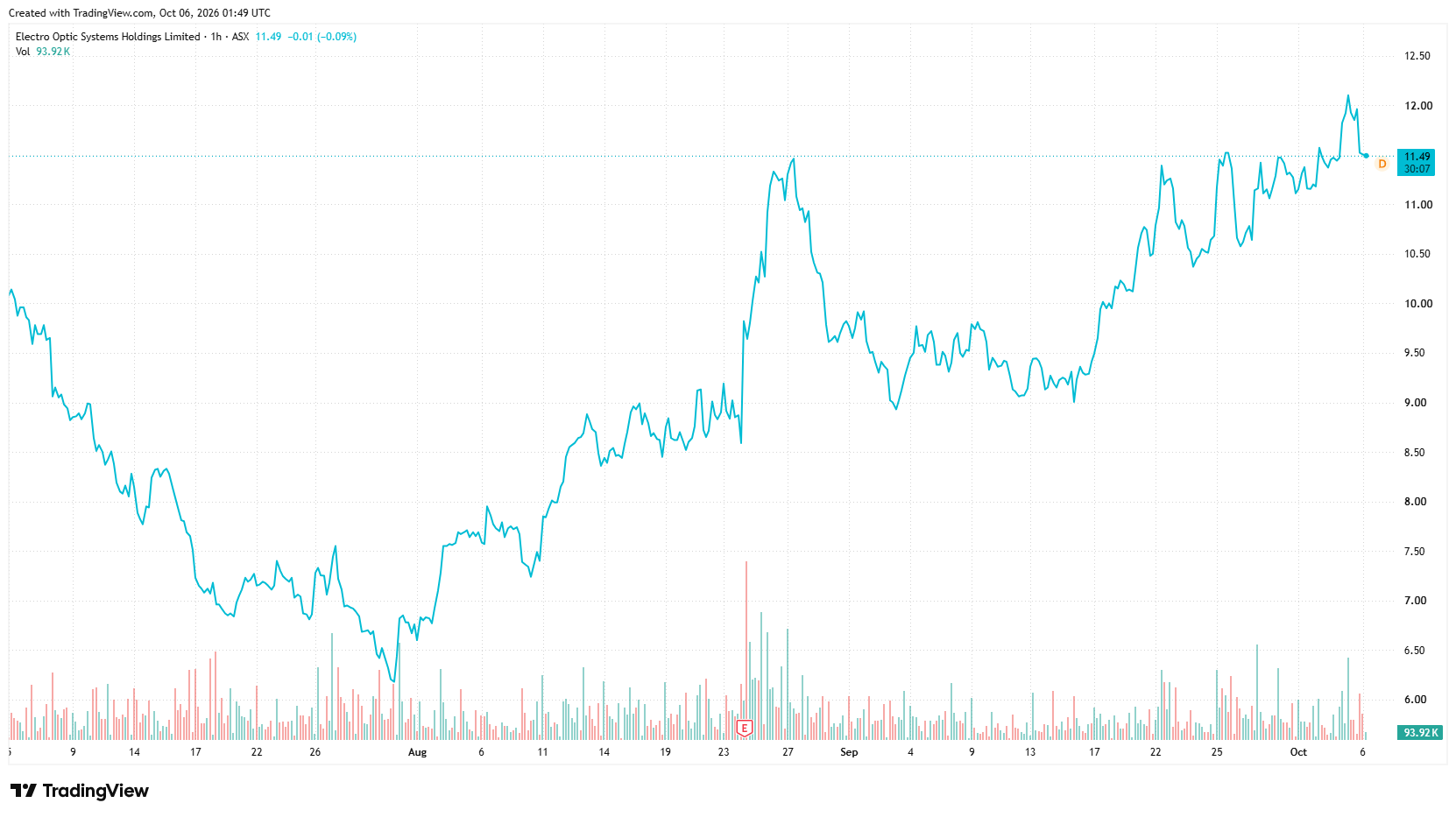
About Electro Optic Systems Holdings Ltd. Electro Optic Systems Holdings Limited engages in the development, manufacture, and sale of telescopes and dome enclosures, laser satellite tracking systems, remote weapon systems, and high laser weapon. It operates through Defense Systems and Space Systems segments. The company develops, manufactures, and markets fire control, surveillance, weapon systems, and high energy laser to military customers. It also provides passive optical and laser sensing equipment; optical, microwave and on-the-move radio and satellite products; and laser-based surveillance systems with space tracking capability. In addition, the company offers counter-drone, firepower, force protection, and UGV and marine lethality systems, as well as high energy laser weapon; optical tracking systems, space control, space domain awareness, satellite laser ranging, space sustainability, and precision optics. It operates in Australia, the United States, Singapore, the United Arab Emirates, the United Kingdom, New Zealand, the Netherlands, North America, Germany, and rest of Europe. Electro Optic Systems Holdings Limited was founded in 1983 and is based in Symonston, Australia. Source: EODHD Key Stats
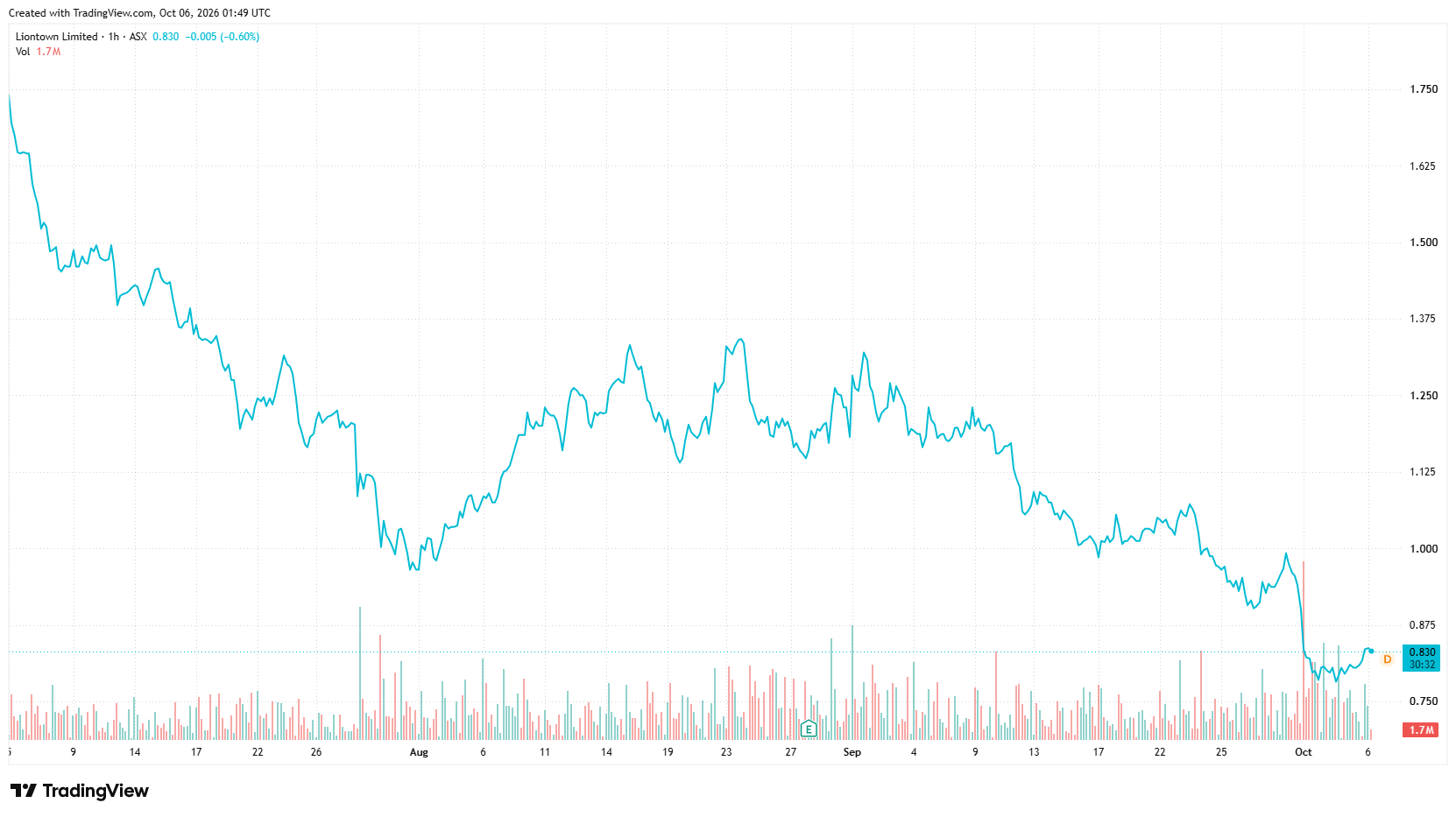
About Liontown Ltd. Liontown Limited engages in the exploration, evaluation, and development of mineral properties in Australia. It primarily explores for lithium, gold, and nickel deposits. The company's flagship property is the Kathleen Valley lithium project located in Perth, Western Australia. The company was formerly known as Liontown Resources Limited and change its name to Liontown Limited in November 2025. Liontown Limited was incorporated in 2006 and is headquartered in West Perth, Australia. Source: EODHD Key Stats

The RBA has raised rates to 4.60% as inflation pressures persist. Explore the impact of energy costs, AI demand and the key signals investors should watch next.

Discover how advances in genomics, AI, diagnostics and gene editing are creating a broader healthcare opportunity and where commercial value is emerging.

The AI trade is being forced to rethink the pace of progress. Here is what investors should watch across Nvidia, chips, AI spending, software and adoption.

Copper is at a record high, yet the global market still has a surplus. So where is all the copper, and why is it becoming harder to find?

Sharewise CEO Alex Perry sat down with ausbiz to unpack how the platform approached FY26, a year in which it reported an ASX return of almost 11% and a US return above 32%. The conversation ranged from the AI infrastructure theme to specific names on Perry's radar in resources and quantum computing. Here's a rundown of the key points.
