SpaceX's IPO Could Redefine the Modern Infrastructure Trade
The Company That Broke Every Private Market Rule
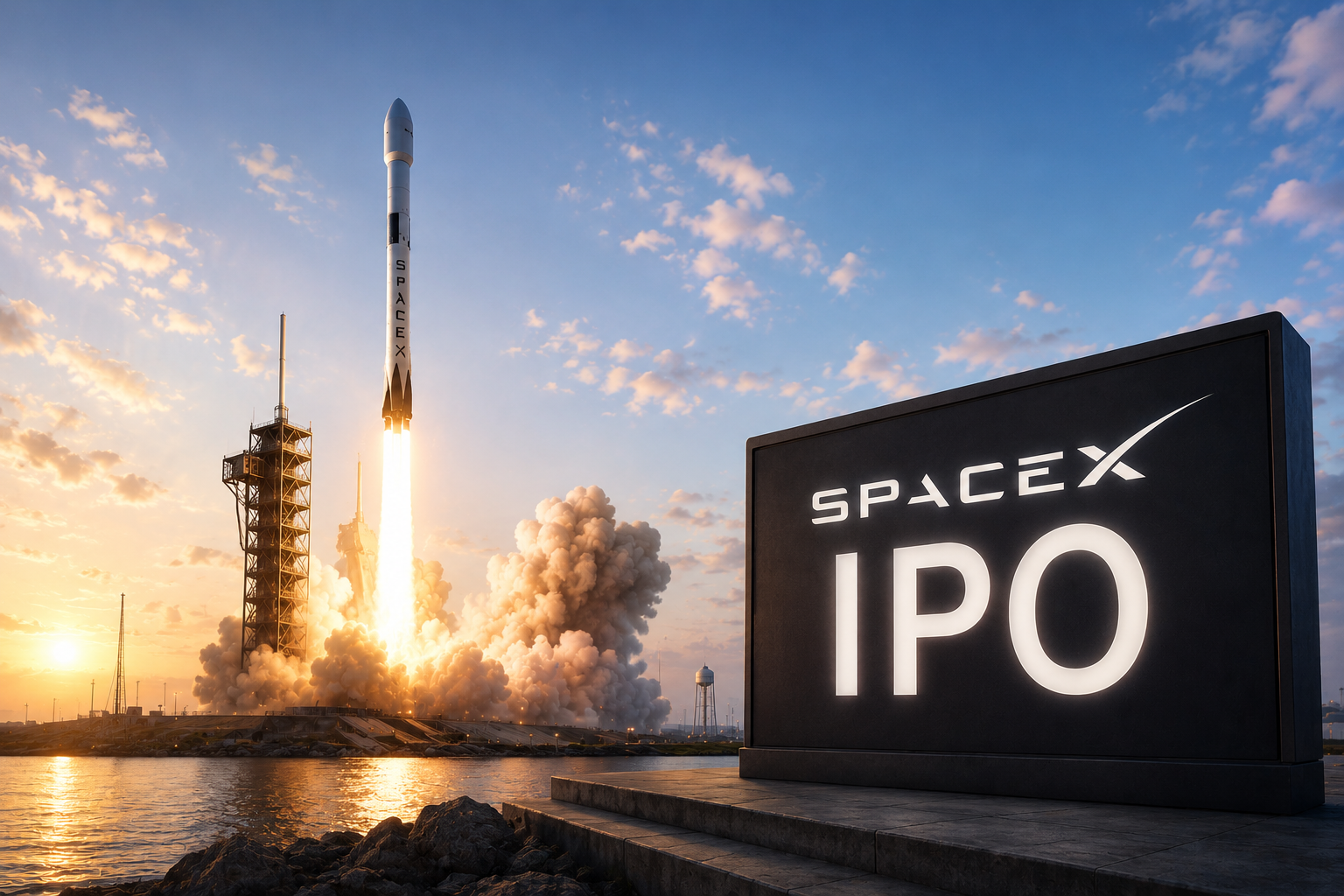
SpaceX has spent more than two decades defying conventional wisdom. While most high-growth companies eventually turn to public markets for capital, Elon Musk's space company remained private, building a launch monopoly, a global satellite network and deep government relationships largely outside the view of everyday investors. Now, as SpaceX prepares for what could become one of the largest IPOs in history, investors are being asked to answer a far bigger question than whether the stock is worth buying.
Most companies pursue public listings because they need capital. SpaceX never needed a public market to access it. Backed by billions of dollars from private investors, the company spent years funding reusable rockets, satellite communications and some of the most ambitious engineering projects of the modern era without the pressure of quarterly earnings expectations or public shareholders.
The result is a company unlike most IPO candidates. By the time SpaceX reaches public markets, it has already built USD18.67 billion in annual revenue, captured roughly 85% of US orbital launches and grown Starlink to 10.3 million subscribers across more than 100 countries. Investors are not being asked to fund a startup. They are being asked to place a value on a business that already dominates one industry and is rapidly strengthening its position in another.
The Business Behind the Rockets
Most investors associate SpaceX with rocket launches, and for good reason. Falcon 9 has become the backbone of global commercial spaceflight, completing 167 missions in 2025 and cementing its position as the industry's dominant launch vehicle. Falcon Heavy serves the heavier end of the market, while Starship remains the company's most ambitious project, with the potential to reshape the economics of space transportation if development proceeds as planned.
Yet focusing solely on rockets risks missing the bigger story. Launches built SpaceX's reputation, but they are no longer the primary driver of its investment case. Over the past decade, the company has evolved beyond an aerospace business into a broader platform spanning communications, connectivity, defence and critical infrastructure. Starlink, originally conceived as a satellite broadband project, sits at the centre of that transformation, while a growing portfolio of government and military contracts has expanded the company's strategic importance.
The numbers reflect that shift. The Space segment, which includes launch services for commercial and government customers, generated approximately USD4.1 billion in revenue during 2025, representing modest year-on-year growth. Beneath that headline, the segment ran a USD657 million operating loss, driven largely by Starship research and development spending. It is the profile of a mature business operating from a position of dominance. The challenge for investors is recognising that future growth may no longer come primarily from sending rockets into orbit.
The business approaching public markets is very different from the one many investors think they know. Rockets remain essential to the story, but increasingly they are the enabler rather than the destination. SpaceX used launch technology to build something far broader: a global network of communications, data and infrastructure assets that may ultimately prove more valuable than the rockets themselves.
Why Starlink Is the Real Investment Story
For all the attention SpaceX receives for its rockets, Starlink has quietly become the company's most important business. The Connectivity segment generated approximately USD11.39 billion in revenue during 2025, representing 61% of total company revenue, while delivering USD4.42 billion in segment operating income and an adjusted EBITDA margin of 63%. Those figures are well above what investors typically associate with traditional satellite communications operators and help explain why Starlink is increasingly viewed as the centrepiece of the SpaceX investment case.
The scale of growth has been equally impressive. Starlink reportedly expanded from around 5 million subscribers in late 2024 to 10 million subscribers by February 2026, while continuing to add approximately 1.5 million new customers each month. Unlike traditional broadband providers, it has achieved this scale without laying fibre, building extensive terrestrial infrastructure or negotiating access across thousands of local jurisdictions. Its network is effectively deployed the moment a satellite reaches orbit.
What makes the story particularly compelling is that residential broadband is no longer the primary growth driver. Enterprise revenue reportedly increased from USD584 million in 2024 to USD1.38 billion in 2025 and is forecast to reach USD1.68 billion in 2026. Maritime revenue is projected to reach USD1.94 billion in 2026, while aviation revenue is expected to grow 68% year on year as commercial airlines and business jet operators continue adopting the service. These customers tend to sign longer-term contracts, generate higher revenue per user and view connectivity as mission-critical rather than discretionary.
The opportunity may expand even further through Direct-to-Cell technology. SpaceX has reportedly launched more than 650 specialised satellites dedicated to the initiative and established partnerships with telecommunications providers including T-Mobile, Rogers and Optus. The addressable market is no longer limited to broadband subscribers. It potentially extends to billions of mobile devices that currently lose coverage beyond the reach of traditional mobile networks.
This is why investors need to separate Starlink from Starship. Starship remains a long-term bet on the future of space transportation, lunar missions and eventually Mars. Starlink is generating substantial revenue and operating income today while embedding itself into critical communications infrastructure around the world.
Rockets built SpaceX. Starlink may ultimately determine its valuation.
The Infrastructure Layer Nobody Is Talking About
For the past two years, the infrastructure story has been dominated by AI. Investors have poured hundreds of billions of dollars into data centres, GPUs, power generation and cooling systems as companies race to build the computing capacity needed for the next wave of artificial intelligence. The focus has been almost entirely on where AI is processed.
Far less attention has been paid to how that information moves. AI inference is only valuable if it can reach users. Cloud computing depends on connectivity. Remote mines, shipping fleets, energy assets and distributed workforces all rely on reliable data transmission, yet large parts of the world remain underserved by traditional communications networks.
This is where SpaceX becomes more than a space company. Through Starlink, it is building a communications network that stretches far beyond residential broadband. The same satellites providing internet access to a cattle station in outback Queensland are also connecting commercial aircraft, offshore energy platforms and maritime operators thousands of kilometres from the nearest fibre network. Replicating that reach through terrestrial infrastructure would require enormous capital and years of development.
That is why the market may be looking at SpaceX through the wrong lens. Most investors see rockets and satellites. The more enduring opportunity may be the communications network being built around them. Everyone is talking about AI infrastructure. Far fewer are talking about communications infrastructure. SpaceX's IPO may be the moment that changes.
When Governments Become Customers
What separates SpaceX from most companies preparing to list is not its technology. It is the nature of its customers. Governments are no longer simply customers of SpaceX. In many cases, they are becoming dependent on infrastructure the company owns and operates.
That shift is most visible through Starshield, a government-focused variant of Starlink designed for classified and national security applications. In May 2026, the US Space Force awarded SpaceX a USD2.29 billion contract to develop the Space Data Network Backbone, a next-generation military communications system built on the Starshield platform. The company also operates the MILNET constellation, a network of more than 480 satellites, and holds a growing portfolio of national security launch, communications and intelligence contracts.
The relationship extends well beyond individual projects. SpaceX participates in the Proliferated Low Earth Orbit Satellite-Based Services program, which carries a potential ceiling value of USD13 billion over ten years. Once governments begin building communications, intelligence and defence capabilities around a platform, replacing that infrastructure becomes expensive, complex and strategically disruptive.
That is what makes this part of the investment case so important. Quilty Space projects Starshield could generate USD3.2 billion in revenue during 2026 alone, but the bigger story is durability. A business supported by long-term government contracts and embedded within national security architecture is often valued very differently from a conventional technology company. As Starshield expands, SpaceX increasingly looks less like a high-growth technology stock and more like a strategic infrastructure provider.
What Is SpaceX Actually Worth and By Whose Yardstick?
This is where the SpaceX story becomes particularly challenging. The company is reportedly targeting a valuation of approximately USD1.75 trillion alongside a capital raise of around USD75 billion, implying valuation multiples that appear extreme when measured against most traditional benchmarks. On trailing 2025 revenue, the company is being valued at more than 100 times sales. On projected 2026 revenue, the multiple falls, but remains well above what investors would typically associate with mature aerospace, telecommunications or infrastructure businesses.
The problem is that SpaceX does not fit neatly into any of those categories. Viewed as a launch provider, the valuation looks difficult to justify. Viewed as a satellite communications operator, the picture changes considerably, particularly when Starlink's profitability and growth profile are taken into account. Add the company's growing defence and national security relationships, and the comparison set shifts again.
The strongest argument for the valuation may be that SpaceX is becoming something entirely new. Through Starlink and Starshield, the company is building a global communications network that spans households, enterprises, governments and defence agencies. If investors ultimately view that network as a form of critical infrastructure, existing valuation frameworks may prove inadequate. The orbital equivalent of a toll road connecting every continent is not an asset class public markets have had to value before.
The market will likely settle somewhere between these competing narratives, with Starlink carrying the greatest influence given it is currently the company's most profitable and scalable business. Investors must also weigh governance considerations. Elon Musk reportedly controls 85.1% of voting power through a super-voting share structure, giving him extraordinary influence over the company's strategic direction. Whether that warrants a premium or a discount will ultimately depend on the investor. Either way, the IPO will not settle the valuation debate. It will simply move it from private markets into public view.
Beyond the IPO: Where Investors Can Gain Exposure
For most Australian investors, the IPO itself may not be the most practical way to gain exposure to the SpaceX story. Access to IPO allocations is often limited, and by the time trading begins, retail investors are typically participating under the same market conditions as everyone else. That does not mean the opportunity set begins and ends with SpaceX shares.
One approach is to look beyond the company itself and focus on the ecosystem it is helping to build. Satellite communications businesses such as Viasat, Iridium Communications and AST SpaceMobile operate within a sector that Starlink is rapidly reshaping. Some are competing directly for market share, while others may benefit from growing demand for satellite-based connectivity as governments, enterprises and consumers increasingly embrace space-based communications.
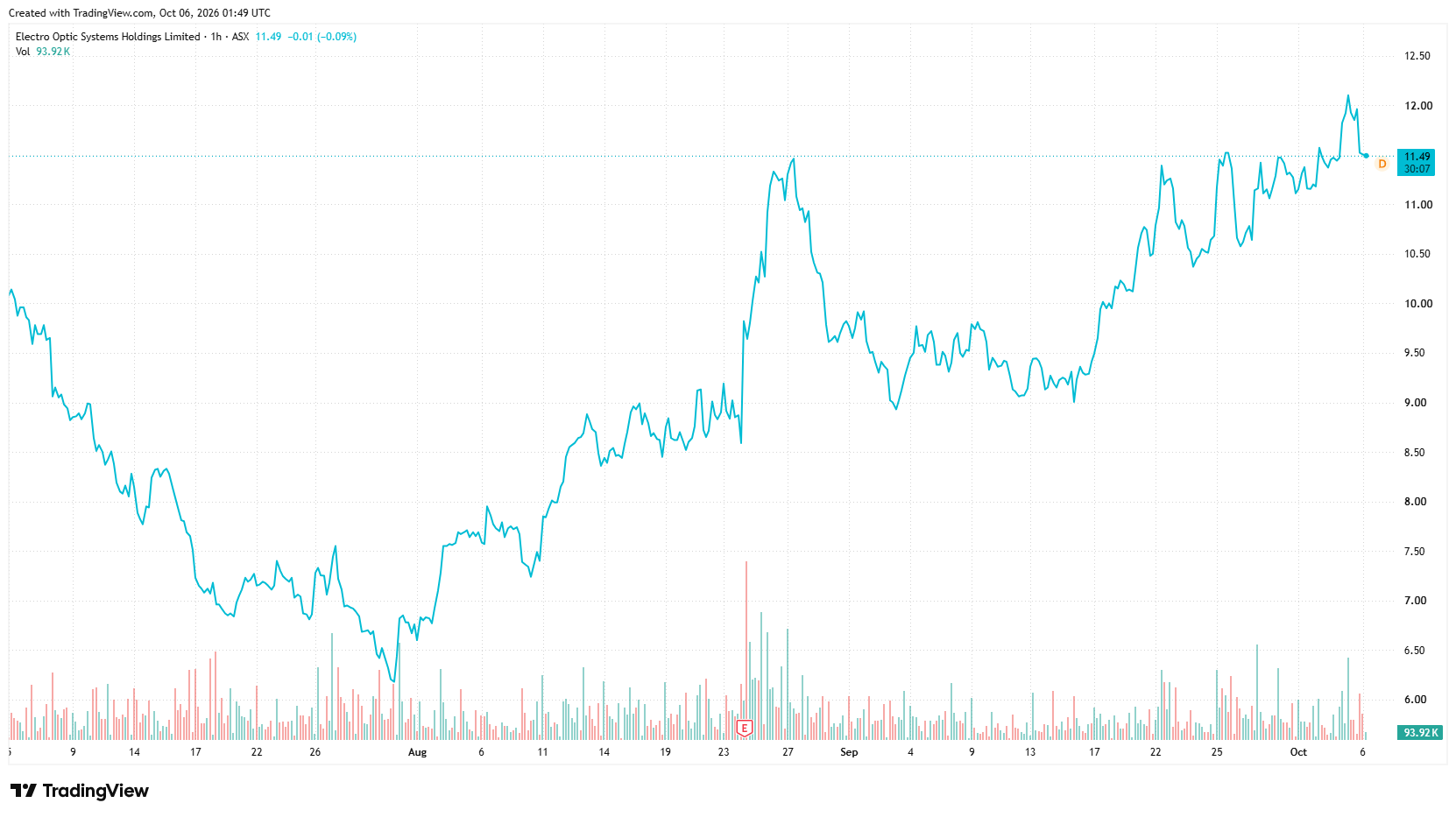
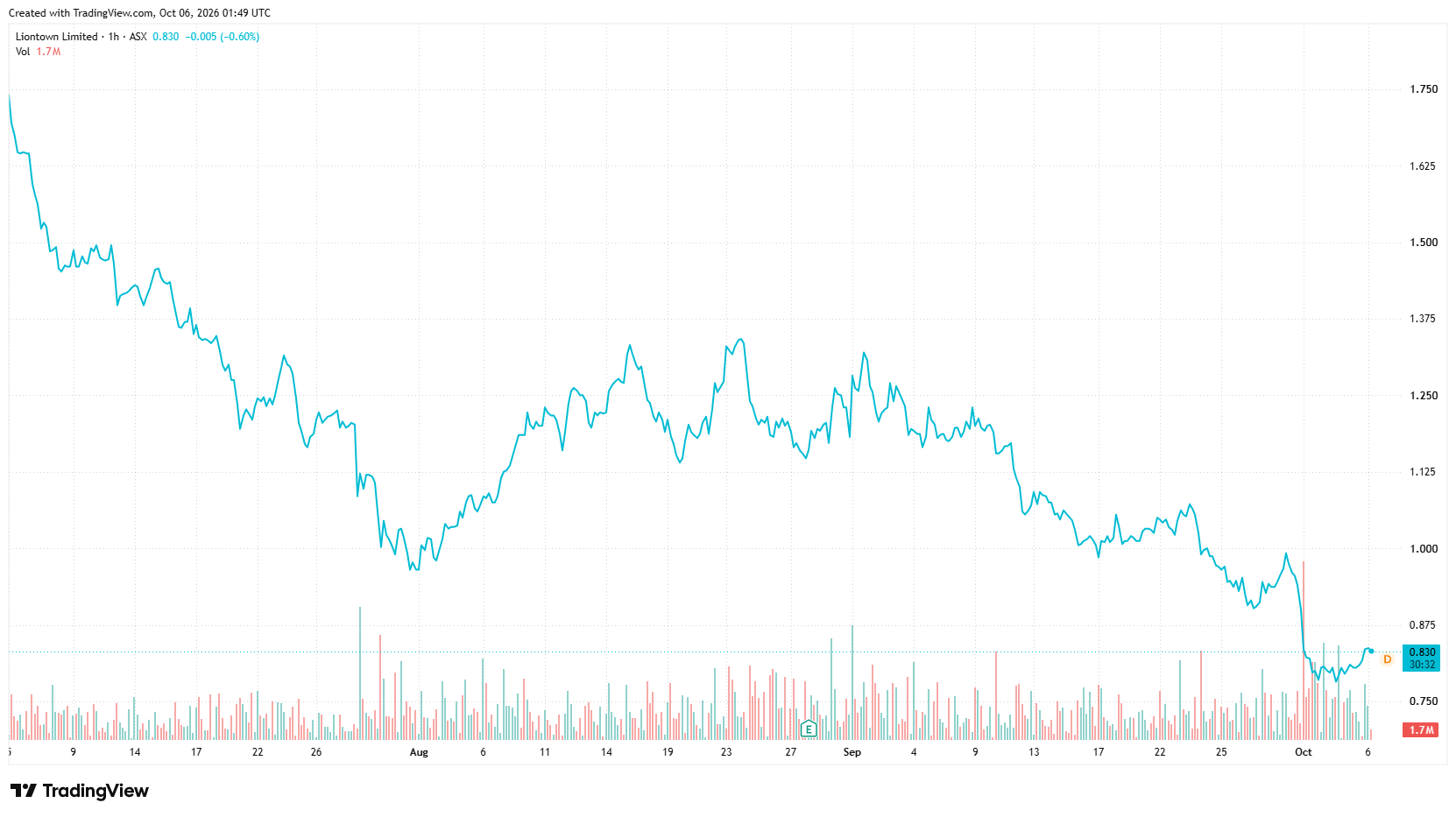
Australian investors may also find opportunities closer to home. Companies such as NextDC and Megaport are not direct beneficiaries of SpaceX, but they sit within the broader digital infrastructure theme underpinning the growth of global connectivity, cloud computing and data transmission. As communications networks, AI infrastructure and data-intensive applications continue to expand, the demand for supporting infrastructure is likely to grow alongside them.
For investors seeking broader exposure, aerospace and defence ETFs provide another avenue. These funds capture many of the government spending and national security trends supporting businesses such as Starshield without requiring a direct investment in SpaceX itself. Ultimately, patience may prove just as valuable as access. The first public earnings reports will reveal far more about Starlink's economics, subscriber growth and defence revenue trajectory than any IPO prospectus ever could. Sometimes the most attractive opportunities emerge after the initial excitement has passed.
A New Chapter for Infrastructure Investing
The SpaceX IPO is not really a test of whether rockets are profitable. Falcon 9 settled that debate years ago. What public markets are being asked to value is something far more unusual: a communications network operating in orbit, serving consumers, enterprises, governments and defence agencies through a single constellation.
For decades, investors learned to view fibre networks, mobile towers and undersea cables as essential infrastructure. Starlink shares many of the same characteristics. It is difficult to replicate, increasingly embedded in critical services and becoming more valuable as usage grows. The difference is that this network sits above the Earth rather than beneath it.
The real question is not whether SpaceX deserves a premium valuation. It is whether investors are using the right framework to assess it. A rocket company, a telecommunications provider, a defence contractor and an infrastructure owner all command very different multiples. SpaceX is trying to convince the market it is all four.
And that is what makes this IPO so important.
Not because it could be one of the largest listings in history. And not because it carries Elon Musk's name.
It matters because public markets are about to decide whether orbital communications networks belong in the same category as fibre networks, mobile towers and other forms of critical infrastructure.
If investors embrace that idea, SpaceX will not be the story.
It will be the starting point.
Subscribe to our newsletter
Disclaimer: This article does not constitute financial advice nor a recommendation to invest in the securities listed. The information presented is intended to be of a factual nature only. Past performance is not a reliable indicator of future performance. As always, do your own research and consider seeking financial, legal and taxation advice before investing.
Speak to an Advisor