
Revisiting the Foundations: Stocks, Bonds and ETFs in a 2026 Portfolio

The challenge facing investors today is not a lack of familiarity with stocks, bonds or ETFs. It is understanding how these instruments behave together in a market environment that looks structurally different from the one that dominated the decade prior to 2020. The post-pandemic period has disrupted long-held assumptions around diversification, the reliability of defensive assets and the role of passive exposure.
As we move through 2026, higher interest rates, persistent inflation risks and more frequent regime shifts have altered the investment landscape. Frameworks that once felt dependable now warrant re-examination. Revisiting first principles is therefore not an exercise in nostalgia, but a practical step toward building portfolios that are resilient, adaptable and aligned with modern risk realities.
This article revisits stocks, bonds and ETFs through a portfolio construction lens grounded in risk management rather than market prediction. It explores how these assets function within contemporary portfolios, where risks have migrated, and how familiar tools can be deployed more deliberately in an uncertain world.
From Asset Classes to Risk Exposures
Portfolios have traditionally been structured by broad asset classes: equities for growth, bonds for stability and diversification achieved through a mix of the two. This approach worked reasonably well when inflation was subdued, policy responses were predictable and correlations were stable.
Today, it is more effective to focus on the underlying risks portfolios are exposed to. These include economic growth, inflation, interest rates, liquidity conditions and investor sentiment. Stocks, bonds and ETFs are vehicles that carry these risks; they are not the risks themselves. Understanding what truly drives returns and drawdowns is therefore more important than relying on asset labels.
Traditional relationships have also become less reliable. Equities and bonds, which historically moved in opposite directions, have at times risen and fallen together during periods of inflation pressure or policy uncertainty. Portfolio construction in 2026 requires assessing how portfolios behave across multiple scenarios and ensuring resilience under stress, rather than assuming historical correlations will hold.
Equities in 2026: Growth with Caution
Equities remain the primary engine of long-term wealth creation, but the nature of equity risk has evolved. Broad market exposure alone is no longer sufficient to ensure balanced participation. Returns have become increasingly concentrated, with a small number of highly profitable and well-positioned companies driving a disproportionate share of index performance.
This concentration creates hidden risks for passive investors, as portfolios may be more exposed to valuation compression or earnings disappointment than headline diversification suggests. Dispersion across sectors, regions and individual companies has widened, making selectivity more important than in the previous decade.
In this environment, emphasis shifts toward companies with durable earnings, strong balance sheets and pricing power. These characteristics provide resilience against higher funding costs and economic volatility. By contrast, businesses reliant on aggressive growth assumptions or cheap capital are more vulnerable as financial conditions tighten.
Sector and style diversification within equities has also become increasingly important. Technology and healthcare continue to lead structural growth, supported by innovation and long-term demand trends. However, cyclical sectors may outperform as economic conditions evolve and policy settings shift. Balancing exposure across sectors, regions and market capitalisation can help reduce concentration risk without sacrificing long-term return potential.
Geographically, global indices remain heavily weighted toward the United States, reflecting its scale and profitability. While US exposure remains important, this dominance introduces concentration risk. Global diversification still plays a valuable role, but allocations are best guided by economic fundamentals and valuation discipline rather than index weights alone.
Bonds Reconsidered: Income, Stability and Flexibility
Bonds have regained importance as a source of income and risk management. After years of very low yields, they now provide meaningful returns and can help protect portfolios during market downturns.
The return of yield changes the role bonds play. Income contributes meaningfully to total return, reducing reliance on capital growth. Higher starting yields provide a buffer against moderate interest rate increases, improving future return expectations.
bonds are no longer universally defensive. Duration risk has become more prominent in an environment of elevated inflation and uncertain policy paths. Long-duration government bonds can still provide protection during sharp risk-off episodes, but they are more sensitive to interest rate shocks than in the past.
Credit exposure adds further complexity. Investment-grade bonds offer income with relatively low default risk, while high-yield bonds provide enhanced yield but behave more like equities during economic stress. Short-duration bonds and cash-like instruments have therefore become valuable tools, offering stability, liquidity and flexibility.
Used intentionally, bonds now serve multiple functions within portfolios: income generation, volatility dampening and optionality. Their role should be actively considered rather than mechanically allocated.
ETFs: Implementation Tools, Not Asset Classes
ETFs have become indispensable in modern portfolio construction, but their role is often misunderstood. ETFs are not an asset class in themselves. They are vehicles that provide access to specific exposures, strategies or outcomes.
When used thoughtfully, ETFs offer efficient, transparent and cost-effective implementation. Broad market ETFs can anchor portfolios, while targeted products allow investors to express views on sectors, factors or regions. The growth of factor-based and actively managed ETFs has further expanded the toolkit available to portfolio managers.
However, ease of access can mask embedded risks. Some ETFs concentrate on a small number of stocks or factors, creating exposure that may behave unexpectedly in volatile markets. Liquidity mismatches or complex derivative strategies can also affect performance. Evaluating ETFs based on how they contribute to portfolio risk and diversification is more important than looking at fees or headline exposure.
Re-thinking Diversification
Recent years have challenged traditional notions of diversification. The simultaneous drawdowns experienced across equities and bonds exposed the fragility of frameworks that relied on stable historical correlations.
Diversification in 2026 is less about spreading capital across asset classes and more about preparing portfolios for different economic regimes. Inflationary shocks, growth slowdowns and liquidity-driven sell-offs affect assets in distinct ways. Effective diversification seeks balance across these scenarios rather than reliance on historical averages.
This shift underscores the limitations of backward-looking analysis. Relationships that held for decades can change quickly when macro conditions shift. Forward-looking risk assessment, scenario analysis and stress testing are now essential components of resilient portfolio design.
Portfolio Construction in Practice
Applying these principles requires clarity of objective and discipline in execution. Growth, income and capital preservation must be balanced explicitly, with each allocation justified by its role rather than its recent performance.
Risk budgeting has become more informative than capital allocation alone. Position sizing should reflect volatility, drawdown potential and contribution to total portfolio risk. Rebalancing, often overlooked, can act as a structural source of return by systematically trimming exposures that have moved ahead of fundamentals and reallocating toward more attractive opportunities.
Equally important is behavioural discipline. Periods of heightened volatility test investor conviction and often lead to reactive decision-making. Portfolios designed with liquidity and resilience in mind are better positioned to endure stress without forcing changes at inopportune moments.
Risk Management as the Core Portfolio Objective
Risk management now sits at the centre of effective investing. Volatility, while uncomfortable, is not inherently damaging. Permanent capital loss, driven by excessive leverage, illiquidity or poor diversification, is the risk that matters most.
Managing drawdowns, stress testing portfolios and maintaining adequate liquidity are therefore critical. Cash, long dismissed during strong markets, has reasserted its value as a strategic asset. It provides flexibility, reduces forced selling and allows investors to respond opportunistically during periods of dislocation.
Managing risk does not mean avoiding it. It means ensuring that risks taken are intentional, understood and appropriately compensated.
Conclusion: Using Familiar Tools More Intelligently
In an evolving market environment, it is tempting to search for novel solutions or thematic shortcuts. Yet the foundations of investing remain remarkably consistent. Stocks, bonds and ETFs continue to form the backbone of resilient portfolios, not because they are new, but because they are flexible, liquid and adaptable.
The task for 2026 is not to replace these tools, but to use them more intelligently. By focusing on underlying risk exposures, acknowledging regime uncertainty and prioritising resilience over prediction, investors can construct portfolios designed not only to perform, but to endure.
In a world defined by higher interest rates, wider dispersion and more frequent shifts in market leadership, revisiting first principles is not a step backward. It is essential for adapting portfolios to current market realities and navigating the years ahead with greater confidence.
For strategic guidance on how you may apply these principles to your own portfolio, click
here
to speak to an advisor.
Subscribe to our newsletter
Disclaimer: This article does not constitute financial advice nor a recommendation to invest in the securities listed. The information presented is intended to be of a factual nature only. Past performance is not a reliable indicator of future performance. As always, do your own research and consider seeking financial, legal and taxation advice before investing.
Speak to an Advisor

Big Tech reports next week. Learn how to read earnings releases and filings, and what to look for in AI spending, cloud growth, cash flow and guidance.

Understand how AI investment could affect global financial stability, as the IMF and RBA warn of rising debt, market concentration and funding risks.

Firmus’ proposed mega-IPO puts a spotlight on the cost, capital intensity and risks of building AI infrastructure as investors weigh the next phase of the AI boom.
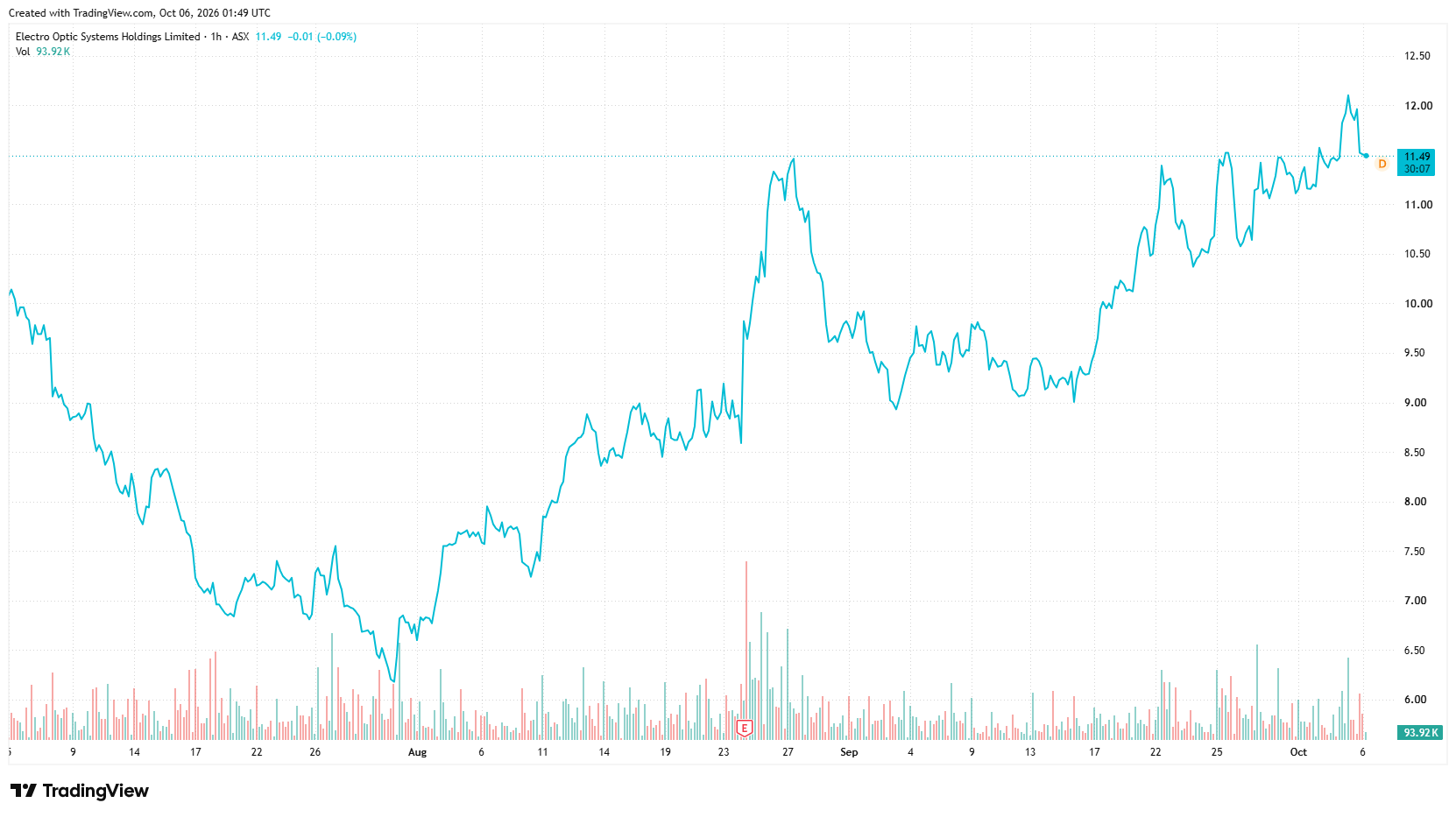
About Electro Optic Systems Holdings Ltd. Electro Optic Systems Holdings Limited engages in the development, manufacture, and sale of telescopes and dome enclosures, laser satellite tracking systems, remote weapon systems, and high laser weapon. It operates through Defense Systems and Space Systems segments. The company develops, manufactures, and markets fire control, surveillance, weapon systems, and high energy laser to military customers. It also provides passive optical and laser sensing equipment; optical, microwave and on-the-move radio and satellite products; and laser-based surveillance systems with space tracking capability. In addition, the company offers counter-drone, firepower, force protection, and UGV and marine lethality systems, as well as high energy laser weapon; optical tracking systems, space control, space domain awareness, satellite laser ranging, space sustainability, and precision optics. It operates in Australia, the United States, Singapore, the United Arab Emirates, the United Kingdom, New Zealand, the Netherlands, North America, Germany, and rest of Europe. Electro Optic Systems Holdings Limited was founded in 1983 and is based in Symonston, Australia. Source: EODHD Key Stats
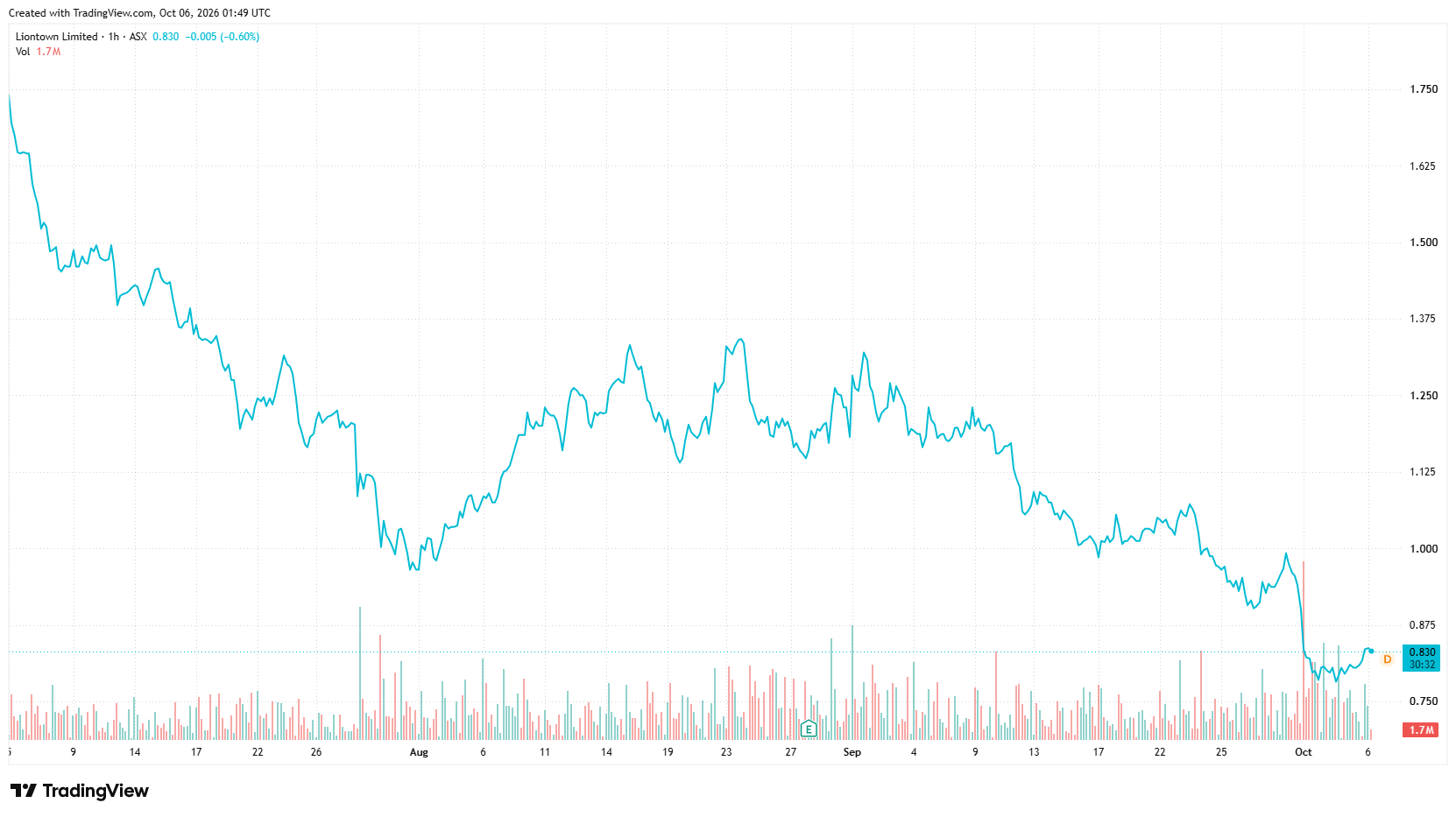
About Liontown Ltd. Liontown Limited engages in the exploration, evaluation, and development of mineral properties in Australia. It primarily explores for lithium, gold, and nickel deposits. The company's flagship property is the Kathleen Valley lithium project located in Perth, Western Australia. The company was formerly known as Liontown Resources Limited and change its name to Liontown Limited in November 2025. Liontown Limited was incorporated in 2006 and is headquartered in West Perth, Australia. Source: EODHD Key Stats

The RBA has raised rates to 4.60% as inflation pressures persist. Explore the impact of energy costs, AI demand and the key signals investors should watch next.

Discover how advances in genomics, AI, diagnostics and gene editing are creating a broader healthcare opportunity and where commercial value is emerging.

The AI trade is being forced to rethink the pace of progress. Here is what investors should watch across Nvidia, chips, AI spending, software and adoption.

Copper is at a record high, yet the global market still has a surplus. So where is all the copper, and why is it becoming harder to find?
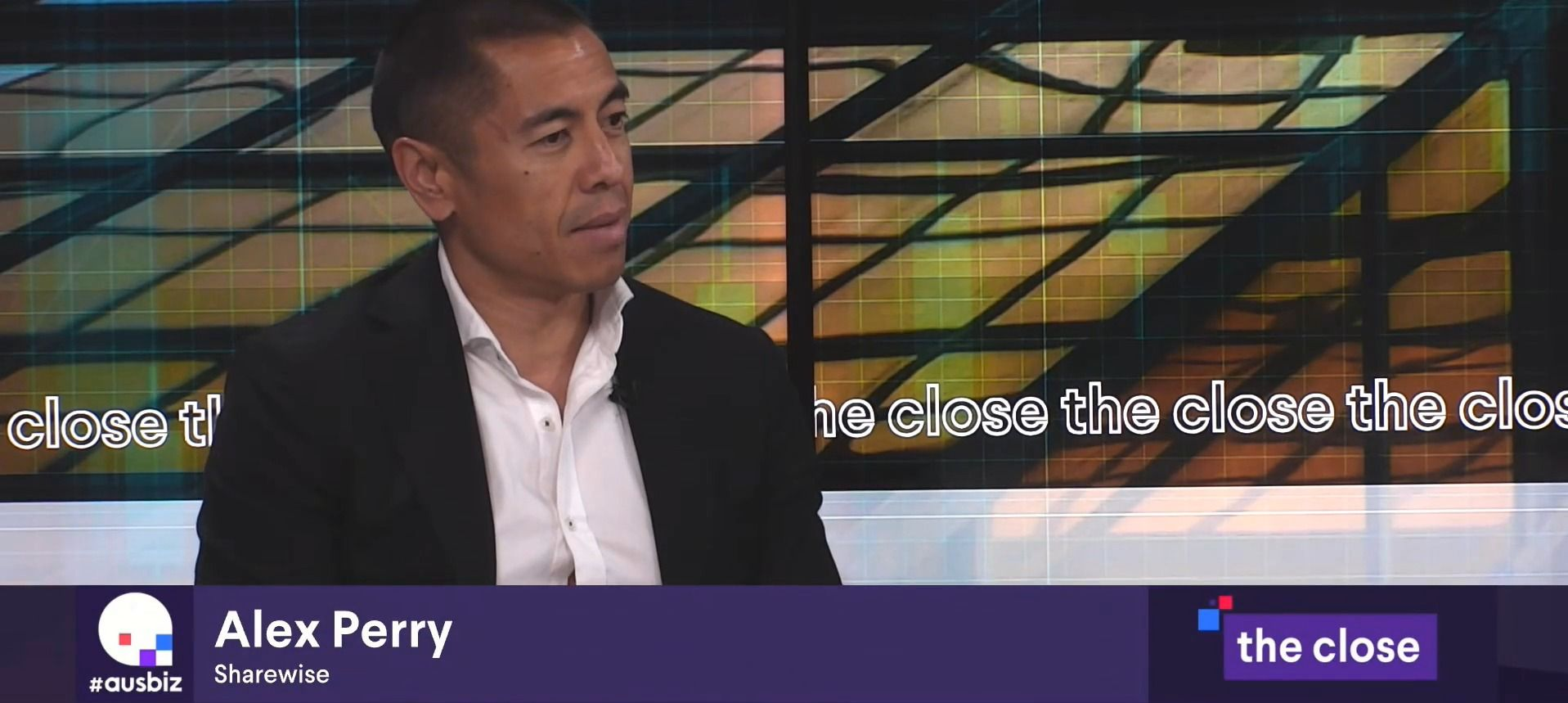
Sharewise CEO Alex Perry sat down with ausbiz to unpack how the platform approached FY26, a year in which it reported an ASX return of almost 11% and a US return above 32%. The conversation ranged from the AI infrastructure theme to specific names on Perry's radar in resources and quantum computing. Here's a rundown of the key points.
