Stock Spotlight: CSL Limited (ASX:CSL) | Sharewise

CSL Limited is one of Australia’s most prominent healthcare investments that is a market-leader in the biotech and pharmaceutical industry. With a strong track record in innovation and global expansion, CSL ASX stock is widely considered a defensive, yet high-growth investment on the ASX.


For long-term investors, CSL Limited stock has consistently delivered shareholder returns, supported by steady revenue growth and reinvestment into cutting-edge research and acquisitions. Unlike many biotech firms that struggle with profitability, CSL’s share price  has   consistently maintained financial stability while expanding its global reach. Its leadership in medical advancements ensures that it remains at the forefront of the industry.


While CSL Limited   has established itself as a strong investment, market conditions, valuation trends and portfolio diversification should be considered before making investment decisions. Understanding financial health, long-term growth potential, and how CSL share price on the ASX  has performed over time can help investors determine if it aligns with their strategy.


About CSL Limited.


CSL Limited researches, develops, manufactures, markets, and distributes biopharmaceutical and vaccines in Australia, the United States, Germany, the United Kingdom, Switzerland, China, Hong Kong, and internationally. The company operates through CSL Behring, CSL Seqirus, and CSL Vifor segments. The CSL Behring segment offers plasma products, gene therapies, and recombinants. The CSL Seqirus segment provides influenza related products and pandemic services to governments. The CSL Vifor segment offers products in the therapeutic areas of iron deficiency and nephrology. The company also licenses CSL intellectual property. CSL Limited was founded in 1916 and is headquartered in Melbourne, Australia.


Source: Yahoo Finance


What Makes CSL Stocks A Strong Competitor In Biotech?


CSL Limited is a dominant player in the biotech and pharmaceutical industry that specialises in plasma-derived therapies, vaccines and nephrology treatments. With over a century of experience and a global footprint spanning more than 30 countries, CSL benefits from economies of scale, diversified revenue streams and deep expertise in life sciences.


The biotechnology sector is one of the most competitive and capital-intensive industries that requires companies to navigate complex regulatory environments, lengthy approval processes and significant R&D investment. When undertaking a CSL stock analysis, it’s vital to recognise the long-standing expertise and infrastructure that give it a strong advantage over new entrants. Key factors that reinforce its market dominance include:

  • High barriers to entry: Decades of research, clinical trials and regulatory approvals make it challenging for competitors to develop similar therapies.
  • Established supply chains: CSL has a global network of plasma collection centers and production facilities, ensuring stable product distribution.
  • Massive scale and market cap: As one of the largest biotech firms globally, with a market cap consistently exceeding $100 billion, CSL has financial strength that allows for continuous innovation and expansion.
  • Defensive investment appeal: The steady demand for healthcare products and institutional investor confidence have historically made CSL stocks more resilient during economic downturns.


CSL stocks  maintain strong profit margins and robust cash flow provides it with significant reinvestment capacity. As opposed to many biotech firms that rely on speculative drug approvals, CSL’s well-diversified revenue base ensures long-term financial stability. Key elements of CSL’s financial strength include:

  1. Heavy reinvestment into R&D: CSL consistently allocates billions annually to research and development, keeping it ahead of competitors.
  2. Strategic acquisitions: Acquiring Vifor Pharma and other biotech firms has expanded CSL’s market reach and product range.
  3. Operational expansion: CSL regularly scales production facilities and invests in advanced manufacturing processes to maintain efficiency and meet growing demand.
  4. Consistent revenue streams: With income from plasma products, vaccines, and nephrology treatments, CSL is less reliant on a single breakthrough product for profitability.


CSL’s competitive edge also stems from its ability to outperform many ASX-listed biotech peers. Companies like Cochlear (ASX:COH) and ResMed (ASX:RMD) are highly specialised, focusing on hearing implants and sleep apnea devices, respectively. While these companies have seen success, CSL’s diverse portfolio of life-saving therapies and global reach reduces its exposure to single-product market risks. Additional factors that strengthen CSL’s stock chart  include:

  • Global brand recognition: CSL’s reputation in plasma therapy and vaccine development places it among the most trusted names in biotechnology.
  • Pricing power and industry influence: Its established presence and market leadership allow CSL to set competitive pricing and negotiate strong supplier agreements.
  • Greater research scope: CSL’s broad R&D pipeline spans multiple healthcare areas, reducing reliance on any single segment.
  • Regulatory expertise: CSL has decades of experience navigating strict pharmaceutical regulations, giving it a compliance advantage over smaller biotech firms.


With a strong balance sheet, continued investment in cutting-edge treatments, and a proven ability to scale globally, the CSL company in Australia remains a compelling choice for investors seeking exposure to healthcare stocks.


Key Stats

Source: Yahoo Finance. Data as of 21/08/25.

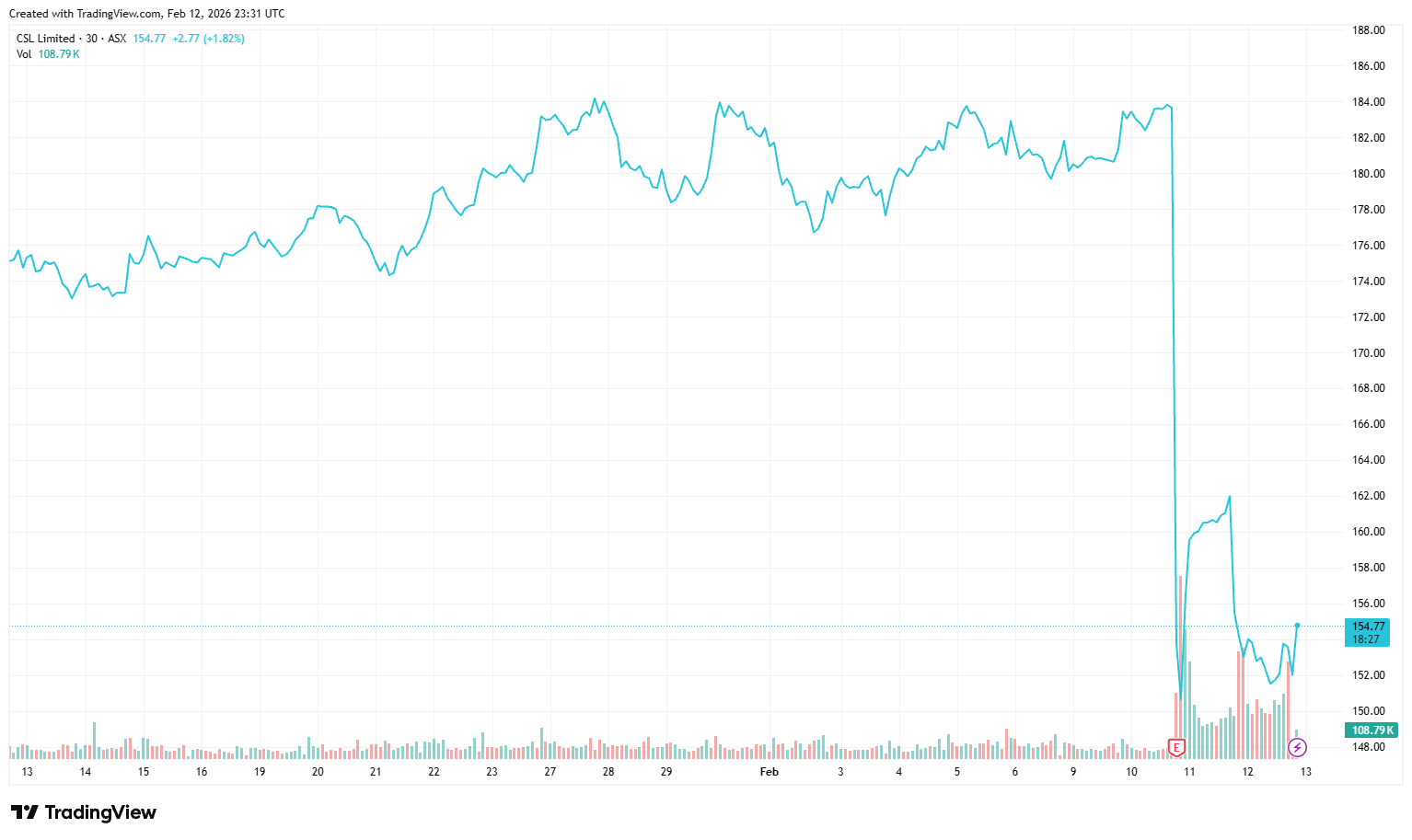
Price Performance

Growth Potential

  • Our revised valuation is a blend of our DCF & PE-relative valuations.
  • Given the near-term uncertainty, we believe CSL’s share price is likely to be range bound. The market is likely to grapple with what valuation multiples to apply to CSL, in our view.
  • The core group earnings driver Behring remains a solid business, and we continue to forecast double digit earnings growth for the group over the medium term. However, this is not completely without risk.
  • High barriers to entry in establishing expertise + global channels + operations/facilities/assets.
  • Better results from the development & R&D pipeline – new product launches.
  • Strong management team and operational capabilities.
  • Strong balance sheet which could be used to deploy capital management initiatives.


Upcoming Innovations from CSL Limited


CSL Limited continues to drive innovation in the biotech and pharmaceutical industry by investing heavily in cutting-edge medical advancements across plasma-derived therapies, vaccines and specialty medicines. With a strong R&D focus and strategic acquisitions, CSL remains at the forefront of medical breakthroughs that shape the future of healthcare.


The company’s research and development pipeline targets high-growth therapeutic areas with significant market demand. The key innovation drivers that drive the CSL dividend include:

  • CSL Behring: Expanding plasma-based therapies for rare and chronic diseases, reinforcing its leadership in immunoglobulin and hemophilia treatments.
  • CSL Seqirus: Advancing next-generation flu vaccines, including mRNA-based solutions to enhance pandemic preparedness and seasonal influenza protection.
  • CSL Vifor: Strengthening its iron deficiency and nephrology treatment pipeline, with a focus on addressing chronic kidney disease and associated conditions.


Beyond internal R&D, CSL’s innovation strategy includes strategic acquisitions and partnerships that accelerate the development of breakthrough treatments. The acquisition of the aforementioned Vifor Pharma has expanded CSL’s presence in renal and cardiovascular therapies, increasing its exposure to high-growth therapeutic areas. In addition, CSL has established collaborations with global biotech firms that focus on gene therapy, cell therapy and precision medicine to develop targeted treatments for complex diseases. The company is also investing heavily in next-generation biologics to leverage advanced manufacturing and research capabilities to address high unmet medical needs.


As demand for advanced biologics and immune-based treatments grows, CSL’s commitment to innovation supports long-term revenue growth and sustained competitive positioning. With its focus on biotechnology expansion and global healthcare advancements, CSL on the stock market is well-positioned to deliver cutting-edge medical solutions that drive shareholder value.


CSL Shareholder Returns & Investor Sentiment


CSL Limited has consistently rewarded long-term investors through substantial share price appreciation and regular dividend payments. Over the past two decades, the share price for CSL on ASX has significantly outperformed the broader local healthcare index.


CSL has maintained a strong commitment to shareholder returns through consistent dividend payments. In August 2024, the company announced a final dividend of $1.45 per share, an increase from $1.29 the previous year. This growth underscores CSL’s dedication to providing reliable income to investors while balancing reinvestment in research and acquisitions. While CSL’s dividend yield is relatively low compared to some other ASX stocks, its ability to steadily grow dividends highlights its financial strength and disciplined capital management.


Investor sentiment toward CSL remains strong, driven by its financial performance and strategic market positioning. For the first half of the 2025 fiscal year, CSL reported revenues of $8.48 billion, reflecting a 5% increase year-over-year, and net profit of $2.11 billion, also up 5%. While some divisions faced challenges, including a 9% revenue drop in Seqirus due to lower immunisation rates in the U.S., CSL’s diversified portfolio and strategic acquisitions—such as the Vifor Pharma acquisition—have reinforced its long-term growth potential.


Over the years, CSL’s sustained share price growth, dividend increases and ability to proactively navigate changing market conditions have made it an attractive option for long-term investors. With a track record of financial stability and strategic expansion, CSL stock forecast continues to offer compelling value to both institutional and retail investors.


Investment Tips for Buying CSL Limited (ASX:CSL) Stock


CSL Limited is widely regarded as a high-quality, long-term investment, but making informed decisions about when and how to buy is key to maximising returns. Investors should evaluate CSL’s valuation, potential risks and long-term growth prospects to determine the best approach for their portfolio.


CSL has historically traded at a premium valuation, reflecting its market leadership, strong earnings performance and expansive global presence across 30+ countries. Its P/E ratio has consistently remained above the ASX healthcare sector average, often ranging between 30x and 40x, with peaks exceeding 45x during periods of strong earnings growth.


The company’s net profit for FY2024 reached $2.11 billion, marking a 5% year-over-year increase, while its 10-year total return has surpassed 300%, significantly outperforming the broader ASX 200. Analysing historical CSL share price movements can help investors identify potential entry points, particularly during market pullbacks or sector-wide corrections. For long-term investors, dollar-cost averaging remains a practical approach to smooth out price volatility and reduce the impact of short-term fluctuations.


While CSL is a strong investment, there are key risks to consider before buying. Understanding these factors can help investors make more informed decisions and manage potential downside risks:

  1. Regulatory changes: Global healthcare regulations can affect drug approvals, pricing strategies, and reimbursement models, potentially impacting CSL’s revenue and profitability.
  2. Foreign exchange fluctuations: With a significant portion of revenue coming from USD and EUR markets, CSL’s earnings can be influenced by currency movements and exchange rate volatility.
  3. Plasma collection costs: As CSL relies heavily on plasma-derived therapies, rising collection and processing costs or supply constraints could increase operational expenses and impact margins.


For long-term investors, CSL can serve as a core healthcare holding within a diversified portfolio that offers exposure to a stable, high-growth industry. Reinvesting CSL’s consistent but relatively low-yield dividends can further enhance returns through compounding over time. Keeping an eye on R&D developments, regulatory approvals, and new product launches can provide valuable insights into CSL’s future revenue streams and market positioning, helping investors make informed decisions based on long-term potential rather than short-term fluctuations.


Key Risks


  • Competitive pressures or growth disappoints (underperform company guidance).
  • Product recall / core Behring business disappoints relative to expectations.
  • Contract loss (e.g. Kcentra recently lost a substantial U.S. contract).
  • Operating costs come in ahead of expectations (incl. elevated costs to support product launches). Further, cost out program fails to yield material benefits given the savings had to be reinvested back into the business.
  • Adverse currency movements (AUD, EUR, USD).

Frequently Asked Questions.

  • What does CSL Limited do?

    CSL Limited is a global biotech company specialising in plasma-based therapies, vaccines, and specialty medicines. It operates through three divisions: CSL Behring (plasma therapies for rare and chronic diseases), CSL Seqirus (influenza vaccines), and CSL Vifor (treatments for iron deficiency and nephrology).

  • Is CSL Limited a good long-term investment?

    CSL has historically been a high-performing stock, consistently delivering strong shareholder returns through earnings growth and reinvestment into R&D. With a dominant market position, steady demand for healthcare products, and ongoing innovation, CSL remains a popular choice for long-term investors.

  • Does CSL Limited pay dividends?

    Yes, but the CSL dividend yield is relatively low compared to other ASX-listed companies. The company prioritises reinvestment into research and acquisitions to drive long-term growth while still providing shareholders with stable, growing dividend payments.

  • What are the risks of investing in CSL stock?

    Like any investment, CSL comes with risks. Key concerns include regulatory changes in healthcare markets, foreign exchange fluctuations, and rising plasma collection costs. Investors should also consider CSL’s premium valuation and potential market volatility before making investment decisions.

  • How can I buy CSL Limited (ASX:CSL) stock?

    CSL stocks are listed on the Australian Securities Exchange (ASX) under the ticker ASX:CSL. Investors can purchase shares through an online brokerage platform, financial advisor, or full-service stockbroker.

Subscribe to our newsletter

Disclaimer: This article does not constitute financial advice nor a recommendation to invest in the securities listed. The information presented is intended to be of a factual nature only. Past performance is not a reliable indicator of future performance. As always, do your own research and consider seeking financial, legal and taxation advice before investing.

Is a Share Advisor

right for you?

February 5, 2026
This week's Stock Spotlight is NYSE-listed Bank of America Corp. About Bank of America Corp. Bank of America Corporation, through its subsidiaries, provides various financial products and services for individual consumers, small and middle-market businesses, institutional investors, large corporations, and governments worldwide. The company operates through four segments: Consumer Banking, Global Wealth & Investment Management (GWIM), Global Banking, and Global Markets. The Consumer Banking segment offers traditional and money market savings accounts, certificates of deposit and IRAs, checking accounts, and investment accounts and products; credit and debit cards; residential mortgages and home equity loans; and direct and indirect loans, such as automotive, recreational vehicle, and consumer personal loans. The GWIM segment provides investment management, brokerage, banking, and trust and retirement products and services; wealth management solutions; and customized solutions, including specialty asset management services. The Global Banking segment offers lending products and services, including commercial loans, leases, commitment facilities, trade finance, and commercial real estate and asset-based lending; treasury solutions, such as treasury management, foreign exchange, short-term investing options, and merchant services; working capital management solutions; debt and equity underwriting and distribution, and merger-related and other advisory services; and fixed-income and equity research services. The Global Markets segment provides market-making, financing, securities clearing, settlement, and custody services; securities and derivative products; and risk management products using interest rate, equity, credit, currency and commodity derivatives, foreign exchange, fixed-income, and mortgage-related products. Bank of America Corporation was founded in 1784 and is based in Charlotte, North Carolina. Key Stats
February 5, 2026
As AI adoption accelerates, workforce cuts are spreading beyond tech, raising questions for investors around margins, labour risk and market positioning.
February 4, 2026
Saudi Arabia’s stock market opening marks a major shift for global investors, combining scale, reform momentum and index inclusion within emerging market portfolios.
February 4, 2026
This week's Stock Spotlight is ASX-listed ResMed Inc. About ResMed Inc. ResMed Inc. develops, manufactures, distributes, and markets medical devices and cloud-based software applications to diagnose, treat, and manage respiratory disorders in the United States and internationally. The company operates in two segments, Sleep and Breathing Health, and Residential Care Software. It offers sleep recorders for the diagnosis and titration of sleep apnea in sleep clinics, hospitals, and at home, including ApneaLink Air, a portable diagnostic device that measures oximetry, respiratory effort, pulse, nasal flow, and snoring; NightOwl, a portable, cloud-connected, and disposable diagnostic device that measures AHI based on derived peripheral arterial tone, actigraphy, and oximetry; and EasyCare Tx, a sleep lab solution. The company also provides AirView, a cloud-based system that enables remote monitoring and changing of patients' device settings; myAir, a personalized therapy management application for patients with sleep apnea that provides support, education, and troubleshooting tools for increased patient engagement and improved compliance; and connectivity module which provides a cellular connection between compatible ventilation devices and AirView system. In addition, the company offers Brightree solutions which are solutions and services for organizations in home medical equipment and pharmacy, orthotic and prosthetic, and home infusion; HEALTHCAREfirst solutions that offers electronic health record, software, billing and coding services, and advanced analytics that enables home health and hospice agencies to optimize clinical, financial and administrative processes; MatrixCare EHR software as a service solutions used by skilled nursing and senior living providers, life plan communities, and home health and hospice sectors; and MEDIFOX DAN software solutions that is used by residential care providers, such as home health and nursing home providers. ResMed Inc. was founded in 1989 and is headquartered in San Diego, California.  Key Stats
February 3, 2026
This week's Stock Spotlight is NYSE-listed Wells Fargo & Company. About Wells Fargo & Company. Wells Fargo & Company, a financial services company, provides diversified banking, investment, mortgage, and consumer and commercial finance products and services in the United States and internationally. The company operates through four segments: Consumer Banking and Lending; Commercial Banking; Corporate and Investment Banking; and Wealth and Investment Management. The Consumer Banking and Lending segment offers diversified financial products and services for consumers and small businesses. Its financial products and services include checking and savings accounts, and credit and debit cards, as well as home, auto, personal, and small business lending services. The Commercial Banking segment provides financial solutions to private, family owned, and certain public companies. Its products and services include banking and credit products across various industry sectors and municipalities, secured lending and lease products, and treasury management services. The Corporate and Investment Banking segment offers a suite of capital markets, banking, and financial products and services, such as corporate banking, investment banking, treasury management, commercial real estate lending and servicing, equity, and fixed income solutions, as well as sales, trading, and research capabilities services to corporate, commercial real estate, government, and institutional clients. The Wealth and Investment Management segment provides personalized wealth management, brokerage, financial planning, lending, private banking, and trust and fiduciary products and services to affluent, high-net worth, and ultra-high-net worth clients. It also operates through financial advisors in brokerage and wealth offices, consumer bank branches, independent offices, and digitally through WellsTrade and Intuitive Investor. The company was founded in 1852 and is headquartered in San Francisco, California. Key Stats
February 3, 2026
About Oracle Corporation Oracle Corporation offers products and services that address enterprise information technology environments worldwide. Its Oracle cloud software as a service offering include various cloud software applications, including Oracle Fusion cloud enterprise resource planning ERP, Oracle Fusion cloud enterprise performance management EPM, Oracle Fusion cloud supply chain and manufacturing management SCM, Oracle Fusion cloud human capital management HCM, and NetSuite applications suite, Oracle Health applications, as well as Oracle Fusion Sales, Service, and Marketing. The company also offers cloud-based industry solutions for various industries; Oracle cloud license and on-premise license; and Oracle license support services. In addition, it provides cloud and license business' infrastructure technologies, such as the Oracle Database and MySQL Database; Java, a software development language; and middleware, including development tools and others. The company's cloud and license business' infrastructure technologies also comprise cloud-based compute, storage, and networking capabilities; and Oracle autonomous database, as well as AI, Internet-of-Things, machine learning, digital assistant, and blockchain. Further, it provides hardware products and other hardware-related software offerings, including Oracle engineered systems, enterprise servers, storage solutions, industry-specific hardware, virtualization software, operating systems, management software, and related hardware support services, and consulting and advanced customer services. It markets and sells its cloud, license, hardware, support, and services offerings directly to businesses in various industries, government agencies, and educational institutions, as well as through indirect channels. Oracle Corporation has a strategic alliance with Metron, Inc. The company was founded in 1977 and is headquartered in Austin, Texas. Key Stats
January 30, 2026
Capital preservation alone is no longer a sufficient strategy for the high-net-worth investor. Inflationary pressure and market volatility have eroded the purchasing power of static cash, meaning a $1 million portfolio left in a standard savings account or underperforming brokers leaves capital exposed. The Australian Taxation Office reports that the average Self Managed Super Fund (SMSF) balance now sits at approximately $1.63 million, signalling that $1 million is the new baseline for serious portfolio construction rather than the finish line. Managing a seven-figure sum requires a fundamental shift from simple accumulation to strategic allocation. You move from trying to save money to ensuring your capital works harder than you do. This guide outlines how professional investors approach a $1 million portfolio in 2026, towards data-driven managed accounts with direct share ownership and transparent reporting. The hidden cost of doing nothing with $1m Doing nothing with $1 million is rarely neutral. In practice, it usually means one (or more) of the following: too much capital sitting idle, risk building silently through concentration, or positions being held out of hesitation rather than conviction. The cost isn’t just financial. It’s behavioural. When investors feel uncertain, they delay decisions, second-guess moves in volatility, and hold onto underperformers longer than they should. That often leads to inconsistent outcomes, even after hours of research. Missed opportunity cost: capital sits unallocated while better opportunities pass. Unmanaged risk: concentration and drift can build without obvious warning signs. Confidence drain: underperformance and indecision compound over time. Risk capacity vs risk tolerance A common failure point for self-directed investors is confusing risk tolerance with risk capacity. Risk tolerance is psychological; it is how well you sleep at night when the ASX 200 corrects by 5%. Risk capacity is mathematical; it is how much capital you can afford to lose without jeopardising your lifestyle or retirement plans. Investors with $1 million often have higher risk capacity but lower tolerance, simply because the numbers feel heavier. Sharewise bridges that gap with evidence-based frameworks, clear communication, and documented decision rules that keep the portfolio aligned to the agreed approach. This is not about avoiding growth. It’s about taking risks deliberately, measuring it properly, and staying consistent through volatility. Defining your mandate Money without a mandate is inefficient. A mandate is simply the portfolio’s job description: what the capital is for, how much volatility is acceptable, and how performance is measured. A good mandate answers three questions: What is the goal (growth, income, protection, or a blend)? What is the time horizon and liquidity needed? What benchmark(s) will you measure against? The Growth Mandate This targets capital appreciation and suits investors still earning significant income who want performance with a disciplined process. Sharewise blends technical and fundamental analysis with proactive monitoring to identify opportunities and manage risk objectively. The Income Mandate Income-focused investors often prioritise dividends, but yield alone can mislead. A portfolio can pay 6% and still go backwards if capital falls. A more professional approach focuses on total return, risk management, and transparency to avoid yield traps while still supporting income needs. The Preservation Mandate This is about reducing volatility and protecting purchasing power. The goal is to beat inflation with minimal volatility. While cash rates from the Reserve Bank of Australia (RBA) offer a baseline, they rarely outpace real inflation after tax. Preservation strategies utilise defensive equities and gold exposure to maintain real wealth. The Time Horizon Trap Short-term thinking can force long-term mistakes. Structuring capital into time-based buckets helps reduce reactive selling and keeps decisions calmer during volatility. 0–2 Years (Liquidity Bucket): Capital needed for tax bills, property deposits, or lifestyle. This remains in cash or near cash instruments. 3–5 Years (Core Portfolio): Blue chip Australian equities and established international leaders. This forms the bedrock of the portfolio. 5–10 Years+ (Growth Engine): Smaller companies, emerging markets, or thematic plays (e.g., AI, green energy transition). The key is simple: don’t rely on your growth engine to fund next year’s expenses. That is how investors get forced into selling at the wrong time. Why Managed Accounts suit serious investors Historically, Australian investors had two choices: expensive managed funds where you pool your money with thousands of others, or a DIY brokerage account where you make every decision alone. Sharewise uses managed accounts to combine professional oversight with investor control: you maintain direct ownership of shares, you can see what’s happening through transparent reporting, and professionals help manage the day-to-day monitoring and execution process. Sharewise operates under a general advice model, which means every trade requires your verbal or written approval. You keep oversight while professionals handle execution and risk management. Which investor profile fits you Different investors face unique friction points when managing substantial capital. The table below outlines the common problem, the risk of staying as-is, and what changes with Sharewise.
January 30, 2026
A half-million-dollar portfolio demands a fundamental shift in psychology. While accumulating the first $50k or $100k often involves aggressive saving and speculative enthusiasm, managing $500k requires an institutional-grade mindset. You are no longer just trying to grow wealth; you are actively defending a significant asset base against inflation, volatility, and emotional error. Holding $500,000 in a stagnant bank account or a property offset facility is not a "safe" play; it is a guaranteed loss of purchasing power as lifestyle inflation outpaces static returns. Reaching this milestone places you in a distinct category of Australian investors, yet it introduces complexities that standard retail advice fails to address. As we look forward to 2026, the economic environment demands a more rigorous, data-driven approach to asset allocation. The reality of different investment options Every investor must decide which asset class will be the best investment for their goals. In 2026, a comparative analysis reveals why traditional "safe" havens often fail the $500k investor: High-Interest Savings & Term Deposits The Proposition: Earning a predictable 4.5% – 5.1% per annum. The Reality: On a $500k balance, this generates roughly $22,500 – $25,500 pre-tax. The Failure Point: With core inflation and the rising cost of living, your real return (after tax and inflation) is often near zero. Cash offers liquidity but zero capital appreciation, making it a "wealth-leak" strategy for a large portfolio. It is a place to hide, not a place to grow. 2. Residential Real Estate The Proposition: Using $500k as a deposit for a $1M+ property. The Reality: Gross rental yields in major Australian cities are currently squeezed between 3-4%. The Failure Point: Real estate is plagued by Concentration Risk. You are betting $500k on a single postcode. Between stamp duty, land tax, maintenance, and agent fees, the "passive" income is often eaten alive by holding costs. Furthermore, you cannot sell a kitchen to fund a lifestyle expense or a new investment opportunity; property is an all-or-nothing liquidity commitment. 3. Managed Stocks The Proposition: Professional allocation across the ASX and global markets. The Reality: Direct ownership of the world's most profitable businesses with 100% liquidity. The Sharewise Advantage: Unlike property, equities provide Franking Credits, which can significantly boost the net yield of an income-focused portfolio. Unlike savings, equities offer Capital Growth that has historically outperformed every other asset class over the long term. Strategic Flexibility: A share portfolio can be pivoted instantly. If market data shifts, you can move from "Growth" to "Defensive" in seconds. A feat impossible with real estate or locked-in term deposits. Does your mindset match your portfolio size? Investing $500,000 moves you into a distinct category of professional wealth management. While capital preservation is often a dominant theme, investors at this level generally fall into two strategic camps: Income Seekers: Focused on protecting capital while earning reliable, franked dividends to support lifestyle or retirement. Growth Seekers: Focused on aggressive capital appreciation to further build a legacy and stay well ahead of the rising cost of living. Regardless of the objective, the greatest risk to your portfolio is often your own behaviour. The emotional burden of managing this sum leads to two common failures: Paralysis: Funds sit in low-yield accounts because the investor fears making a wrong move during market swings. Overconfidence & Erosion: DIY investors often attempt to replicate small, speculative wins with much larger, unmanaged positions. This leads to slowly eroding money as they misjudge market cycles and make emotional decisions during volatility. Without an evidence-based framework, "hoping" for a recovery becomes a substitute for strategy. Data-driven comparison: The $500k decision 
January 30, 2026
Inflation does not sleep. While the Australian Bureau of Statistics (ABS) reported the Consumer Price Index (CPI) rose 3.8% over the twelve months to the December 2025 quarter, the reality for high-net-worth investors is a persistent erosion of purchasing power. Reaching a liquid asset base of $400,000 is a significant milestone – one that often represents a business exit, an inheritance, or decades of disciplined saving. At this level of wealth, you have moved past the "early saver" phase and entered the territory of the Wealth Steward. The decisions you make now are no longer just about "saving" for the future; they are about protecting a legacy and ensuring your capital works as hard as you did to earn it. Smart investors know that preserving wealth requires active participation in the market rather than passive observation. But where exactly should that capital be invested? The capital allocation dilemma When deploying $400,000, most Australian investors weigh four primary options. Each carries a different risk profile, yet only one offers the institutional-grade growth and liquidity required for long-term success in 2026. Should $400k go into savings? Cash offers the highest level of liquidity and a sense of immediate security. However, for a $400,000 portfolio, "safety" is often a mathematical illusion. In an environment where inflation outpaces standard interest rates, holding large reserves in savings accounts results in a guaranteed loss of real-world value. While cash is a tool for liquidity, it is a poor vehicle for wealth acceleration. Unlike equities, which offer the potential for market outperformance, cash guarantees you stay behind the curve. Should $400k go into bonds and fixed income? Bonds are traditionally viewed as a middle ground, offering more yield than cash with less volatility than shares. While they provide a predictable income stream, they often lack the "growth engine" required to significantly increase the net worth of a $400,000 portfolio. In a 2026 market, fixed income may struggle to provide the capital appreciation and tax-effective yield, or franking credits, that high-quality Australian shares deliver. Should $400k go into real estate? Australians have a long-standing affinity for "bricks and mortar," but investing $400,000 in property creates significant structural frictions. Real estate is an illiquid asset; you cannot sell a bathroom to fund a lifestyle change or pursue a new investment opportunity. Furthermore, rental yields in major cities often hover around 3% to 4% gross. Once you account for stamp duty, maintenance, and land tax, the net return barely outpaces inflation. Conversely, the share market provides instant liquidity and the ability to diversify globally, which is something a single postcode can never offer. Should $400k go into shares? Equities offer a proven path to market outperformance when managed through institutional-grade research and professional risk management. Unlike traditional property, which is often plagued by high entry costs, the share market provides high liquidity and franked income. While $400,000 in a savings account risks capital erosion as inflation outpaces interest rates, a diversified share portfolio allows for the compounding of real-world value. Shares are the superior choice for those seeking superior portfolio performance, transparency, and the ability to grow wealth with absolute confidence. Choosing a managed account structure allows for rapid trade execution and global diversification, ensuring your portfolio adapts quickly to market shifts. At Sharewise, our commitment to transparency and our proven track record, such as our FY25 ASX return of +26.49% vs the market's 10.21%, ensure that your capital is being managed with the precision and professionalism your role as a Wealth Steward demands. How to best manage the risks A common concern with individuals looking to invest in stocks is how to manage risks. For a $400,000 portfolio, the fear isn't just about market "noise"; it's about the potential for permanent capital impairment. However, professional investors don't view risk as a reason to avoid the market, but as a variable to be meticulously managed. By moving beyond speculative "tips" and adopting a disciplined, research-backed framework, you can replace the anxiety of the unknown with the confidence of a professional strategy, allowing you to transition from a capital accumulator to a Wealth Steward. Risk in the share market is manageable when you have the right tools, such as institutional-grade technical analysis and active oversight, that go far beyond the passive "buy and hold" approach. Whether you are a time-poor professional or a retiree seeking income stability, the goal is to build a resilient portfolio that captures growth while proactively mitigating the downside. Stocks: A proven framework for success For an investment of $400,000, a Managed Account structure offers a superior alternative to traditional pooled managed funds. Why surrender your capital to a "black box" where you own units in a trust and inherit the tax liabilities of others? With a Sharewise Managed Account, you retain beneficial ownership of your shares (HIN-based) while accessing professional management. Crucially, as we operate under a General Advice license, no trade is ever executed without your verbal or written approval. This empowers you with the research of a professional team while you maintain the final veto on every transaction. The strategic advantage of professional advice If you have amassed $400,000, your time is likely your scarcest resource. Analysing balance sheets and monitoring global macroeconomics is a full-time job. Trying to replicate the output of a professional investment team in your spare time is not just inefficient – it is risky. Partnering with Sharewise gives you an intellectual partner in financial growth. You gain access to research that is not available to the general public. We filter the noise of the financial media, acting as a behavioural coach to ensure you don't buy during a frenzy or sell during a dip. We provide the objective counsel needed to stay the course. This discipline adds significant value over the life of an investment journey. Risk management is more than just diversification Protecting your $400,000 is as vital as growing it. Many self-directed investors fail because of "hope" – holding onto losing positions in the belief they will bounce back. This emotional bias is the primary cause of capital impairment. Our professional risk management involves data-led investing. We utilise strict stop-loss parameters to remove emotion from the equation. If a stock falls below a technical level, we exit. This discipline ensures that a minor correction doesn't become a catastrophic loss. After all, if you lose 50% of your capital, you need a 100% gain just to get back to square one. Why leave that maths to chance? Professional Tip: "Waiting for 'the right time' often leads to missed returns. Success is found in using data to predict growth as accurately as possible, rather than trying to time the market perfectly". Steps to deploying capital in 2026 Deploying $400,000 requires a methodical approach. Dumping the full amount into the market on a single day is rarely the best tactic. Dollar cost averaging can reduce timing risk. Assess your timeline: Ensure you do not need these funds for at least 3 to 5 years. Equity markets are vehicles for long-term wealth creation. Define your risk profile: Be honest about how you handle market swings. A growth portfolio will be more volatile than a balanced one. Select a structure: Choose between a personal name, a family trust, or a Self-Managed Super Fund (SMSF). Each has distinct tax implications. Partner with experts: Engage a firm that aligns with your values. Look for transparency regarding fees and a track record of data-driven performance. Monitor and rebalance: Markets drift. Regular reviews ensure your portfolio stays aligned with your original goals. Secure your future with precision Investing $400k in 2026 is an act of Wealth Stewardship , requiring a fundamental shift from simple accumulation to strategic, efficient allocation. You have the capital to generate significant wealth, but only if that capital is working as a true asset. Relying on cash guarantees erosion, while property limits the flexibility a true steward requires. A professionally managed share portfolio offers the balance of liquidity, transparency, and high-growth potential that a high-net-worth Wealth Steward requires. It allows you to participate in global growth stories while retaining direct, transparent ownership of your assets, ensuring your capital is managed for future generations. Sharewise provides the institutional-grade insights and professional portfolio management you need to manage your wealth with absolute confidence. Our commitment to transparency and our proven track record, such as our FY25 ASX return of +26.49% vs the market's 10.21%, ensure that your capital is being managed with the precision and professionalism your role as a Wealth Steward demands. Discover how a Wealth Steward's portfolio performs with professional oversight. Book your free portfolio review with a Sharewise advisor today. Disclaimer: The information contained in this article is general in nature and does not consider your personal objectives, financial situation, or needs. It should not be relied upon as financial advice. You should consider seeking independent advice before acting on any information contained herein.
January 30, 2026
Earnings calls reveal more than numbers. Learn how to interpret management tone, guidance, and commentary to uncover true business performance.