Stock Spotlight: Temple & Webster Group Ltd (ASX:TPW)
This week's Stock Spotlight is ASX-listed Temple & Webster Group Ltd.
About Temple & Webster Group Ltd.
Temple & Webster Group Ltd engages in the online retail of furniture, homewares, and home improvement products through its online platform in Australia. It also provides procurement, styling, specialized delivery, and installation services. Temple & Webster Group Ltd was founded in 2011 and is headquartered in St Peters, Australia.
Source: EODHD
Key Stats
Key Stats
Source: EODHD. Data as of 16/02/26.
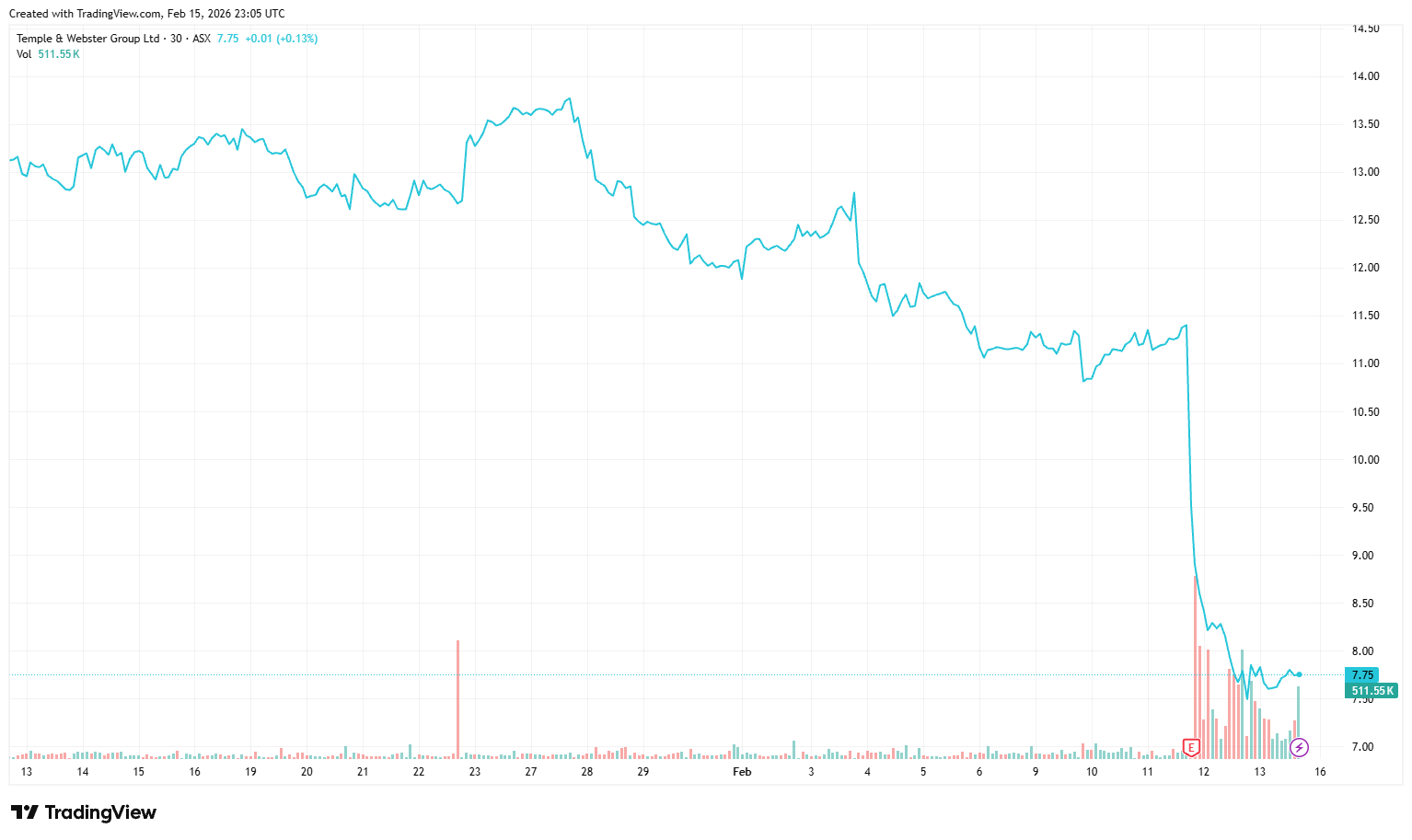
Price Performance
Growth Potential
- Operates in a large addressable market – B2C furniture and homewares category is approx. $16bn.
Structural tailwinds – ongoing migration to online in Australia in the homewares and furniture segment. At the moment less than 10% of TPW’s core market is sold online versus the U.S. market where the penetration rate is around 25%. Home improvement online penetration is estimated at 5-10%
- Strong revenue growth suggests TPW can continue to win market share and become the leader in its core markets.
- Active customer growth remains strong, with revenue per customer also increasing.
- Successful execution in new growth pillars.
- Management is very focused on reinvesting in the business to grow top line growth and capture as much market share as possible. Whilst this comes at the expense of margins in the short term, the scale benefits mean rapid margin expansion could be easily achieved.
- Strong balance sheet to take advantage of any in-organic (M&A) growth opportunities, however management is likely to be very disciplined.
- Ongoing focus on using technology to improve the customer experience – TPW has invested in merging the online with the offline experience through augmented reality (AR).
- Currently undertaking on-market share buy-back - TPW has the ability to buy back 11 million shares.
Key Risks
- Rising competitive pressures.
- Any issues with the supply chain, especially because of the impact of Covid-19 on logistics, which affects earnings / expenses.
- Rising cost pressures eroding margins (e.g., more brand or marketing investment required due to competitive pressures).
- Disappointing earnings updates or failing to achieve growth rates expected by the market could see the stock price significantly re-rate lower.
- Trading on high PE-multiples / valuations means the Company is more prone to share price volatility.
Subscribe to our newsletter
Disclaimer: This article does not constitute financial advice nor a recommendation to invest in the securities listed. The information presented is intended to be of a factual nature only. Past performance is not a reliable indicator of future performance. As always, do your own research and consider seeking financial, legal and taxation advice before investing.
Speak to an Advisor