
S&P 500 Q1 Earnings Are Beating Expectations: What the Season Is Revealing So Far
Q1 2026 earnings season is, by most conventional measures, outperforming expectations. The beat rate is above historical averages, earnings growth is strengthening relative to where the quarter began, and forward estimates for the full year are being revised higher across much of the market. On the surface, this is the type of reporting season that would typically support broad-based gains and reinforce investor confidence.
Market reactions have been measured rather than enthusiastic. Gains have been selective, concentrated in specific areas of the market rather than broadly distributed. In many cases, companies delivering solid results have seen only muted share price responses, while others have struggled to sustain post-earnings momentum.
This gap between the quality of reported earnings and the strength of market reaction has become a defining feature of the season so far. Investors are looking beyond the headline beat rate and focusing more closely on what those results imply for the outlook ahead. That distinction provides a clearer read on market sentiment than the aggregate earnings data alone.
The Headline Strength: Earnings Are Beating
The numbers coming out of the Q1 2026 reporting season are strong by any historical measure. With approximately 28% of S&P 500 companies having reported, around 84% have delivered positive earnings surprises, above both the five-year average of 78% and the ten-year average of 76%. In aggregate, earnings are coming in roughly 12.3% above expectations, well ahead of longer-term averages near 7%.
Growth is also improving as the season progresses. The blended earnings growth rate has risen to 15.1% year on year, up from 13.1% at the start of the quarter. This upward revision reflects genuine strength in delivered results rather than conservative guidance. If sustained, it would mark the sixth consecutive quarter of double-digit earnings growth for the index, one of the strongest periods of expansion since the post-pandemic recovery.
Early bellwether results reinforce this backdrop. UnitedHealth Group raised its full-year outlook after a strong beat, easing cost concerns. United Airlines reported a significant upside surprise driven by premium demand, highlighting resilience among higher-income consumers. Boeing delivered narrower losses than expected, while General Motors exceeded expectations and lifted guidance.
Earnings are not only exceeding expectations, they are improving as the season unfolds. The more important question is what is driving that strength and how sustainable those drivers are.
Where the Strength Is: Sector Winners
The 15.1% blended earnings growth rate suggests broad-based corporate strength, but a closer look reveals a more concentrated picture. Eight of the eleven S&P 500 sectors are reporting year-on-year earnings growth, led by Information Technology, Materials, Financials and Industrials. Information Technology remains the dominant contributor, delivering approximately 46% earnings growth and accounting for a significant share of the overall expansion.
Technology’s strength reflects structural drivers. Demand linked to artificial intelligence continues to support semiconductor revenues, while cloud infrastructure growth is driven by sustained enterprise adoption. Digital advertising has stabilised as platforms improve return on investment through more advanced targeting. These trends are translating into consistent revenue growth across the sector.
Industrials have delivered strong upside relative to expectations, with companies such as GE Vernova, Boeing and FedEx contributing meaningful surprises. In Materials, producers such as Newmont Corporation and Freeport-McMoRan are benefiting from higher commodity prices and demand linked to data centre expansion.
Financials are also contributing to overall growth, with insurance emerging as a key driver. Higher interest rates are supporting investment income on insurer balance sheets, providing a direct earnings tailwind even as other parts of the sector face more mixed conditions.
In contrast, Energy and Healthcare are reporting year-on-year earnings declines. Energy performance has been affected by prior hedging positions and elevated operating costs despite higher oil prices. Healthcare has shown variability, with demand for certain procedures proving more sensitive to consumer conditions than previously assumed.
Earnings growth is genuine, but it is concentrated in a limited number of sectors and driven by a relatively small group of companies within those sectors. This concentration is central to understanding how the market is interpreting the current earnings season.
The Market Engine: Large-Cap Leadership Continues
A defining feature of this earnings season is that strength remains concentrated in the largest companies within the index. This pattern has persisted for years, but its scale now has a more significant impact on both performance and risk..
The so-called Magnificent Seven account for a substantial share of the S&P 500, with their collective weight rising significantly over the past ten years. Their earnings growth continues to outpace the broader market, supported by strong revenue expansion and operating leverage. As a group, they are expected to deliver earnings growth well above the index average, reinforcing their role as the primary drivers of headline performance.
This concentration becomes particularly relevant during key reporting periods. The current week represents a critical point in the earnings calendar, with major companies such as Microsoft, Alphabet, Meta Platforms, Amazon and Apple Inc. reporting results within a narrow window. Together, these companies represent a significant portion of the index’s total market value, meaning their performance has an outsized influence on overall market direction.
The key issue is no longer whether these companies can deliver strong results. It is whether the scale of investment, particularly in AI infrastructure, is translating into sustainable revenue growth. Capital expenditure has increased materially, and the market is focused on whether returns justify that investment.
Recent results from Tesla illustrate how sensitive the market is to this dynamic. While the company reported solid revenue and margin improvement, investor reaction was shaped more by forward-looking commentary on capital spending than by the quarterly numbers themselves. This underscores a broader theme across large-cap technology. Strong results alone are not sufficient. The outlook for growth, efficiency and return on investment carries greater weight.
Leadership transitions can also add another layer of complexity. Tim Cook’s planned departure and succession by John Ternus introduces an additional variable for investors assessing Apple’s longer-term trajectory alongside its near-term earnings performance.
Index-level strength is being driven by a relatively small group of companies, and the sustainability of that strength is increasingly tied to forward expectations rather than reported results alone. For investors, this concentration highlights both the opportunity created by market leadership and the risk that comes with reliance on a narrow set of dominant contributors.
What Isn’t Working: The Gaps Beneath the Surface
A 15.1% growth rate and an 84% beat rate suggest broad strength. The underlying picture is more selective.
Much of the outperformance is being driven by cost discipline and margin management rather than demand-led revenue growth. This supports earnings in the short term but is less durable than sustained top-line expansion.
Share price reactions reflect this dynamic. Companies beating expectations are seeing only modest gains, slightly below historical norms. With the index already near record levels, much of the strength was priced in before results were released.
Sector composition reinforces the point. A significant share of the index’s growth is concentrated in a small number of areas, particularly Information Technology, which is delivering approximately 46% earnings growth. Removing that contribution materially reduces the overall growth profile of the index. A similar pattern is visible at the company level. Excluding the Magnificent Seven’s projected 20.3% earnings growth, the remaining 493 companies are growing at roughly 12%. That is a solid outcome, but it is not the level of growth typically associated with an index trading at around 20.9 times forward earnings. At the same time, three sectors are still reporting year-on-year earnings declines, while the largest positive surprises are concentrated in Industrials, Information Technology and Materials, sectors benefiting from specific structural tailwinds rather than broad-based demand recovery.
The underlying consumer signal adds another layer of caution. Measures of consumer sentiment remain weak, reflecting ongoing pressure from inflation and broader economic uncertainty, and this is beginning to show up in earnings across consumer-facing industries and parts of healthcare where demand is more sensitive to household conditions. Geopolitical factors are compounding these pressures. Elevated energy prices are increasing input and transport costs across a range of industries while also eroding discretionary spending capacity. Even businesses with limited direct exposure to energy are feeling the indirect effects through softer demand, reinforcing the divergence between strong large-cap technology results and more pressured outcomes in economically exposed sectors.
Why the Market Is Not Fully Convinced
The gap between strong underlying results and a measured market response reflects a shift in what investors are focusing on at this stage of the cycle. The issue is not the quality of earnings, but what those earnings imply for the path ahead.
A key factor is that much of the strength was already anticipated. The S&P 500 had rallied meaningfully ahead of reporting season, pricing in a solid set of results. When expectations are elevated, delivering in line with those expectations confirms the existing narrative but does not drive a meaningful re-rating. The market is recognising the strength without needing to adjust valuations higher.
Forward guidance now matters more than reported results. Investors are focusing on whether current earnings can be sustained in a more challenging environment.
Valuation also plays a central role. With the S&P 500 trading around 20.9 times forward earnings, the market is priced for continued execution rather than acceleration. At these levels, strong results support current pricing but offer limited room for further expansion. Any sign that forward growth may not fully match expectations can lead to an immediate reassessment.
The macro backdrop adds further caution. Higher energy costs, weaker consumer sentiment and geopolitical uncertainty are shaping expectations for the next quarter. Investors are therefore approaching strong Q1 results with a more forward-looking perspective.
The current environment reflects a balance between resilient corporate performance and growing macro uncertainty. Earnings are holding up, but the market’s response suggests that confidence in the durability of that strength is more measured than the headline numbers imply.
What This Means for Investors
An earnings season that is beating historical benchmarks but generating a more muted market response carries different implications for investors than a straightforward, broad-based expansion.
Understand what you actually own in international ETFs. Australian investors holding products such as IVV, NDQ or VGS often have significant concentration in the largest US technology names. With the Magnificent Seven accounting for a substantial share of the S&P 500, a meaningful portion of portfolio performance is tied to the results and guidance of a small number of companies. This earnings season is not delivering uniform strength across the index. It is delivering concentrated strength in a handful of dominant businesses, and their outlook will continue to shape market direction in the near term.
Watch guidance more closely than the headline beats. The high beat rate is already reflected in current pricing. What will drive markets from here is whether management teams demonstrate that investment, particularly in artificial intelligence, is translating into measurable revenue growth, and whether demand conditions remain stable into the second quarter. Companies that deliver strong results but adopt a more cautious tone on growth or capital expenditure are likely to face immediate valuation pressure. The emphasis has shifted from what has been delivered to what can be sustained.
Recognise the two earnings seasons Australian investors are navigating simultaneously. While the S&P 500 continues to deliver strong growth, domestic markets are experiencing a more uncertain reporting backdrop, with earnings revisions reflecting softer consumer conditions, currency impacts and shifting macro dynamics. The contrast between these environments highlights the importance of portfolio balance. Exposure to global growth remains important, but so does an awareness of the risks embedded in both international and domestic allocations.
Strong earnings do not remove the need for discipline. Positioning, diversification and an understanding of where growth is actually coming from are becoming more important as market leadership narrows and expectations remain elevated.
Strong Earnings, Selective Confidence
The first quarter earnings season is delivering what the market had hoped for in one respect. Companies are proving resilient, and earnings are holding up.
What it is not delivering is broad-based confidence.
Strength remains concentrated, expectations are elevated and forward visibility is uncertain. Investors are responding not just to what has been reported, but to what it implies for the path ahead.
A key question now is whether current earnings momentum can be sustained as cost pressures, consumer softness and geopolitical risks become more visible in the second half of 2026.
Markets are advancing, but doing so cautiously.
Earnings strength is real, but it is not evenly shared, and that is what the market is responding to.
Not sure how your portfolio is positioned in today’s market?
Speak to a Sharewise adviser for strategic insight into what this earnings season means for your investments.
Subscribe to our newsletter
Disclaimer: This article does not constitute financial advice nor a recommendation to invest in the securities listed. The information presented is intended to be of a factual nature only. Past performance is not a reliable indicator of future performance. As always, do your own research and consider seeking financial, legal and taxation advice before investing.
Speak to an Advisor

Big Tech reports next week. Learn how to read earnings releases and filings, and what to look for in AI spending, cloud growth, cash flow and guidance.

Understand how AI investment could affect global financial stability, as the IMF and RBA warn of rising debt, market concentration and funding risks.

Firmus’ proposed mega-IPO puts a spotlight on the cost, capital intensity and risks of building AI infrastructure as investors weigh the next phase of the AI boom.
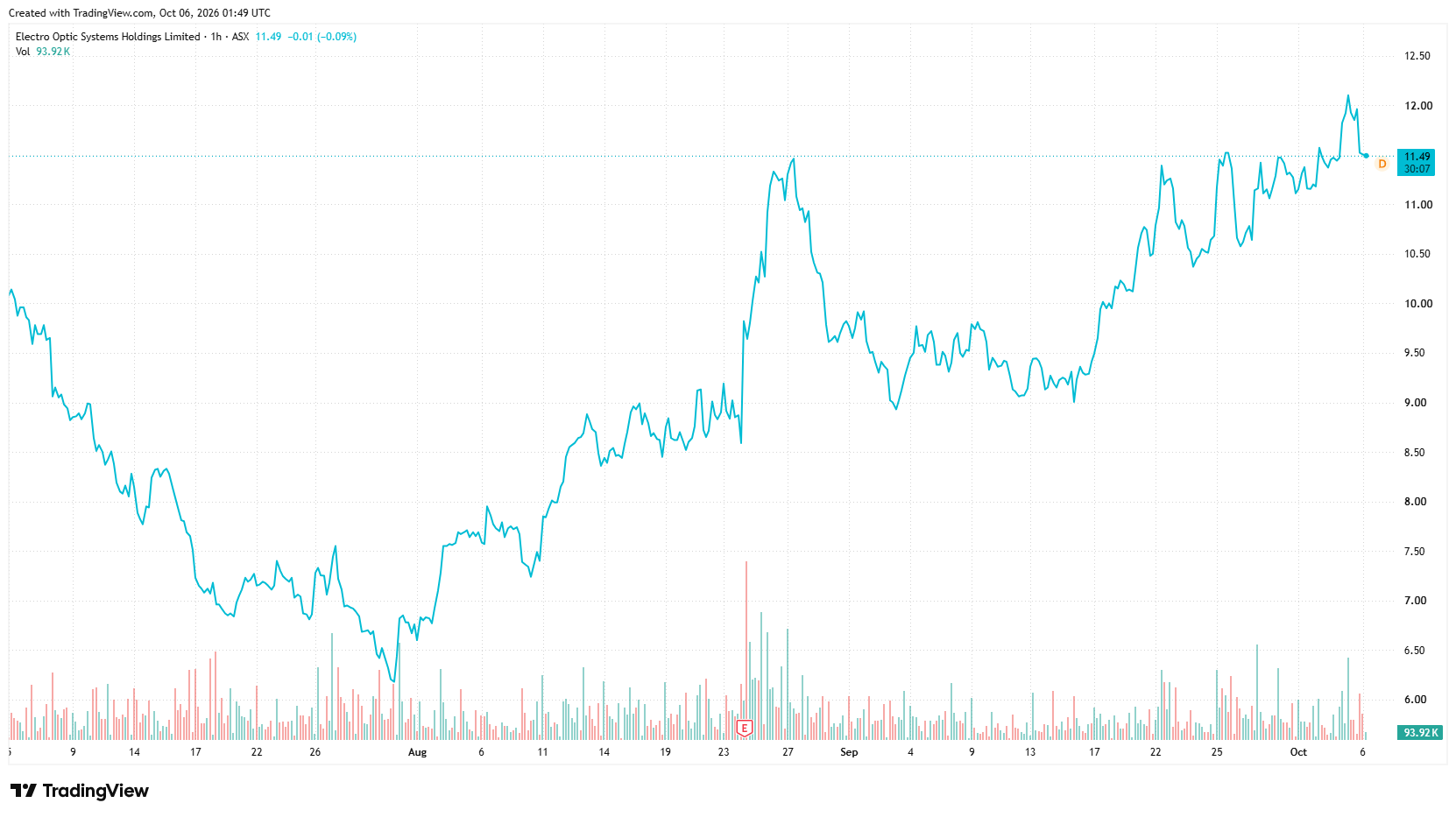
About Electro Optic Systems Holdings Ltd. Electro Optic Systems Holdings Limited engages in the development, manufacture, and sale of telescopes and dome enclosures, laser satellite tracking systems, remote weapon systems, and high laser weapon. It operates through Defense Systems and Space Systems segments. The company develops, manufactures, and markets fire control, surveillance, weapon systems, and high energy laser to military customers. It also provides passive optical and laser sensing equipment; optical, microwave and on-the-move radio and satellite products; and laser-based surveillance systems with space tracking capability. In addition, the company offers counter-drone, firepower, force protection, and UGV and marine lethality systems, as well as high energy laser weapon; optical tracking systems, space control, space domain awareness, satellite laser ranging, space sustainability, and precision optics. It operates in Australia, the United States, Singapore, the United Arab Emirates, the United Kingdom, New Zealand, the Netherlands, North America, Germany, and rest of Europe. Electro Optic Systems Holdings Limited was founded in 1983 and is based in Symonston, Australia. Source: EODHD Key Stats
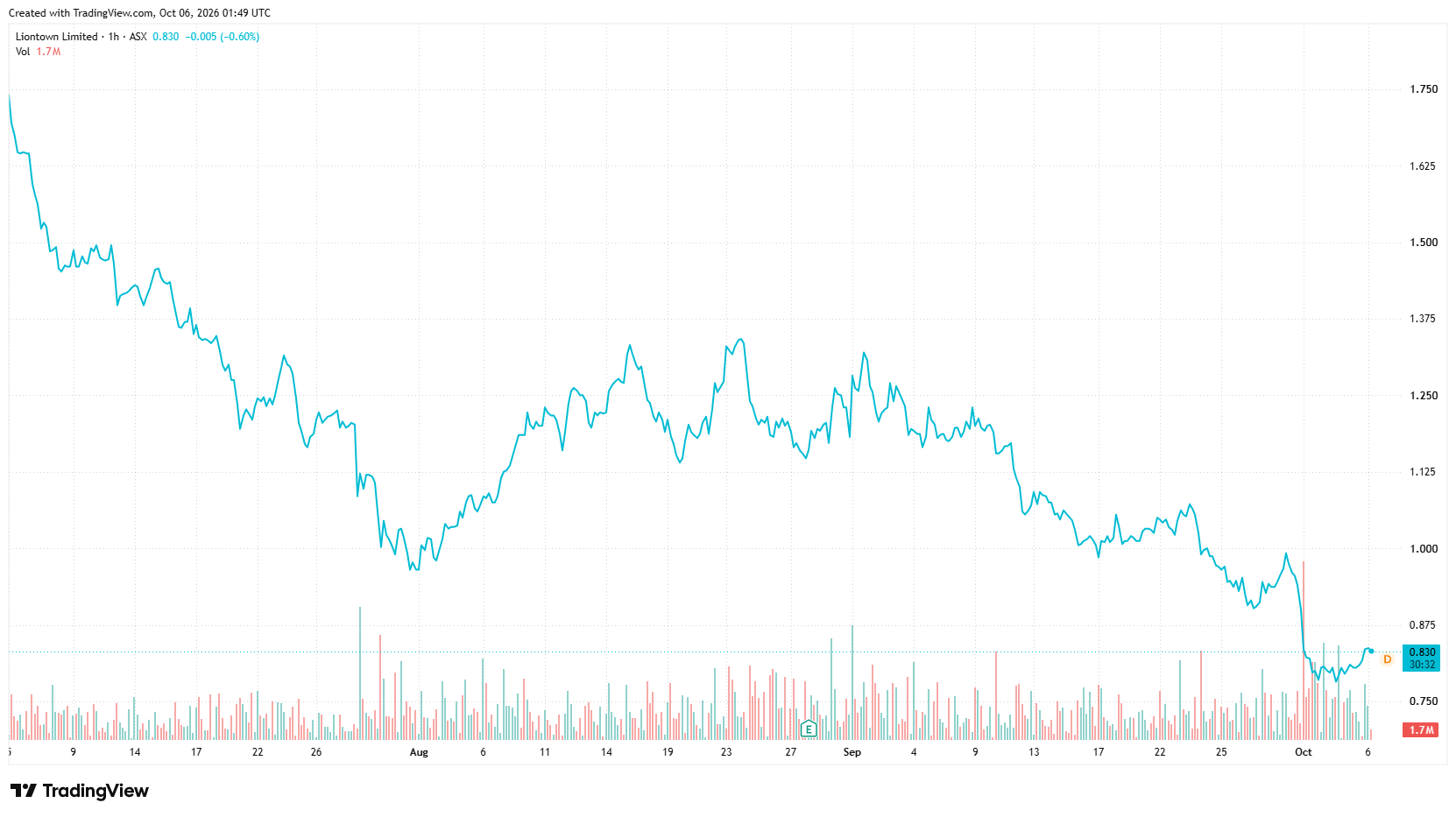
About Liontown Ltd. Liontown Limited engages in the exploration, evaluation, and development of mineral properties in Australia. It primarily explores for lithium, gold, and nickel deposits. The company's flagship property is the Kathleen Valley lithium project located in Perth, Western Australia. The company was formerly known as Liontown Resources Limited and change its name to Liontown Limited in November 2025. Liontown Limited was incorporated in 2006 and is headquartered in West Perth, Australia. Source: EODHD Key Stats

The RBA has raised rates to 4.60% as inflation pressures persist. Explore the impact of energy costs, AI demand and the key signals investors should watch next.

Discover how advances in genomics, AI, diagnostics and gene editing are creating a broader healthcare opportunity and where commercial value is emerging.

The AI trade is being forced to rethink the pace of progress. Here is what investors should watch across Nvidia, chips, AI spending, software and adoption.

Copper is at a record high, yet the global market still has a surplus. So where is all the copper, and why is it becoming harder to find?
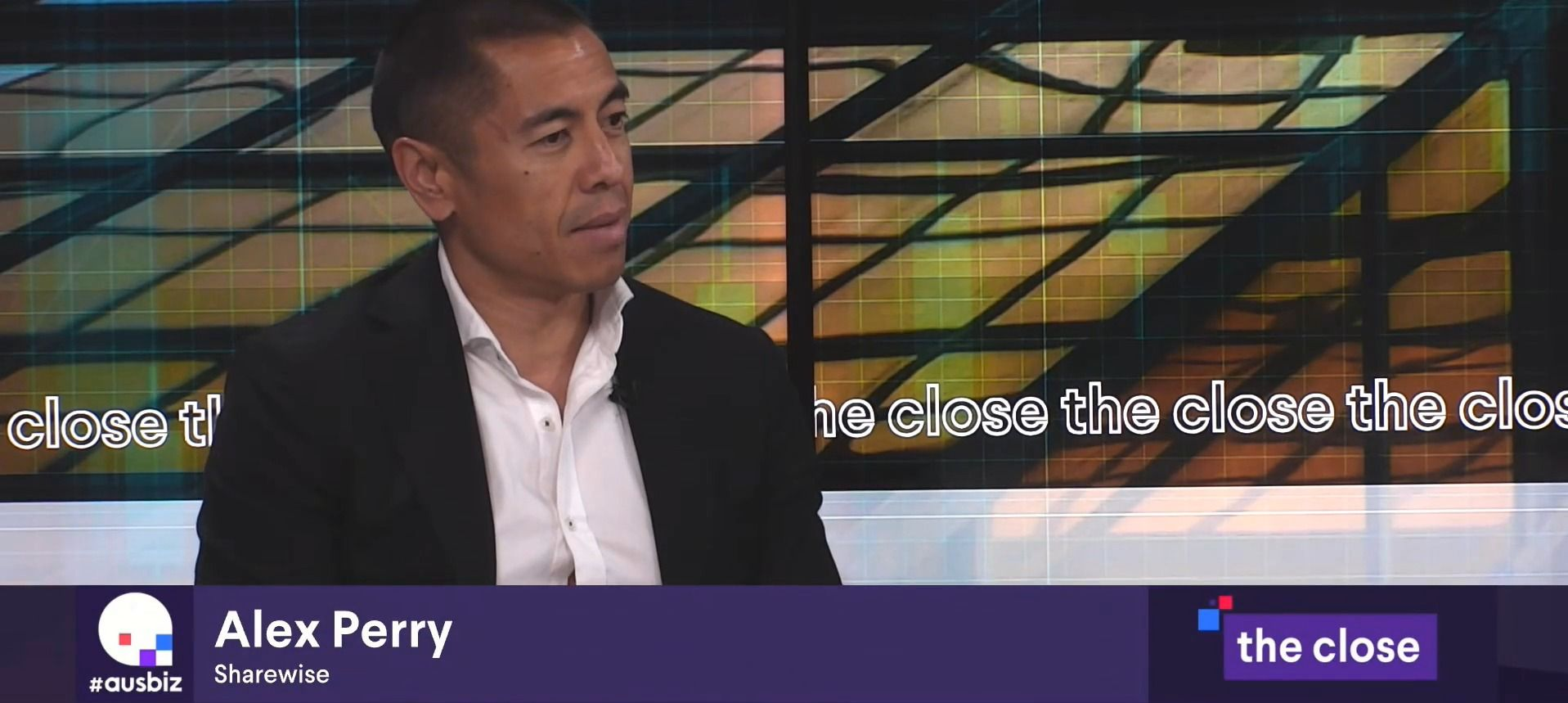
Sharewise CEO Alex Perry sat down with ausbiz to unpack how the platform approached FY26, a year in which it reported an ASX return of almost 11% and a US return above 32%. The conversation ranged from the AI infrastructure theme to specific names on Perry's radar in resources and quantum computing. Here's a rundown of the key points.
